
Hopeful Signs for Turnaround in the Marcellus/Utica Industry
 One of our favorite M-U reporters, Paul Gough of the Pittsburgh Business Times, went in search of news about Appalachian shale drilling and its future. He found some rays of light. Gough talked with several of our favorite M-U people–CNX CEO Nick DeIuliis, Deep Well Services CEO Mark Marmo, and Range Resources COO Dennis Degner. Those three (and others) are certainly not Polyanna about what the future holds. There will be bumps. But they do offer hope that on the other side of this pandemic the M-U will actually emerge stronger and better.
Read More “Hopeful Signs for Turnaround in the Marcellus/Utica Industry”
 We’ll say it right up front: We’re not impressed with so-called “renewable” natural gas (RNG) and all of the machinations companies go through to obtain and deliver it to their customers. RNG is chemically identical to regular old natural gas. It’s called methane (CH4). It burns the same and releases the same amount of carbon dioxide into the atmosphere when it burns. Chesapeake Utilities (nothing to do with Chesapeake Energy), which operates in the Delmarva Peninsula (Delaware, Maryland, Virginia), is the latest utility company to cook up an RNG scheme–to use chicken “droppings” as the source of methane. Whatever.
 On Tuesday, New Jersey Attorney General Gurbir Grewal filed a brief with the U.S. Supreme Court asking the court to not even consider hearing a case involving PennEast Pipeline. Grewal wants to deny the project its day in court. In the brief Grewal outright lies by saying “PennEast is wrong” in its claim that a lower court decision, if allowed to stand, would result in pipeline projects across the country getting blocked. That is a 100% lie and Grewal knows it.
 Delaware River Basin Commission (DRBC) Executive Director Steve Tambini is such a disappointment. He has totally caved to the hard-left environmental lobby that has its hooks deeply embedded in the DRBC. On June 1 Tambini sent a letter that’s, well, embarrassing. He sent the letter to the Federal Energy Regulatory Commission (FERC), telling FERC that the DRBC does have a say in whether or not the PennEast Pipeline can get built–even though not one inch of Phase 1 of the project will traverse DRBC’s jurisdiction.
 A coalition of so-called environmental groups (leftist, very radical organizations) filed an official request with the Federal Energy Regulatory Commission (FERC) on Saturday calling on FERC to conduct a supplemental environmental impact statement (EIS) for a project that’s already been studied to death: Dominion Energy’s Atlantic Coast Pipeline (ACP). The once $5.5 billion project (now $8 billion because of delays caused by these nefarious groups) will run from West Virginia through Virginia and into North Carolina.
 PTT Global Chemical, the huge Thailand-based petrochemical company looking to build a world-class ethane cracker plant in Belmont County, OH, has botched its messaging about when it will make a final investment decision (FID) about moving forward with the project. The latest FID was supposed to be now, by the end of June this year (see
 The mighty Mariner East 2X (ME2X) pipeline project gets closer and closer to 100% completion, despite the efforts of anti-fossil fuelers to hassle and block the project. In a bit of news ignored by mainstream media, another 13-mile stretch of ME2X in southeastern PA between Chester and Delaware counties went online late last week.
 Summit Midstream Partners, formed in 2009 and headquartered in The Woodlands, Texas, operates natural gas, crude oil and produced water gathering (pipeline) systems in six unconventional resource basins, including the Marcellus and Utica. The company concentrates its time and money on four “core focus areas” including the Utica, the Williston (i.e. Bakken), the DJ Basin, and the Permian. The company announced yesterday it has completed the buyout of a subsidiary and merged it in. Hidden in the bowels of the press release we discovered Bob McNally, former (ousted) CEO of EQT Corporation, has joined the board of directors at Summit.
 In late April PTT Global Chemical, the huge Thailand-based petrochemical company looking to build a world-class ethane cracker plant in Belmont County, OH, announced it would not make a final investment decision (FID) about whether to build the Ohio cracker by mid-2020 (see
 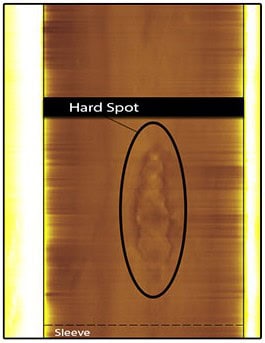 The last nine months haven’t been the best for Enbridge’s Texas Eastern Pipeline Company (TETCO) pipeline in Kentucky. Last August one of the TETCO lines exploded in Lincoln County, Kentucky, killing one and sending six to the hospital (see
  FirstEnergy, now calling itself Energy Harbor, somehow got into the pockets (via campaign donations) of enough Ohio politicians (many of them Republican) to convince them to pass a horrible law last year–House Bill (HB) 6. HB 6 grants the company $1 billion in corporate welfare over seven years in a deal to prop up its two “unprofitable” nuclear power plants. Now that the first $150 million is about to flow, how will Energy Harbor use it? To pay its so-called high operating costs? No. Energy Harbor will funnel the money right into the pockets of big investors. It was all a scam.
 The nation’s largest natural gas producer, EQT Corporation, is temporarily curtailing or shutting in roughly one-third of its natural gas production in Pennsylvania and Ohio. So says EQT’s main midstream (pipeline) provider, Equitrans (formerly EQT Midstream).
 Is it time to turn the gas off for New York City and let the people there reap the “benefits” of having a dictator, Andrew Cuomo, as their governor? On Friday the NY Dept. of Environmental Conservation, thoroughly and completely corrupted by Cuomo, issued yet another rejection for the critically-needed Northeast Supply Enhancement (NESE) pipeline project. It was the last straw for Williams, the builder of the project, which has walked away from the project. Gas customers on Long Island, including parts of NYC, now face the real prospect of running out of natural gas (this is not an exaggeration). Andrew Cuomo is the grossest, most corrupt governor in NY’s history.