
4th Circuit Judges Explain Why They Won’t Block MVP Southgate
 The same three judges from the U.S. Court of Appeals for the Fourth Circuit who blocked the 303-mile Mountain Valley Pipeline (MVP) for *years* suddenly changed course in late April, ruling on an extension of MVP into North Carolina called Southgate. Big Green, represented by the Sierra Club and Appalachian Voices, sued to block a permit issued by North Carolina regulators for the Southgate project. While the three judges grumbled and complained about Southgate during oral arguments (see 4th Circus Clown Judges Badmouth MVP Southgate in Oral Arguments), a day later, they surprised everyone by lifting a previous “stay” imposed on building the project (see Surprise! 4th Circus Clown Judges Allow MVP Southgate Construction). The three have just issued a lengthy explanation for their April decision to lift the stay. Read More “4th Circuit Judges Explain Why They Won’t Block MVP Southgate”
 Big Green groups rallied Tuesday in Peekskill (Westchester County, NY) against Enbridge’s proposed Project Beacon, a natural gas pipeline expansion that would increase capacity on the Algonquin Gas Transmission line. Radicals lied by saying the project would “burden ratepayers” already facing high living costs. How do you figure? Algonquin is a transmission pipeline, and its expansion will be paid for by Enbridge (and its shareholders), not by increasing local utility rates. Yet these liars are never called out for their false statements by the media.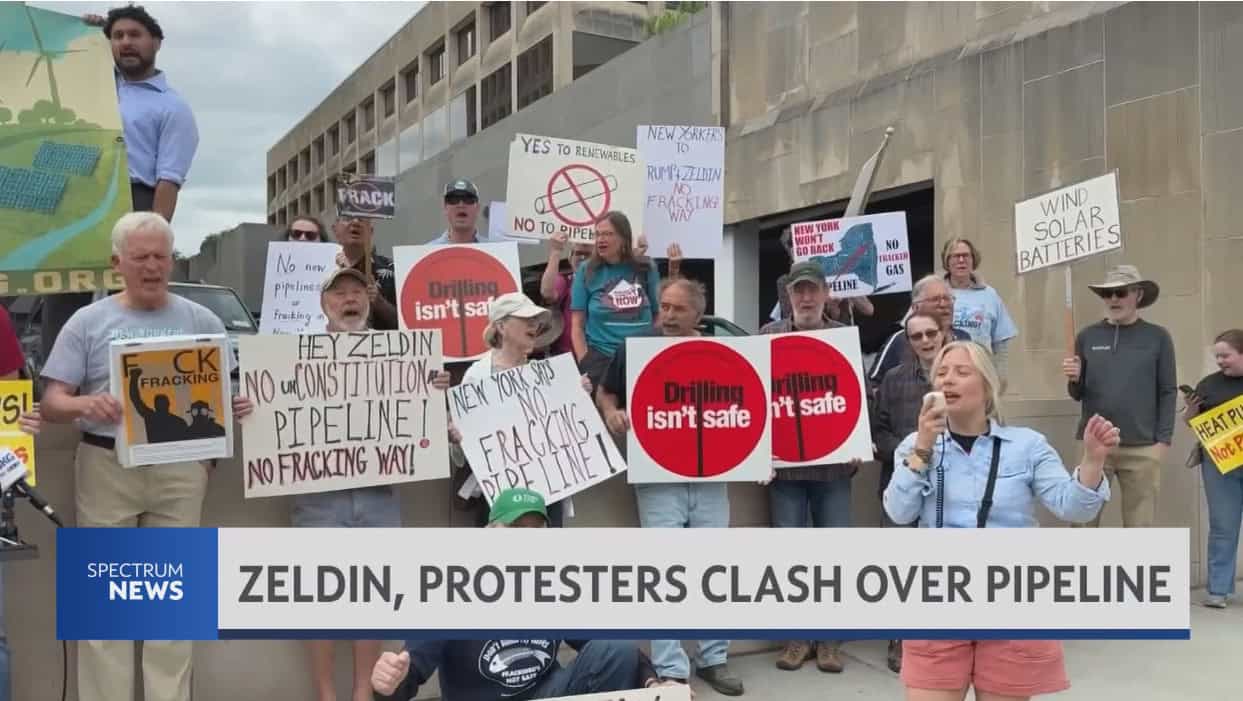
 Although there are legitimate concerns over data centers locating in populated communities (noise, water use, etc.), make no mistake: The anti-data center movement is nothing more than the anti-fracking movement in new clothes (see
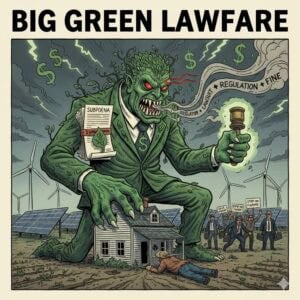
  The U.S. House Judiciary Committee has issued its first subpoena in a probe of what it calls a coordinated climate litigation campaign against energy companies. The subpoena targets Roger Worthington, attorney for Multnomah County, Oregon. Multnomah seeks more than $51 billion from energy companies (and if they prevailed, Worthington’s law firm would get one-third of that, making every person working the case an instant millionaire). Chairman Jim Jordan and Rep. Darrell Issa are investigating possible coordination (collusion) between Worthington, the Environmental Law Institute, and its Climate Judiciary Project, despite CJP’s supposed neutrality.
  The U.S. Court of Appeals for the Ninth Circuit on Tuesday upheld the dismissal of a lawsuit brought by 22 “youths,” aged 7 to 25 (kids used as a prop by Big Green groups), challenging three Trump executive orders promoting fossil fuel production and domestic energy investments. The appeals panel affirmed that the plaintiffs lacked standing, finding they failed to demonstrate the executive orders directly caused their injuries and could only speculate about future agency actions to implement those orders.

 The Warren, OH, City Council introduced legislation to impose a permanent ban on new data centers, citing concerns about water supply, wastewater infrastructure, utility costs, and the city’s residential character. Sponsored by Democrats, the proposed ordinance argues that data centers place unsustainable demands on city systems, particularly following a costly wastewater plant upgrade. One Council Democrat drew parallels between data centers and past fracking “disappointments” in the region, emphasizing water as the community’s most critical resource.
  Well, you knew this was going to happen. Last week, a group of disgusting Big Green groups and the New York State Attorney General both filed separate lawsuits in the U.S. Court of Appeals for the Second Circuit (2nd Circuit), challenging the Federal Energy Regulatory Commission’s (FERC) decision to resurrect the Constitution Pipeline under the existing (but dormant) docket. NY AG Tish James, representing the Department of Environmental Conservation (DEC), argues that a brand new review should be done by the state to evaluate the project for compliance with the federal Clean Water Act. You may recall that NY previously lost its right to evaluate the Constitution project by stretching out its review for years, causing FERC to overrule NY (see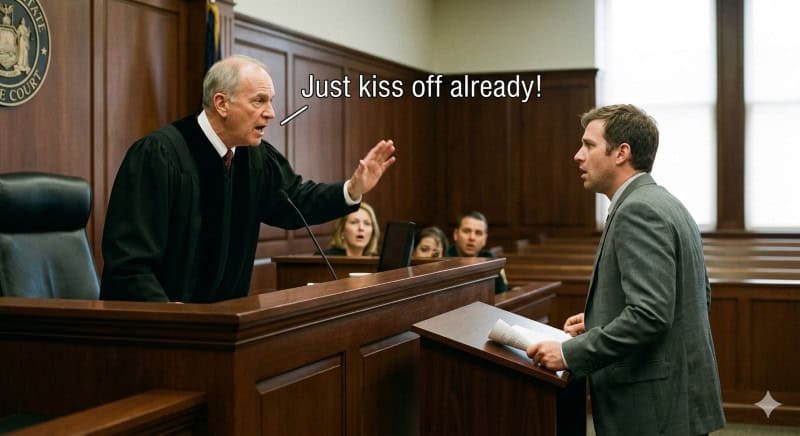
 In March, the Pennsylvania Department of Environmental Protection (DEP) released the results of a two-year study that found radium levels in landfill wastewater (leachate) from landfills with drill cuttings do NOT pose a risk to human health (see
  It seems that not all of the judges who sit on the U.S. Court of Appeals for the Fourth Circuit (4th Circuit) are clowns, the way the three judges who oversee cases dealing with the Mountain Valley Pipeline (MVP) Southgate project are (see
  In February 2024, members of the South Carolina Public Service Commission approved a proposed project to build a 2,200-megawatt (MW) gas-fired power plant in the state’s Lowcountry, in Colleton County (see
  At a Pennsylvania DEP hearing in Indiana County, environmental extremists opposed a proposed 5.8-mile, 30-inch natural gas pipeline serving Homer City Redevelopment’s planned $10 billion, 4.5-GW gas-fired power plant and hyperscale data center campus. The pipeline would cross streams, wetlands, and floodways, potentially affecting Muddy Run, Blacklick Creek, and various tributaries. Reminding us of Chicken Little in The Sky is Falling, speakers warned of water pollution, setbacks to acid mine drainage restoration, drought-related water stress, and inadequate transparency around the fast-moving project.