
Old Hippies Protest Connecticut DEEP HQ re Iroquois Compressor
 The Iroquois Gas Transmission’s Enhancement by Compression (ExC) project will increase horsepower at three compression stations — two in New York and one in Connecticut — by an extra 125 MMcf/d, to flow more Marcellus/Utica gas into New York City and New England. The NY Department of Environmental Conservation (DEC) approved the permits for the NY compressors with the condition that Iroquois pays a $1.5 million “contribution” (we call it a bribe) to the “Disadvantaged Community Benefit Program” (see NY DEC Approves Iroquois Pipe Expansion…With $1.5M “Contribution”). The only remaining holdup is a permit from the CT Department of Energy and Environmental Protection (DEEP) for the Brookfield compressor, which has been on hold since June of last year (see Iroquois Pipe Expansion Close to Construction, Waiting on CT Permit). A handful of old hippies staged a sit-in at DEEP headquarters on Monday to protest the compressor station. Read More “Old Hippies Protest Connecticut DEEP HQ re Iroquois Compressor”
 Last December, MDN told you that three anti-shale drilling groups—the PA Council of Trout Unlimited, the Keystone Trails Association, and the Responsible Drilling Alliance—requested the Pennsylvania Department of Environmental Protection (DEP) hold a hearing on the Chapter 105 permit requested for a 3.9-mile shale gas access road and staging area proposed by Pennsylvania General Energy (PGE) in the Loyalsock State Forest (see
 President Donald Trump’s proposal for a $33 billion, 9.2-gigawatt gas power plant in Ohio—funded by Japanese investment, including SoftBank—aims to address soaring energy demands from data centers (see
 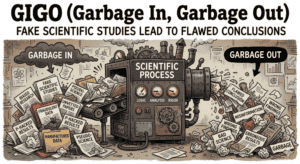 In December, the Pennsylvania Environmental Quality Board (EQB) accepted a petition by radical green groups, including the Clean Air Council and Environmental Integrity Project, to “study” the issue of increasing setbacks for shale drilling so far that it would ban ALL new Marcellus/Utica drilling in the Keystone State, which is no exaggeration (see
  Just yesterday, MDN told you that three left-wing judges from the 4th Circuit (“Circus”) who hate the Mountain Valley Pipeline (MVP) were back at it, badmouthing an extension of MVP into North Carolina, called Southgate (see
 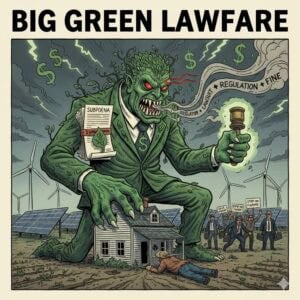 In February 2024, members of the South Carolina Public Service Commission approved a proposed project to build a 1,020-megawatt (MW) gas-fired power plant in the state’s Lowcountry, in Colleton County (see
  Twenty-three state attorneys general are demanding explanations from the top ratings agencies, Fitch, Moody’s, and S&P, regarding “ESG-driven” downgrades of fossil-fuel companies. They allege the agencies promote a radical climate agenda, weaponizing credit ratings with flawed methodologies to push woke ideology and UN-backed net-zero goals, rather than providing objective financial analysis. The AGs contend these downgrades contradict stated methodologies, reveal conflicts of interest arising from pledges to integrate ESG, and penalize American energy while potentially favoring entities such as Chinese-owned companies.
  The Pennsylvania Department of Environmental Protection (DEP) is seeking public comment on an Individual Stormwater Permit for a 5.8-mile natural gas pipeline in Indiana County. Serving the proposed Homer City Generation LP 4.5 GW power plant and data center, the 30-inch pipeline will traverse Black Lick, Burrell, and Center Townships, involving several stream and wetland crossings. The DEP will host a public hearing on May 12 from 5 to 7 PM at the Indiana Theater regarding Homer City Generation’s proposed 5.8-mile natural gas pipeline in Center Township. In response to this new project, local anti-fossil fuel groups are actively mobilizing. So-called “Concerned Residents of Western PA” (CROW) is holding a preparation meeting this afternoon to help “citizens” draft their public comments and build speaking confidence.
  Last November, the Buckeye Environmental Network, backed by lawyers from the controversial Earthjustice, sued the Ohio Department of Natural Resources (ODNR) over permitting two new shale wastewater injection wells in the Marietta area, claiming the standard used to evaluate the wells was old and out-of-date (see
  Earlier this year, the Federal Energy Regulatory Commission (FERC) approved the Williams Transco Southeast Supply Enhancement Project (see
  The Iroquois Gas Transmission’s Enhancement by Compression (ExC) project will increase horsepower at three compression stations — two in New York and one in Connecticut — by an extra 125 MMcf/d, to flow more Marcellus/Utica gas into New York City and New England. The NY Department of Environmental Conservation (DEC) approved the permits for the NY compressors with the condition that Iroquois pays a $1.5 million “contribution” (we call it a bribe) to the “Disadvantaged Community Benefit Program” (see
 Olympus Energy (now owned by EQT) drills in the Greater Pittsburgh region, in Allegheny and Westmoreland counties. In 2021, Olympus applied to build a new well pad in a rural part of Allegheny County, in West Deer Township. So-called Concerned Residents of West Deer (CROWD) got amped up to oppose the project. They succeeded when town supervisors rejected the Dionysus well pad (see
 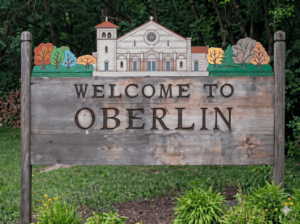 Oberlin, Ohio, officials are weighing a proposal to amend the city’s Community Bill of Rights to allow Dominion Energy Ohio to build a gas pipeline connection to a planned eco-industrial park, unlocking possible state support. Environmental groups and students at Oberlin College (neither of which pay any property or income taxes in Ohio, meaning they don’t have a say) argue the change would weaken Oberlin’s anti-fossil-fuel commitments and revive ties to Enbridge, whose NEXUS pipeline previously “divided” the city. City officials and utility experts counter that renewables alone are not yet feasible, citing constraints on electric capacity and on wind, solar, and geothermal options.
  Last week, U.S. Sen. Ted Cruz (R-TX) introduced S.4340. This bill would bar frivolous lawsuits from green activist groups seeking damages, injunctions, or other relief for so-called harms allegedly caused by the end use of energy products, including oil and gas. Senators Ted Budd (R-NC), Tom Cotton (R-AR), and Mike Lee (R-UT) are cosponsoring the legislation. The House’s companion bill, H.R. 8330, was also introduced by Representative Harriet Hageman (R-WY). The bill is being called the “Stop Climate Shakedowns Act of 2026.” An appropriate title.