
AI Data Centers Must Learn from Fracking How to Win Over Skeptics
 MDN first tipped you back in July 2025 that the Democrat anti-fracking movement in Pennsylvania (and beyond) was rapidly becoming anti-data center (see PA Antis Hate Fossil Fuels, Shale Drilling, and Now…Data Centers). The trend only blossomed, with national and international groups joining the chorus against data centers (see 200 Enviro Groups Want Freeze on Building ALL New Data Centers). As we observed last week, mainstream media is now (finally) admitting what we said nine months ago is true, that data centers have become the new fracking (see Mainstream Media Catches Up: AI Data Centers are the New Fracking). So, how do we overcome the smears, slanders, and lies about data centers? The same way we overcame the smears, slanders, and lies about fracking. Read More “AI Data Centers Must Learn from Fracking How to Win Over Skeptics”
 As we reported last week, anti-fossil fuel fanatics haven’t given up on trying to block construction of the Williams Northeast Supply Enhancement (NESE) pipeline, a $1 billion+ project designed to increase Transco pipeline capacity and flows of Marcellus gas heading into New York City and other northeastern markets (see
  Natural Allies for a Clean Energy Future
 The Mountain Valley Pipeline (MVP), which began operations in 2024 through West Virginia and Virginia, is now slated for an extension, the MVP Southgate, into North Carolina. This expansion faces opposition from some residents and environmental groups who raise concerns about safety, environmental impact, eminent domain issues, and the need for increased natural gas infrastructure (they believe cataclysmic global warming comes from burning natural gas). Despite court challenges and past environmental violations, the project has received government approvals and is forging ahead. On March 23, the Federal Energy Regulatory Commission (FERC) issued a notice to proceed with construction in Virginia.
  A decision issued by the Pennsylvania Commonwealth Court has helped to rein in attempted lawfare (the abuse of our judicial system) by an anti-fossil fuel group in southwestern PA. Protect PT, a group we’ve covered many times in the past, tried to assert “standing” (the right to sue) in a case involving an EQT well pad that needed to be moved by 178 feet from its original location. The local zoning board was happy to give the antis “standing” in their hearings, but when Protect PT didn’t like the board’s decision, they tried to appeal it to a court. The trial court told Protect PT the group didn’t have standing under the very specific requirements of the law.
  Anti-fossil fuel fanatics haven’t given up on trying to block construction of the Williams Northeast Supply Enhancement (NESE) pipeline, a $1 billion+ project designed to increase Transco pipeline capacity and flows of Marcellus gas heading into New York City and other northeastern markets. Last November, the states of New York and New Jersey issued federal Clean Water Act permits for their respective states, allowing NESE to be built (see
  Virginia is officially rejoining the Regional Greenhouse Gas Initiative (RGGI) carbon tax scheme this July after a liberal court deemed its previous withdrawal under former Governor Glenn Youngkin unlawful. This reentry forces utilities like Dominion Energy to resume purchasing carbon credits—modern-day indulgences for the “sin” of emitting carbon dioxide, the same thing mammals exhale with every breath. The cost will be passed on to ratepayers through monthly bill increases. Virginians have no one to blame but themselves when their electric bills soar due to this idiotic carbon tax that does nothing more than allow politicians to pass out money to their favorite constituent groups as a reward for voting them into office. Welcome to the USSR of Virginia.
  Please excuse our immodesty while we toot our own horn. MDN first tipped you back in July 2025 that the Democrat anti-fracking movement in Pennsylvania (and beyond) was rapidly becoming anti-data center (see
  On Tuesday, seven radicalized Big Green groups filed a court challenge to the Federal Energy Regulatory Commission’s (FERC) authorization for Mountain Valley Pipeline, LLC, to construct the MVP Southgate gas pipeline. The petition for review, filed by the Southern Environmental Law Center (SELC), Appalachian Mountain Advocates, and Sierra Club in the United States Court of Appeals for the District of Columbia Circuit (DC Circuit), asks the court to vacate the amended certificate of convenience and public necessity issued by FERC in December 2025.
 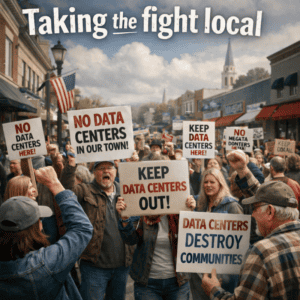 Anti-progress and anti-fossil energy Democrats in Pennsylvania are doing their darndest to try to block new AI data centers from getting built in the state. Just last week, the Democrat-controlled House passed a bill to block new data centers (see
  Southwestern Pennsylvania voters chose poorly when they elected a Communist radical as their representative to the U.S. Congress: Democrat Summer Lee. She and two other far far far far far left radicals, Congresswoman Rashida Tlaib (Democrat from Michigan), and Congresswoman Adelita Grijalva (Democrat from Arizona), together just launched what they euphemistically call the People’s Environmental Justice Caucus in Congress. A better name is the “oil and gas is racist” caucus, an attempt to smear the oil and gas industry with the label of racism, claiming that O&G projects only get built in communities of color or where the residents are poor—people who (says Lee & co.) can’t fight back against the industry.
  Last week, we told you that a supposed “group of rural Ohioans” in Adams and Brown counties was seeking a constitutional amendment to ban data centers exceeding 25 megawatts, citing concerns over resource consumption and a lack of local control (see
  Yesterday, the Pennsylvania House passed House Bill (HB) 1834 to regulate AI data centers, supposedly aiming to protect the electric grid and shield consumers from rising utility costs. Authored by Representative Robert Matzie (Democrat), the legislation requires data centers to use increasing amounts of clean, in-state energy and contribute to affordability programs like LIHEAP. While Democrats emphasize the need for safeguards against industry expansion, Republicans argue that the bill’s mandates could discourage investment and drive developers to neighboring states. The measure now heads to the state Senate, where it’s dead on arrival (DOA).
 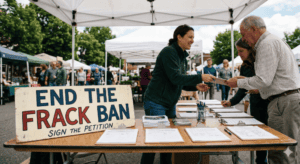 Shale drilling in Wayne and Pike counties in the northeastern tip of Pennsylvania has been blocked since 2010 (16 looooong years), denying landowners in those counties the right to benefit from leasing and drilling on and under their land. Those counties (parts of them) are within the Delaware River Basin, and the Delaware River Basin Commission (DRBC) implemented a moratorium in 2010 to block shale drilling. The moratorium became a full-blown, permanent ban on fracking in 2021. The DRBC added a prohibition on the disposal of oil and gas wastewater to the permanent ban in 2022. It’s time to overturn the ban. We have a
  A supposed “group of rural Ohioans” in Adams and Brown counties is seeking a constitutional amendment to ban data centers exceeding 25 megawatts, citing concerns over resource consumption and a lack of local control. The “rural Ohioans” argue these massive facilities drain electricity and water supplies while providing few permanent jobs, often facilitated by secretive non-disclosure agreements between tech companies and officials. After submitting initial signatures to the Ohio Attorney General, supporters must gather approximately 413,000 more by July to reach the November ballot. Because modern AI-driven facilities typically require over 200 megawatts of power, this amendment would effectively ban large-scale data center expansion across the state. In its reporting, the media left out an important part of the story.