
New Pipelines Set to Flow Marcellus Gas to Northeast & New England
 There’s plenty of cheap, abundant, clean natural gas available in the Marcellus/Utica region. One of the biggest challenges (for drillers and landowners) has been moving those molecules to markets that need them, like New York State and New England. Every single inch of a pipeline project in the northeast is fought over, with radicalized environmentalists using lawfare as their favorite tactic to oppose projects. Their resistance is based on the false belief that fossil fuels like natural gas are somehow evil. But even though the enviro-left has done its best, there are several pipeline projects in the works that will flow molecules from the M-U into and through New York and into New England. Read More “New Pipelines Set to Flow Marcellus Gas to Northeast & New England”
 Big Green groups rallied Tuesday in Peekskill (Westchester County, NY) against Enbridge’s proposed Project Beacon, a natural gas pipeline expansion that would increase capacity on the Algonquin Gas Transmission line. Radicals lied by saying the project would “burden ratepayers” already facing high living costs. How do you figure? Algonquin is a transmission pipeline, and its expansion will be paid for by Enbridge (and its shareholders), not by increasing local utility rates. Yet these liars are never called out for their false statements by the media.
  Sempra Infrastructure announced that its Port Arthur Pipeline Louisiana Connector has entered service, marking progress on U.S. energy infrastructure aimed at supplying global natural gas markets. CEO Justin Bird said the project was completed ahead of schedule and under budget. The pipeline will transport up to 2 billion cubic feet per day (Bcf/d) of U.S. natural gas, including Marcellus/Utica gas, to Port Arthur LNG Phase 1, which is now under construction with a nameplate capacity of about 13 million tonnes per annum (MTPA). The project links with the Gillis Hub Pipeline and the LA Storage facility under construction. It includes 72 miles of 42-inch pipeline and a compressor station.
  In February 2025, the Federal Energy Regulatory Commission (FERC) approved a plan by PJM Interconnection, the country’s largest electric grid (which covers all or parts of 13 states, including PA, OH, and WV), to fast-track the addition of new gas-fired power plants (see
  Yesterday, President Trump accused New York Governor Kathy Hochul of reneging on her pledge to allow the 125-mile Constitution Pipeline project to be built in the Empire State. The project was canceled in 2020 after New York repeatedly rejected the necessary permits. President Trump brokered a deal with New York Governor Kathy Hochul to resurrect the project last year (see
  On April 29, 2026, Pennsylvania’s Department of Environmental Protection (DEP) issued six violations to CNX Resources for causing water supply problems affecting two Bell Township residences in Westmoreland County. The violations targeted three CNX facilities with 19 shale gas wells drilled between 2022 and 2026. DEP determined that CNX operations diminished water supplies after two homeowners filed complaints in December 2025 about loss of well water. CNX was ordered to provide temporary water within 24 hours and submit restoration plans within 15-45 days. CNX, which *did* offer temporary water back in December, is disputing the DEP’s findings, denying responsibility and claiming insufficient evidence of hydrogeologic pathways linking their operations to water impacts.
  Pennsylvania imposes an annual “impact fee” (the state’s version of a severance tax) on unconventional (i.e., shale) natural gas wells that were drilled or operating in the previous calendar year. The state Independent Fiscal Office (IFO) provides updates to predict how much will be collected from the fee. The IFO released its mid-year report yesterday, which typically focuses on a forecast for the current fiscal year (FY 2026). But this update is different. It spends most of its verbiage on firming up and confirming the final numbers for 2025, which will be distributed in July of 2026. Near the end, the IFOers do break out the crystal ball and venture a guess on revenues for 2026 that will be paid out next July.
  On June 8, 2026, a Pennsylvania Department of Environmental Protection (DEP) inspector visited Frontier Natural Resources’ Winner 1, Winner 2, Winner 4H and Winner 6 shale gas well pads, along with four multimillion-gallon water impoundments in East and West Keating Townships, Clinton County. The inspector found that Frontier had not restored the pads and impoundments within 9 months of drilling ending. But here’s the thing: the original violations were lodged by the DEP on July 14, 2017. That’s almost nine years ago! In other words, the DEP didn’t bother to re-inspect the pads/sites for nine years.
  The troubles continue to pile up for Eureka Resources and its now-closed frack wastewater treatment facilities in Pennsylvania — two in Lycoming County and one in Bradford County. In March, the PA Department of Environmental Protection (DEP) assessed two fines against Eureka for violations of cleanup deadlines at two facilities, totaling $100,000 (see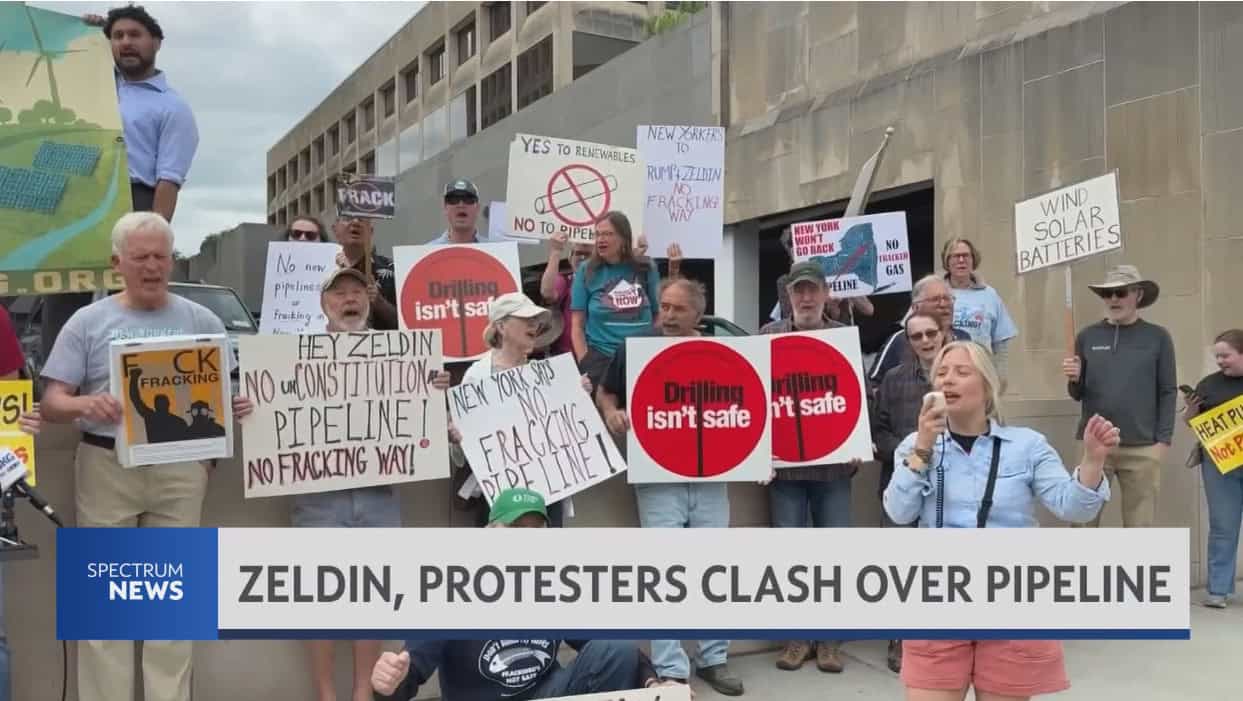
 JobsOhio, a private, nonprofit corporation that works on behalf of the state to drive job creation and new capital investment in Ohio by attracting business, contracts its economic research to Cleveland State University (CSU) to monitor the Utica Shale industry. JobsOhio released the latest CSU twice-a-year report yesterday (full copy below). It shows that Ohio’s shale energy sector drew another $2.9 billion in direct investment between January and June 2025, pushing cumulative investment in the Utica since 2011 to nearly $117.5 billion. All private money! It’s massive.
  WhiteHawk Minerals (formerly WhiteHawk Energy), a natural gas mineral and royalty interest owner in the Marcellus and Haynesville plays, with over 3.4 million gross acres under lease for drilling, launched an initial public offering (IPO) two weeks ago (see
  Here’s a story that may, at first glance, seem to have nothing to do with the Marcellus/Utica. Au contraire! The story of what’s happening with Permian drillers has a great deal to do with the M-U region. Although MDN frequently refers to the Haynesville Shale as the #1 competitor to the M-U because both plays target natural gas as the primary hydrocarbon, would it surprise you to learn that the Permian basin is the #2 producer of natural gas behind the M-U? And it’s catching up. Permian Basin drillers are experiencing starkly contrasting fortunes, reaping historic profits from war-driven oil price rallies while facing negative regional natural gas prices due to severe pipeline bottlenecks. To curb financial losses from associated gas, major producers like Permian Resources and Devon Energy are shutting in wells, while others resort to flaring to maintain more profitable crude production.
  Last week, the combined Marcellus/Utica Baker Hughes rig count remained at 36 active rigs for the fourth week in a row. The M-U’s chief competitor, the Haynesville, maintained its count of 55 active rigs, operating 19 more than the M-U. The national count added 1 rig last week, bringing the total to 563 rigs. That’s the seventh week in a row the national count has added rigs, driven by new oil-focused rigs. Baker Hughes said oil rigs rose by two to 431 last week, the highest since June 2025, while gas rigs fell by one to 124, the lowest since January 2026. Other miscellaneous rigs held at eight.
  Back in March, MDN alerted you to a potential new water pipeline coming in Lycoming County, PA, for EQT shale drilling (see
 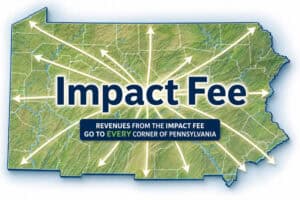 Stephanie Catarino Wissman, executive director of the American Petroleum Institute Pennsylvania, argues in a recent op-ed that Pennsylvania’s Act 13 natural gas impact fee has successfully paired shale development with local investment since 2012. Unlike a severance tax, the fee directs revenue to counties, municipalities, and environmental programs, generating nearly $3 billion overall and more than $1 billion from 2020 to 2024. Funds have supported roads, bridges, stormwater systems, emergency services, parks, watershed restoration, abandoned mine reclamation, orphan well plugging, and tax relief.