
Mass. Electric Ratepayers Get a Brutal Lesson in Economics 101
 According to José Costa of the Northeast Gas Association, Massachusetts’ high energy bills (some of the highest in the country!) stem from infrastructure constraints rather than price volatility. That is, Democrat politicians like Gov. Maura Healey have blocked new pipelines with additional capacity from entering the state. Although the nearby Marcellus Shale produces abundant, affordable natural gas, New England’s pipeline system operates at capacity during extreme winter cold. These physical bottlenecks restrict gas delivery, driving up spot prices to nearly 17 times Pennsylvania’s levels. The same supply with far more demand equals soaring prices. It’s Economics 101. Read More “Mass. Electric Ratepayers Get a Brutal Lesson in Economics 101”
 On March 18, President Trump issued a 60-day waiver pausing the enforcement of the Jones Act (see
  In a significant ruling for Utica and Marcellus shale landowners, the Ohio Seventh District Court of Appeals affirmed a trial court’s decision denying a motion by Ascent Resources to compel arbitration in a lease-expiration dispute. The court ruled that when an oil and gas lease expires by its own terms without active production or drilling operations, the lease’s arbitration clause does not survive the lease’s expiration to govern subsequent disputes—such as claims of trespass and unauthorized drilling. To force arbitration on post-expiration events, a lease must contain explicit “survival” language or involve rights that accrued/vested while the lease was still active.
  Google has partnered with Voltus to fund a three-year, 100-megawatt (MW) so-called “virtual power plant” in the PJM Interconnection (roughly the Marcellus/Utica region). VPPs are designed to address soaring data center demand. Voltus will “aggregate” distributed energy resources from residential, commercial, and industrial customers. We call foul. So-called VPPs are fake—they don’t actually exist. They simply use existing grid electricity taken from other sources. Creating a VPP just takes a little software and a lot of apathy from citizens to make it work. Google will, in essence, pay other electricity consumers to shift or forgo energy use. Google says it’s faster and more cost-effective to buy electricity from other electricity users rather than build an actual, honest-to-God power plant.
 The experts at NGI (
 AI (artificial intelligence) data centers are vital to both the natural gas industry and the national security of the United States. Yet, many Americans (a majority?) have turned against data centers. Sure, sometimes the builders of these facilities have shot themselves in the foot by not being more transparent and attempting to build facilities too close to population centers. Our thesis is that reasonable people can compromise, address issues, and move forward with data centers. But that’s not happening. Why?
  Although there are legitimate concerns over data centers locating in populated communities (noise, water use, etc.), make no mistake: The anti-data center movement is nothing more than the anti-fracking movement in new clothes (see
  In mid-April, MDN brought you the great news that a major lawsuit had been filed against New York State alleging a “taking” of private property by the state via the state ban on fracking (see
  The Democrats who rule New York State with an iron fist recently signed a new budget bill into law (57 days late). In New York, the sleazy politicians who run the state slip all sorts of legislation into bills unrelated to the budget. They operate on the “throw as much crap against the wall as you can to see what sticks” theory of legislating. This year, the legislature and governor finally had to face the reality that the state’s 2019 Climate Leadership and Community Protection Act (CLCPA) was not feasible. So they changed it, much to the distress of the radical environmental left. As part of the budget bill, the Dems lightened up on requirements in the CLCPA. The end result is that natural gas infrastructure, including new gas pipelines, is once again on the agenda.
  ISO New England’s Internal Market Monitor reported that total wholesale electricity costs in New England reached $15 billion in 2025, up 48% from 2024. The increase was driven by higher natural gas prices, tighter supply, changes in the resource mix, and shifts in market design. Day-ahead energy prices averaged $71.81/MWh, up 73%, while real-time prices rose 67% to $65.89/MWh. Natural gas prices more than doubled to $6.27/MMBtu. Carbon taxes added $1.1 billion to energy costs. Boiling it all down, aside from carbon taxes, high natgas prices are the main culprit. The report (full copy below) has some thoughts about why natgas prices are so high in New England.
  The U.S. House Judiciary Committee has issued its first subpoena in a probe of what it calls a coordinated climate litigation campaign against energy companies. The subpoena targets Roger Worthington, attorney for Multnomah County, Oregon. Multnomah seeks more than $51 billion from energy companies (and if they prevailed, Worthington’s law firm would get one-third of that, making every person working the case an instant millionaire). Chairman Jim Jordan and Rep. Darrell Issa are investigating possible coordination (collusion) between Worthington, the Environmental Law Institute, and its Climate Judiciary Project, despite CJP’s supposed neutrality.
  Yesterday, the Pennsylvania Independent Fiscal Office (IFO) released its latest quarterly Natural Gas Production Report for January through March 2026 (full copy below). There were 101 new horizontal wells spudded (drilled) in 1Q26, an increase of 7 wells (+7%) compared to 1Q25. Natural gas production volume was 1,928 billion cubic feet (Bcf) in 1Q26, down less than 1/10th of a percent from 1,943 Bcf produced in 1Q25 (down 15 Bcf, -0.8%). The average Pennsylvania spot hub price was $5.22, a huge increase of $1.53 (+41%) from the prior year’s $3.69.
 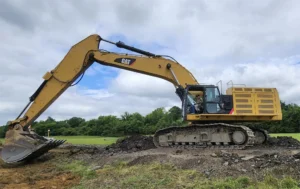 Homer City Generation announced the early completion of demolition and excavation work at its Indiana County, Pennsylvania, site, marking a major milestone in transforming the former coal-fired power plant into a gas-fired power plant and AI data center complex. Over nine months, partner Independence Excavating led 130 union workers and 65+ pieces of equipment to recycle over 112,000 tons of scrap material and excavate approximately 3 million cubic yards (comparable to the Great Pyramid’s volume), all while maintaining zero safety incidents.
  KLX Energy Services has acquired all assets of Wolfpack Rentals for $17 million, including $14 million at closing and two deferred payments of $1.5 million each. Wolfpack, founded in 2005 and based in Texas, provides surface rental equipment and services to oil and gas E&P, midstream, construction, and industrial customers across Texas and the Marcellus/Utica region, including regional offices and operations in West Virginia and Ohio. A better way to understand Wolfpack is to think of them as renting trailers for “man camps” — temporary settlements of oil and gas workers in remote locations.