
Kathairos Uses Nitrogen to Eliminate 1 MMT of CO2e from Pneumatics
 Kathairos Solutions says its liquid nitrogen systems have crossed a major climate milestone by eliminating 1 million metric tonnes (MMT) of CO2 equivalent by replacing methane with nitrogen to power pneumatic devices at oil and gas facilities. The Calgary-based company reports that about 3,000 systems have been deployed across North America, with more than 70 producer partners, eliminating roughly 1,250 tCO2e per day. Kathairos’ customers include many of the biggest drillers in the Marcellus/Utica. Read More “Kathairos Uses Nitrogen to Eliminate 1 MMT of CO2e from Pneumatics”
 The U.S. Court of Appeals for the Ninth Circuit on Tuesday upheld the dismissal of a lawsuit brought by 22 “youths,” aged 7 to 25 (kids used as a prop by Big Green groups), challenging three Trump executive orders promoting fossil fuel production and domestic energy investments. The appeals panel affirmed that the plaintiffs lacked standing, finding they failed to demonstrate the executive orders directly caused their injuries and could only speculate about future agency actions to implement those orders.
  Data center developers are turning to behind-the-meter natural gas generation as grid interconnection delays now exceed five years, making traditional utility connections commercially unworkable for AI-scale (hyperscale) facilities. Natural gas turbines and engines provide continuous, dispatchable baseload power that unreliable renewables cannot deliver at the required scale and reliability. However, this shift transforms data centers from energy consumers to energy producers, requiring sophisticated gas supply strategies including managing basis risk, securing firm pipeline transport capacity, evaluating supply reliability during site selection, and structuring contracts that accommodate volume growth.

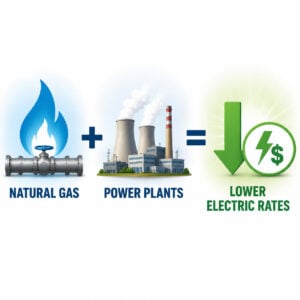 Pennsylvania families face rising electricity bills despite the state’s abundant energy resources. In an excellent op-ed, Bradford County Commissioner Doug McLinko explains that local utilities like Penelec and PECO don’t control electricity costs—they only deliver power. Prices are set by PJM Interconnection’s regional market, where costs are soaring as baseload power plants retire while demand from manufacturing, data centers, and AI surges. Pennsylvania produces massive natural gas from the Marcellus Shale but lacks sufficient modern power plants to convert it into electricity.
 In March 2024, the U.S. Securities and Exchange Commission (SEC), corrupted by the Bidenistas, voted 3-2 (three Democrats vs. two Republicans) to issue a final rule forcing all publicly traded companies to disclose their so-called greenhouse gas (GHG) emissions and the imaginary climate risks their businesses face (see
  From the very first whisper of the rumor that Devon Energy was sniffing around a buyout and merger with Coterra Energy, we wondered, speculated, and worried about what such a merger would mean for Coterra’s considerable Marcellus assets in northeast Pennsylvania. From the outset, activist investor Kimmeridge (with a stake in both Coterra and Devon) has pressured Devon to consider selling the Marcellus assets (see
  The Pennsylvania Department of Environmental Protection issued an air quality permit on May 18, 2026, to MarkWest Liberty Midstream, authorizing the expansion of its Harmon Creek Natural Gas Processing Plant in Washington County. The MarkWest name is still used, although the company is now MPLX. The DEP permit approval allows the addition of a third cryogenic plant and a second de-ethanization plant. A number of Big Green groups colluded in an attempt to block the permits, but their demands were ignored.
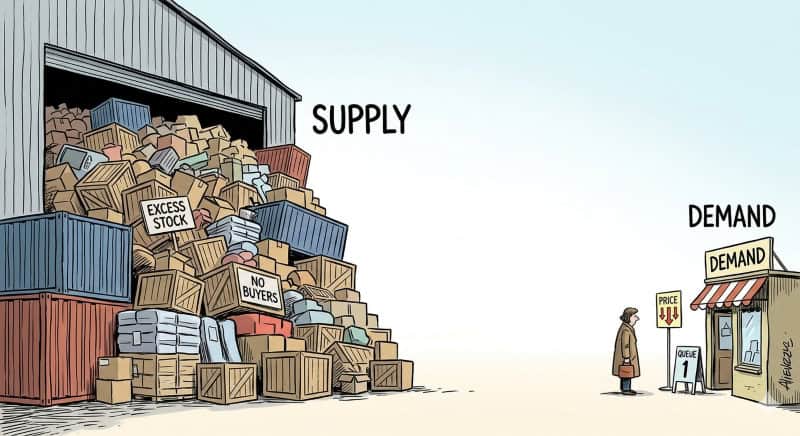
 U.S. shale producers face limited ability to rapidly boost crude output because drilled-but-uncompleted wells, or DUCs, have fallen to record lows. DUCs can bring production online in six to nine weeks, faster and cheaper than drilling new wells, making them a key industry buffer during supply shocks. Since the U.S.-Israeli war on Iran disrupted Middle Eastern oil flows, U.S. exports and refinery runs have surged, drawing down crude inventories sharply. But years of DUC depletion have reduced shale’s flexibility. Operators are now adding rigs and completion crews, especially in the Permian, to rebuild inventories as higher future oil prices support new drilling.
  Pennsylvania Republican gubernatorial candidate Stacy Garrity (currently the State Treasurer) yesterday called for a “total pause” on Pennsylvania A.I. data center development, arguing communities need time to update zoning, protect neighborhoods and farmland, strengthen noise rules, and secure transparency on water, energy, health, infrastructure, taxpayer, and ratepayer impacts. While we have expressed similar sentiment that common-sense guidelines are needed for data centers regarding water, noise, and energy use, we strongly disagree with a total statewide (and indefinite) “pause” on new projects. It sends the exact WRONG signal to the tech industry — that both Republicans and Democrats in the state are now blocking data centers in the Keystone State. Pausing or blocking data centers jeopardizes $92 billion worth of private investment in the state.
  Ohio Governor Mike DeWine announced on May 27, 2026, that he has directed the chair of the Ohio Tax Credit Authority to pause consideration of any new data center tax exemption requests. The pause comes while the Ohio General Assembly’s Joint Data Center Committee “studies” the growth of data centers in the state. DeWine noted that data centers previously granted sales and use tax benefits reported a total capital investment of $27.2 billion in 2025. The Tax Credit Authority will stop accepting new exemption proposals after a meeting next Monday, where it will consider one final proposal. DeWine said the move is a suspension of new exemptions, NOT a data center ban.