
Coalition Asks Congress to Halt Foreign-Funded Energy Lawsuits
 Honestly, this story is likely to spike your blood pressure the way it did ours. Breathe in, breathe out. Find your calm, center space. OK. Now you’re ready to hear about it. Foreign companies and billionaires are funneling money to American NGOs and law firms that use the money to attack (in court) fossil energy companies. If a lawsuit prevails and either a settlement or a judgment is entered, the foreigners who helped finance it receive a cut of the “profits” from the settlement. And they don’t pay taxes on their so-called profits! IT IS DISGUSTING and an outright attack on our country. AND IT MUST STOP. NOW. A group of 21 energy-related organizations has sent a letter to both the U.S. House and Senate, outlining a loophole in our laws that allows this immoral practice and urging them to fix it. Pronto. Read More “Coalition Asks Congress to Halt Foreign-Funded Energy Lawsuits”
 Last week, the combined Marcellus/Utica Baker Hughes rig count remained at 36 active rigs for the sixth week in a row. The M-U’s chief competitor, the Haynesville, maintained its count of 55 active rigs, operating 19 more than the M-U. The national count regained 1 rig last week (after losing it the week before), bringing the total back up to 563 rigs, the highest number the count has reached in a year. Baker Hughes said oil rigs held steady at 433 last week, while gas rigs rose by one to 122, their highest since early June, and other miscellaneous rigs held steady at eight.
  Last week, MDN brought you the great news that the Pennsylvania impact “fee” (tax on drilling) generated $243.8 million in fees collected from producers for the 2025 reporting year, a whopping 48% increase over 2024 (see
  In March, we told you about a deal made by Maryland Eastern Shore developer TeraWulf to acquire the retired Morgantown Generating Station in Charles County (on the Potomac River), proposing to transform the site into a massive natural gas-powered data center campus (see
  A new report from UConn’s Connecticut Center for Economic Analysis, bought and paid for by the anti-fossil fuel Connecticut League of Conservation Voters (meaning it’s useless propaganda), argues that the state’s past expansion of natural gas saddled customers with costly infrastructure upgrades without lowering fuel prices. The so-called report says most of the increased gas demand went to power plants—including three new or expanded facilities—rather than heating homes. The propagandists claim that Connecticut, a net electricity exporter, supposedly “absorbed pollution costs,” while benefiting neighboring states.
  Last week, the Federal Energy Regulatory Commission (FERC) launched a sweeping investigation into how power grids and utilities divide the soaring costs of supplying electricity to data centers. FERC issued six “show-cause” orders directing regional grid operators—PJM, SPP, MISO, CAISO, ISO New England, and NYISO—to prove that data center connection rates are “just and reasonable” and shield ordinary ratepayers from cost-shifting, or face federal fixes. FERC wants regional grids to speed up data center connections while protecting residential ratepayers. And they WILL do it, or else.
  Devon Energy completed its merger with Coterra Energy just over one month ago, on May 7, paying Coterra $21.4 billion in Devon stock (see
  This is one of those “man bites dog” (or in this case, “woman” bites dog) stories. Rebecca Tepper has, for years, worked for Maura Healey—first when Healey was Attorney General of Massachusetts, and later (now) in Healey’s role as Governor of the state. Tepper is Healey’s Secretary of Energy and Environmental Affairs. Healey is her boss and directs the policies that Tepper executes. So it was a complete shock for us to receive an email from Tepper’s office with a letter attached (see it below) that Tepper sent to Dan Dolan, President of the New England Power Generators Association. The letter encourages (we’d call it demands) New England’s power generators to sign up to receive natural gas during Enbridge’s open season for the recently announced Project Beacon.
 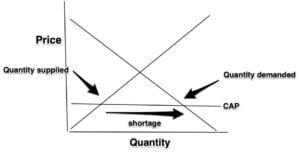 Pennsylvania’s Senate Republicans are speaking truth to power, calling out PA Democrat Governor Josh Shapiro’s policies as one of the primary reasons why PA residents pay more for electricity. And Joshie doesn’t like being called out. State Senate President Pro Tempore Kim Ward argues the state is losing out under a roughly $325-per-megawatt-day price cap on PJM Interconnection’s capacity auctions, approved by the federal government after a lawsuit by Gov. Josh Shapiro (see
  Invenergy announced Wednesday it is surrendering offshore wind leases in New Jersey, New York, California, and Maine, pivoting instead to natural gas and geothermal projects. Under a settlement with the Justice and Interior Departments, the Chicago-based developer will receive a $765 million partial refund (money it paid the government for the leases) and will invest in gas-fired plants in Indiana, Wisconsin, Iowa, Kansas, and Missouri, as well as Western geothermal projects. Big Wind is out, natgas is in! Wow, what a change.
  Rising natural gas demand across the U.S. Northeast and adjacent southern and western regions is driving a wave of pipeline projects that will let Marcellus/Utica producers boost output into the 2030s. A fourth installment of RBN’s series about gas market dynamics in the Northeast groups the planned expansions into five buckets: Pennsylvania projects, regionwide enhancements, MVP/Transco-tied projects, expanded Ohio capacity, and more distant related efforts. Highlights include National Fuel Gas’s Pennsylvania builds, Enbridge’s TETCO “Appalachia to Market II” upgrades that add compression and looping, and the MVP Boost Project, which expands Mountain Valley Pipeline from 2 Bcf/d to 2.6 Bcf/d by mid-2028 (via additional West Virginia and Virginia compression).
  In February, MDN told you about the Kriley v. XTO Energy lawsuit (see
  In February 2024, members of the South Carolina Public Service Commission (PSC) approved a proposed project to build a 1,020-megawatt (MW) gas-fired power plant in the state’s Lowcountry, in Colleton County (see
  Owensboro (KY) Municipal Utilities (OMU) is studying a proposed 545-megawatt natural gas power plant on roughly 30 acres at the former Elmer Smith Station site along the Ohio River, where coal generation ended in 2020. The developer, Green River East GenCo, holds an option to lease and has filed a grid interconnection application. OMU hired GDS Associates for a six-month study funded by the developer. OMU General Manager Tim Lyons stressed that the early-stage project isn’t guaranteed and that OMU won’t own the roughly $1 billion plant, citing customer risk. Instead, the plant may pursue power purchase agreements ahead of joining the MISO market in 2027. The plant will employ 15–20 workers.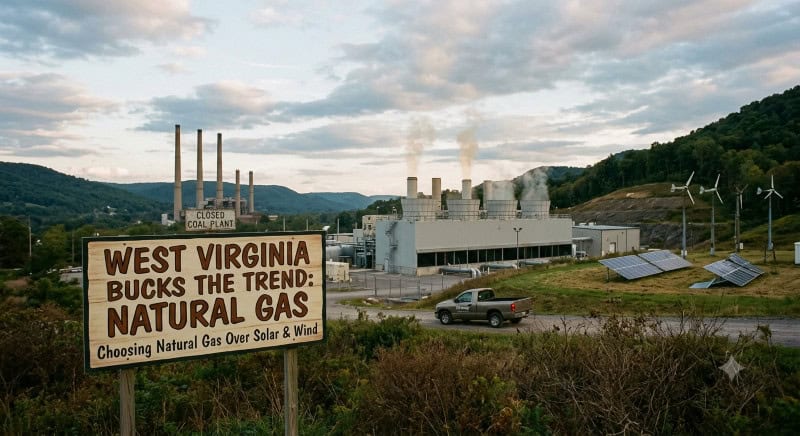
 Pennsylvania has become a hotspot for data center proposals, prompting community backlash, writes Penn State law professor Michael Helbing, whose hometown is Archbald, PA, a suburb of Scranton. You may recall that last week we wrote about another Scranton suburb (virtually next door to Archbald, see the map) by the name of Olyphant, and how the leaders of that borough had developed zoning regulations to protect residents yet allow data center projects to proceed (see