
New 953-MW Utica-Fired Power Plant Goes Online in Lordstown, OH
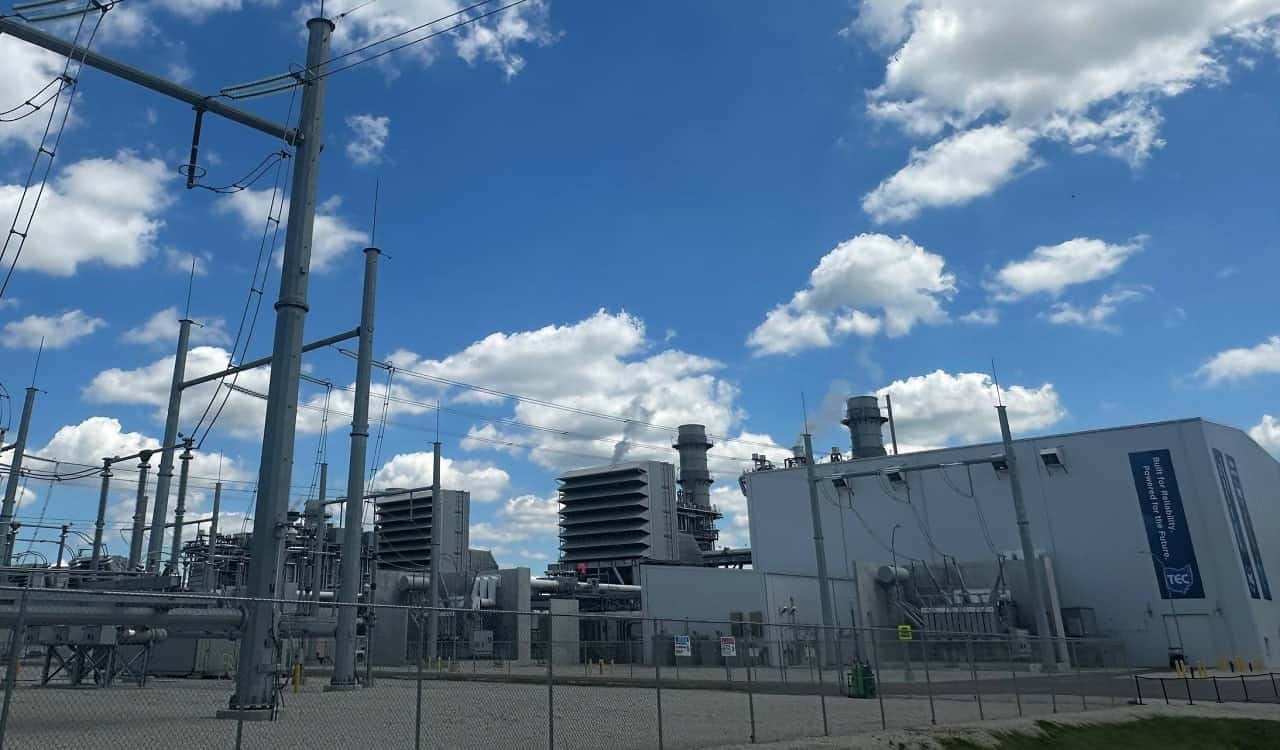
In January 2017, Clean Energy Future (CEF), based in Massachusetts, announced it would build a second Utica gas-fired power plant in Lordstown next to the Lordstown Energy Center (see Details on Newly Announced Trumbull Energy Center Electric Plant). In late 2022, the project finished securing its financing ($1.2 billion), and construction began (see Trumbull Energy Center Secures Financing, Construction Begins ASAP). The good news is that the plant, fed by Utica Shale gas, began operations earlier this year. However, the project’s owners celebrated its official launch yesterday. Read More “New 953-MW Utica-Fired Power Plant Goes Online in Lordstown, OH”
 This is a momentous occasion. Yesterday, the Federal Energy Regulatory Commission (FERC) issued a “Notice to Proceed with Construction” order authorizing Mountain Valley Pipeline (owned by EQT Corporation) to proceed with construction of MVP Southgate pipeline in North Carolina. This follows FERC granting permission to begin building Southgate in Virginia in April (see
  Pennsylvania radical green groups, including PennFuture, the Center for Coalfield Justice, and the Sierra Club Pennsylvania Chapter, continued a full-court press against AI data centers in the Keystone State yesterday. Just yesterday, we reported that Food & Water Watch had assembled dozens (perhaps one hundred at most) protesters in Harrisburg on Tuesday to support a bill (Senate Bill 1359) that would (if signed by Governor Shapiro) ban new data center development in PA for three years (see
  Last week, MDN told you about a group of landowners in Salem Township (Luzerne County), PA, near Wilkes-Barre, who had banded together to offer their land for sale to a data center project and potentially become very wealthy (see
  The thing about the political left is that they NEVER give up. EVER. And so, neither must we. The left wants to destroy new shale drilling in Pennsylvania. They couldn’t do it via regulation. They couldn’t convince a majority of residents that shale drilling is bad. So they search out other ways to make it happen. Among those ways are efforts to increase setbacks (distance from wells to homes and other structures) from the current 500 feet to over 3,200 feet, which would ban drilling in 95%+ of the state (see
 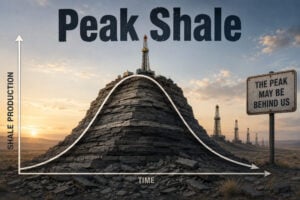 At the 2026 Unconventional Resources Technology Conference (URTeC) conference in Houston, Texas, experts debated whether U.S. shale has “peaked.” AllianceBernstein’s Bob Brackett noted that the sector has added 10 million bbl/d of oil since 2013, with Delaware Basin wells producing 300,000 bbl in two years, but flagged stalled productivity since 2021 and stubbornly low recovery factors (meaning less than 10% of the oil in the shale is actually recovered). Chevron’s Birlie Bourgeois called for a “next chapter” via AI, better fractures, and EOR surfactants, which have boosted productivity up to 20%.
  RBN Energy has published an excellent series of blog posts discussing pipeline projects under development within and beyond the Marcellus/Utica production area that, collectively, will enable at least a few more Bcf/d to reach customers in the Northeast, the Southeast, and the Midwest by 2030. Part 5 of RBN’s Northeast gas series (below) examines pipeline projects moving Appalachian Marcellus/Utica gas westward into Ohio, the Midwest, and to the Mid-South.
  Last week, MDN reported that the Energy Secretary of the very liberal Democrat regime that runs Massachusetts had written a letter to the New England Power Generators Association, asking power generators to get on board and support an expansion of the Algonquin Gas Transmission (AGT) pipeline (see
  Williams’ Transco Southeast Supply Enhancement Project (SESE) is a 55-mile, 42-inch-wide pipeline that will run through Pittsylvania County, Virginia, and Rockingham, Guilford, Forsyth, and Davidson counties in North Carolina. It will provide natural gas to Duke Energy customers. Big Green sued to overturn a federal water quality permit issued by the U.S. Army Corps of Engineers. Big Green wanted the court to block construction until the full case could be heard. In May, a three-judge panel from the U.S. Court of Appeals for the Fourth Circuit (4th Circuit) rejected arguments Big Green put forward that claimed the Army Corps’ decision was “arbitrary and capricious” and refused to block construction (see
  Just yesterday, MDN brought you the great news of the economic and jobs boom happening in Indiana County (Homer City), for a gas-fired AI data center project happening at what was Pennsylvania’s largest coal-fired power plant complex (see
 The Tennessee Valley Authority’s preliminary 2026 Integrated Resource Plan calls for adding 7 to 26 GW of natural gas capacity through 2040, citing load growth—driven largely by data centers and AI—that already outpaces its reference forecast and approaches its higher-growth scenario. TVA also plans up to 5 GW of nuclear, 1-5 GW of storage, 2-5 GW of unreliable renewables, and 2-3 GW of efficiency and demand response. It recommends pursuing solar while suspending wind, extending nuclear licenses, and continuing to operate its coal fleet.
  Seneca Resources, National Fuel Gas Company’s exploration and production arm, and Evolution Well Services announced a three-year strategic agreement to deploy electric hydraulic fracturing technology (e-fracking) across Seneca’s Appalachian Basin operations, including the Marcellus and Utica shales. The companies said Evolution’s electric frac systems, in-house power generation and field-gas conditioning will use Seneca’s own responsibly sourced natural gas to power completions. This isn’t the first time Seneca has used e-fracking.
 In early April, the Federal Energy Regulatory Commission (FERC) issued a Draft Environmental Impact Statement (DEIS) for the Kosciusko Junction Pipeline Project in Mississippi (see
  Earlier this month, Homer City Generation announced the early completion of demolition and excavation work at its Indiana County, Pennsylvania, site, marking a major milestone in transforming the former coal-fired power plant into a gas-fired power plant and AI data center complex (see
  Freeport LNG has become something of a punchline for its frequent outages. Except it’s no laughing matter. Outages at Freeport have happened so frequently that we’ve lost count (