
PA’s Democrat House Passes Bill to Allow Fracking for Geothermal
 Yet another rankly hypocritical move by the Democrats in the Pennsylvania legislature. Yesterday, every single Democrat in the PA House voted in lockstep (as they typically do, under the leadership’s complete control) to pass House Bill (HB) 2076, titled “Advancing Geothermal Energy Development.” The Dems were assisted by 16 Republicans who were (charitably) hoodwinked. No matter. The bill won’t pass in the Senate. But why point out this vote? Because the “advanced” geothermal energy that the House wants to promote and regulate uses the very same drilling rigs and fracking as is used to drill in the Marcellus shale, revealing the hypocritical lies of the Democrat left in demonizing fracking. But there’s another reason we’re highlighting this news: The environmental left (including House Democrats) is seeking to increase drilling setbacks in the state from 500 feet to 3,281 feet (and, in some cases, 5,280 feet). Do the House Dems realize the new setbacks would not only ban ALL shale fracking in the state but also all geothermal fracking? Read More “PA’s Democrat House Passes Bill to Allow Fracking for Geothermal”
 President Donald Trump’s proposal for a $33 billion, 9.2-gigawatt gas power plant in Ohio—funded by Japanese investment, including SoftBank—aims to address soaring energy demands from data centers (see
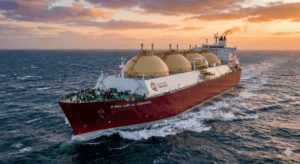 What happens on the other side of the world sometimes affects the Marcellus/Utica. So far, the Iran war has not affected prices (or demand) in the M-U for natural gas. However, if the war continues to drag on for months, it could potentially affect us by affecting the price of LNG on the world market. About one-fifth (20%) of global LNG trade depends on the Strait of Hormuz, with effectively no other way to get it out. Oil can, potentially, find other pathways out of the Persian Gulf (via overland pipelines). But such is not the case with LNG from Qatar.
  Last Friday, TC Energy reported a robust first quarter in 2026, highlighted by a 14% increase in comparable EBITDA to $3.1 billion and record delivery volumes across its North American pipeline network. For the Marcellus and Utica shale region, the standout development is the newly announced $1.5 billion Appalachia Supply Project on the Columbia Gas system. Slated for 2030, this expansion will add 0.8 Bcf/d of takeaway capacity to meet surging electricity and data center demand. Appalachia is explicitly identified as a major contributor to the growth in U.S. natural gas production, and is expected to account for over 55% of the growth by 2035.
  The West Virginia Supreme Court of Appeals ruled in favor of Equinor USA Onshore Properties Inc. (formerly Statoil) in a multi-million dollar tax dispute last Friday. The case has major implications for how the state calculates severance taxes for natural gas liquids. The decision reversed an intermediate court’s procedural dismissal, entitling Equinor to over $19 million in tax refunds for the years 2014, 2015, 2016, 2018, and 2019. The dispute centered on the definition of “gross proceeds” and the timeliness of administrative appeals in a years-long battle with the West Virginia tax commissioner.
  In January, MDN reported that Fidelis New Energy and 8090 Industries together had launched a new company, American Intelligence & Power Corporation (AIPCorp), to develop the Monarch Compute Campus in Mason County, West Virginia (see
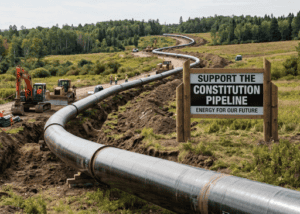 This is a critical moment for reliable, affordable energy in the Northeast, and your voice can make a difference. The Federal Energy Regulatory Commission (FERC) is currently accepting public comments on the Constitution Pipeline, representing an important step toward finally advancing this long-delayed project and a key opportunity for supporters to be heard. If you support building the Constitution Pipeline, please take a few minutes to submit a brief comment to FERC by May 4, 2026, because your input truly matters. We have instructions below on how to file a comment (it takes just a couple of minutes).
  Data centers are driving significant growth in natural gas demand in the Midwest, leading to several pipeline expansion projects. East Daley Analytics is tracking 24 GW of potential power generation capacity from Midwest data centers, which could create over 5 Bcf/d of new gas demand in a high-case scenario. The region’s appeal stems from ample land, water resources, and low-cost electricity, with Illinois and Wisconsin showing the largest potential growth (if the Democrat machine in those states doesn’t block it). To meet this demand, over 3.2 Bcf/d of pipeline expansions are planned for six different pipelines. While some of the pipelines flow molecules from other regions, they ALL flow at least some Marcellus/Utica molecules. We have the list of pipelines looking to expand below.
  In December, the Pennsylvania Environmental Quality Board (EQB) accepted a petition by radical green groups, including the Clean Air Council and Environmental Integrity Project, to “study” the issue of increasing setbacks for shale drilling so far that it would ban ALL new Marcellus/Utica drilling in the Keystone State, which is no exaggeration (see
  The Rover Pipeline is a 711-mile, $6.3 billion natural gas transmission pipeline operated by Energy Transfer, transporting up to 3.25 billion cubic feet per day (Bcf/d) of Marcellus and Utica Shale gas. It connects supply areas in West Virginia, Pennsylvania, and Ohio to markets in the Midwest, Great Lakes, and Canada. As of April 29, 2026, Blackstone (via its Energy Transition Partners funds) has sold its entire 32.4% ownership stake in Rover to Ares Management. Blackstone originally acquired its ownership stake in 2017 to fund the construction of the pipeline.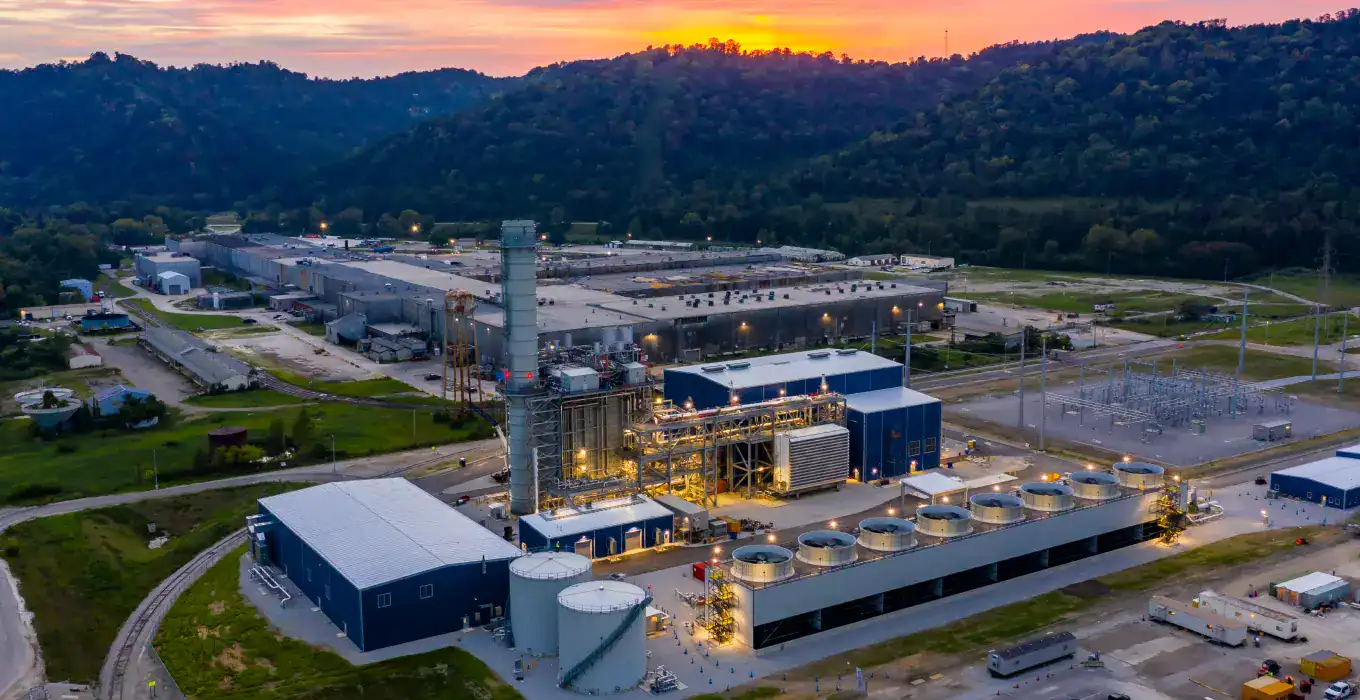
 Just yesterday, MDN told you that three left-wing judges from the 4th Circuit (“Circus”) who hate the Mountain Valley Pipeline (MVP) were back at it, badmouthing an extension of MVP into North Carolina, called Southgate (see
  Although Pennsylvania Governor Josh Shapiro (J.S.) has just hired a lapdog to attack the PJM Interconnection grid as part of his campaign for president (see