
How Much Will New York Pay if It Loses Frack Ban Lawsuit?
 About a month ago, MDN brought you the exciting news that a father and son who own land in Upstate New York (not far from MDN HQ) have sued New York State for “taking” their right to allow shale drilling and fracking under their land (see New Lawsuit Brought Against NY Claims State Frack Ban a “Taking”). No doubt the lawsuit will take years to play out, but at the end of it all, if the state loses and is forced to pay landowners (not just these two, but all affected landowners), how much money are we talking about? Read More “How Much Will New York Pay if It Loses Frack Ban Lawsuit?”
 In February 2024, members of the South Carolina Public Service Commission approved a proposed project to build a 2,200-megawatt (MW) gas-fired power plant in the state’s Lowcountry, in Colleton County (see
  According to RBN Energy, the Northeast natural gas market is entering a new phase after years of stalled pipeline development and Appalachian takeaway constraints. Once a premium destination for Gulf Coast and Canadian gas, the region became a major supplier as Marcellus/Utica production surged, reversing flows toward the Southeast and Gulf Coast. Recent legal, regulatory, and cost hurdles have frozen major projects, with the Mountain Valley Pipeline serving as both a milestone and a warning. Now, under a friendlier regulatory climate, new expansions toward New York/New Jersey and New England are advancing.
  Energy Transfer LP (ET) owns and operates one of the largest and most diversified portfolios of energy assets in the U.S., with approximately 140,000 miles of pipeline and associated energy infrastructure. ET’s strategic network spans 44 states and includes assets in all major U.S. production basins, including the Marcellus/Utica. The company issued its first quarter 2026 update last week. ET sees the Marcellus/Utica region as a key source of NGL supplies for its export operations, particularly exports from the Marcus Hook terminal near Philadelphia.
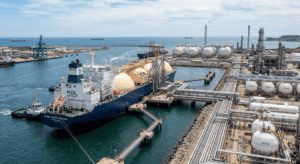
  The Philadelphia Gas Commission, for a second time, has postponed a vote on Philadelphia Gas Works’ (PGW) $182 million proposal to replace and expand its natural gas liquefier (LNG plant) in Port Richmond. The commission’s staff and the Public Advocate recommend rejecting the project, arguing it is oversized and could burden customers with unnecessary debt. They also cite incomplete plant and project designs. PGW argues the upgrade is crucial for safety and affordability, preventing potential harm to customers during cold winters and avoiding the need to truck in liquefied natural gas (LNG). Instead of approving the project, the Commission voted to spend $1 million on an environmental impact study and $4 million for an engineering study. That is, they voted to procrastinate.
  At a Pennsylvania DEP hearing in Indiana County, environmental extremists opposed a proposed 5.8-mile, 30-inch natural gas pipeline serving Homer City Redevelopment’s planned $10 billion, 4.5-GW gas-fired power plant and hyperscale data center campus. The pipeline would cross streams, wetlands, and floodways, potentially affecting Muddy Run, Blacklick Creek, and various tributaries. Reminding us of Chicken Little in The Sky is Falling, speakers warned of water pollution, setbacks to acid mine drainage restoration, drought-related water stress, and inadequate transparency around the fast-moving project.
  The Iroquois Gas Transmission’s Enhancement by Compression (ExC) project will increase horsepower at three compression stations — two in New York and one in Connecticut — by an extra 125 MMcf/d, to flow more Marcellus/Utica gas into New York City and New England. The NY Department of Environmental Conservation (DEC) approved the permits for the NY compressors with the condition that Iroquois pays a $1.5 million “contribution” (we call it a bribe) to the “Disadvantaged Community Benefit Program” (see
  The U.S. Energy Information Administration (EIA) issued its latest monthly Short-Term Energy Outlook (STEO) yesterday. Using the official EIA dartboard, the STEO is the agency’s monthly best estimate of where energy prices and production will go over the next 12 months. There was a revision to the agency’s prediction about the spot price (at the Henry Hub) for natural gas in 2026 and 2027. For the second month in a row, the EIA has significantly lowered its predictions for the HH spot price. Last month, EIA predicted the spot price would average $3.67 per million British thermal units (MMBtus) this year, and $3.59 next year (see
  Enbridge is exploring a major expansion of its Algonquin Gas Transmission pipeline into New England, a move sure to inflame environmental extremists. According to super-secret sources blabbing to E&E News, the company briefed the Trump administration’s National Energy Dominance Council and potential buyers about the project. Details remain preliminary and undisclosed. The proposal comes as Democratic governors in Connecticut, Massachusetts, and Rhode Island face pressure over high energy costs while pursuing nutty climate goals.
  Last December, MDN told you that three anti-shale drilling groups—the PA Council of Trout Unlimited, the Keystone Trails Association, and the Responsible Drilling Alliance—requested the Pennsylvania Department of Environmental Protection (DEP) hold a hearing on the Chapter 105 permit requested for a 3.9-mile shale gas access road and staging area proposed by Pennsylvania General Energy (PGE) in the Loyalsock State Forest (see
  National Fuel Gas Company (NFG) is an integrated natural gas company with a regulated utility business, a shale drilling business (Seneca Resources), and a pipeline business (NFG Midstream, Empire Pipeline). The company issued its fiscal second quarter update two weeks ago, which is everyone else’s calendar first quarter update. The good news is that NFG is upgrading its Line N natural gas pipeline to carry an additional 94,000 Dth/d (90 MMcf/d) of Marcellus/Utica shale gas. The bad news is that Seneca produced 102.0 Bcf of natural gas, a decrease of 3.5 Bcf, or 3%, from the prior year, largely due to weather-driven completion delays and “typical natural gas production declines on producing wells.”
  There’s a reason the University of California, Berkeley, is nicknamed “Berserkly.” It is a hotbed of bright red Communist philosophy and teaching. It produces people who are, well, berserk. And yet, in an unguarded moment of honesty and lucidity, a UC Berkeley researcher has just published a study outlining how natural gas from shale is saving American consumers on the order of $200 billion each year, a cumulative total of $5 trillion or more since 2007. This is astonishing — not only because of how much Americans have saved, but because UC Berkeley is willing to share that truth with the world, damaging its own reputation with the wacky, badacky left.
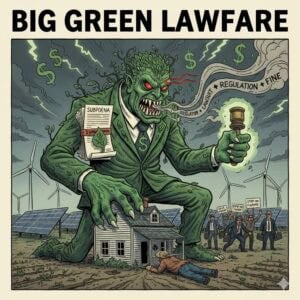
  The federal EPA has proposed new rules allowing gas-fired power plants, data centers, and factories to begin constructing non-polluting components like piping, wiring, and cement pads before receiving air emission permits. EPA Administrator Lee Zeldin stated that this aims to streamline critical infrastructure projects and advance technological development, particularly for AI. Critics, including Big Green lawyers, argue these changes undermine the Clean Air Act by making it harder for communities to “protect air quality.” More importantly, Big Green says it will make it harder for regulators to reject permits after significant investment has already been made. Well, duh! That’s the point.
  U.S. energy production reached a record 107 quadrillion British thermal units in 2025, up 3.4% from 2024 and marking the fourth straight annual record high. Growth was led by all-time highs in natural gas, crude oil, natural gas plant liquids, and unreliable renewables. Dry natural gas output rose more than 4% to 39 trillion cubic feet, with gains concentrated in Appalachia, the Permian, and Haynesville. Incidentally, natural gas has been the largest source of U.S. domestic energy production since 2011. Who knew?!
  It’s been nearly a year since we last wrote about WhiteHawk Energy (now undergoing a rename to WhiteHawk Minerals), a natural gas mineral and royalty interest owner in the Marcellus and Haynesville plays, with over 3.4 million gross acres under lease for drilling (see
  In March 2025, the Wall Street Journal reported that Shell is “exploring a potential sale of its chemicals assets in Europe and the U.S.,” which includes the Monaca (Beaver County, PA) ethane cracker complex (see