Can U.S. Exporters Plug the Qatar LNG Supply Gap? Yes We Can!
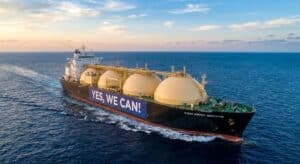 You’ve seen the headlines and maybe read the news that “Qatar supplies 20 percent of the world’s LNG.” Iran bombed Qatar’s LNG export facility in early March and took it offline. The world press had a stroke, predicting a natural gas Armageddon without 20% of LNG coming from Qatar. But what’s this? U.S. LNG exporters “have so far offset the drop in shipments from Qatar following Iranian attacks on its facilities” and the closure of Hormuz. We’ve been able to make up for the lost exports from Qatar. Read More “Can U.S. Exporters Plug the Qatar LNG Supply Gap? Yes We Can!”
 Last November, the Buckeye Environmental Network, backed by lawyers from the controversial Earthjustice, sued the Ohio Department of Natural Resources (ODNR) over permitting two new shale wastewater injection wells in the Marietta area, claiming the standard used to evaluate the wells was old and out-of-date (see
  CNX Resources Corporation issued a press release yesterday to highlight its 2025 sustainability achievements, marking the first full year (2025) of “dynamic ESG reporting,” moving from annual reports to quarterly scorecards and continuous website updates. This approach, rooted in the company’s “Radical Transparency” philosophy and “Appalachia First” strategy, provides timely, transparent disclosures on environmental stewardship, including emissions data, expanded public notice of violations, and community investments.
 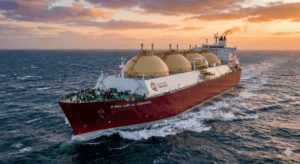 The Golden Pass LNG terminal is a liquefied natural gas terminal and regasification facility in Sabine Pass (Port Arthur), Texas. It is among the largest LNG facilities in the world. It can accommodate up to 15.6 million metric tons (MT) of LNG per year, the equivalent of approximately 2 billion cubic feet of natural gas per day (Bcf/d). Earlier this week, MDN told you that the facility’s very first official cargo carrier had arrived to “fill ‘er up” (see

 EQT Corporation delivered its latest quarterly update yesterday for the first quarter of 2026. EQT sees the materialization of “in-basin demand growth” improving Appalachian market conditions through the end of the decade. The company says it is positioned as a preferred partner for large-scale power, midstream, and data center projects in the region. EQT plans to continue drilling and completing a significant number of wells throughout 2026, indicating ongoing development in the Marcellus and Utica regions. However, the company is curtailing (restricting) 10-15 Bcf (billion cubic feet) of production during the second quarter due to current low prices.
  How many times over the years have we reported on (and cheerleaded for) gas-fired power plants to get built in West Virginia? MANY times. Dozens, maybe hundreds of posts about this topic. Yet, in all the time we’ve been writing MDN (since January 2009), not a single, solitary *new* gas-fired power plant has been built in the Mountain State (although there are four existing, older gas-fired plants). Not one new plant! Until now. Kindle Energy yesterday announced it has broken ground at Wolf Summit Energy, a previously announced fully contracted, 600-megawatt greenfield combined-cycle gas turbine (CCGT) power generation facility in Harrison County, WV.
  Williams has commenced construction of its Transco Northeast Supply Enhancement (NESE) project, extending through northeast Pennsylvania, New Jersey, and New York (see
  Earlier this year, the Federal Energy Regulatory Commission (FERC) approved the Williams Transco Southeast Supply Enhancement Project (see
  PowerTransitions, an independent power producer specializing in redeveloping legacy power facilities, has agreed to acquire five New York gas-fired power plants — Batavia, Hillburn, Massena, Shoemaker, and Sterling — totaling 323 megawatts (MW) from Alliance Energy Group affiliates. Terms of the deal were not disclosed. The deal marks PowerTransitions’ entry into the New York market, bringing its total portfolio to approximately 550 MW across seven stations spanning multiple NYISO zones. PowerTransitions says the acquired sites offer “brownfield redevelopment potential” for new power generation and battery storage. Frankly, this one is a head-scratcher for us.
  The Iroquois Gas Transmission’s Enhancement by Compression (ExC) project will increase horsepower at three compression stations — two in New York and one in Connecticut — by an extra 125 MMcf/d, to flow more Marcellus/Utica gas into New York City and New England. The NY Department of Environmental Conservation (DEC) approved the permits for the NY compressors with the condition that Iroquois pays a $1.5 million “contribution” (we call it a bribe) to the “Disadvantaged Community Benefit Program” (see
 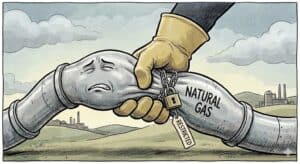 Natural gas flows along the Rover Pipeline have been cut by 387 MMcf/d (out of 3.25 – 3.4 Bcf/d) due to maintenance at the Bulger Compressor Station, which is expected to last through the end of the month, curbing Appalachian takeaway capacity to the Midwest and Canada. Additionally, the MarkWest Harmon Creek gas processing plant in Washington County, PA, is reported to be offline due to this work.
  Yesterday, the Pennsylvania Department of Environmental Protection (DEP) informed the House Environmental and Natural Resource Protection Committee that it remains uncertain about the final contents of its plan to reduce methane emissions from oil and gas operations, which is due to the EPA in January 2027. That is, they don’t have a clue. This cluelessness follows an extensive public comment period on a proposed plan for onerous regulations (developed during the dark Biden years) that aims to satisfy federal obligations primarily through general permits and references to federal standards.
  Halliburton, the world’s second-largest OFS (oilfield services) company, issued its first quarter 2026 update yesterday. CEO Jeff Miller said, “In North America, I see clear signs that we are in the early innings of a recovery.” Cool. Of course, he’s talking about oil drilling, mostly. While the update and earnings conference call did not specifically mention the Marcellus/Utica, they did include information highly relevant to our region. In particular, the company prominently mentioned its electric fracking “e-fleets” and said that the current low price of natural gas represents a significant opportunity for drillers to save money by using it instead of diesel to power fracking equipment.