
Driller Wins Right to Cancel Pipeline Contract via Bankruptcy
 If an upstream (drilling) company with a long-term pipeline contract files for bankruptcy, does that give the company the right to break its pipeline contract? A major shipper on the Rockies Express (REX) pipeline, Ultra Resources, filed for bankruptcy with the express plan to skip out on its obligations to REX (see REX Pipe Asks FERC to Prevent Shipper from Breaking Contract). The Federal Energy Regulatory Commission (FERC) stepped in to say it (FERC) has jurisdiction to decide whether or not Ultra (and by extension, other companies) can wiggle out of their contracts via bankruptcy. The U.S. Court of Appeals for the Fifth Circuit recently ruled that FERC does not have the lead in such cases–that a decision about breaking a pipeline contract will be up to the bankruptcy court instead. This is bad news for pipeline builders.
Read More “Driller Wins Right to Cancel Pipeline Contract via Bankruptcy”
 Pennsylvania, Ohio, and West Virginia are all scrambling to form working groups or other alliances in an attempt to be THE state chosen for one of four regional hydrogen hubs funded by the recently passed so-called Biden infrastructure bill (see
 Environmental radical Freeda Cathcart, who was once arrested for resisting and interfering with a U.S. Forest Service agent at the site of tree cutting for Mountain Valley Pipeline in Giles County, VA (see
 In early March MDN brought you information from the Toronto Financial Post that said the Ukrainian crisis has put East Coast Canada LNG export facilities “back on the map” (see

 Each quarter NGI (
 It seems that every post we write about banks with respect to fossil fuels is about banks that have decided to stop lending and participating in loans made to fossil fuel companies. It’s time to start talking about the good guys–the banks that continue to make fossil energy loans. Sitting at the top of the list, according to the lefties at Bloomberg, is Wells Fargo Bank. In 2021 Wells Fargo put together (as “bookrunner”) some $28 billion of fossil energy deals. The bank is going great guns in 2022 too. It’s time to give Wells Fargo a great big “attaboy” for continuing to fund fossil fuel projects.
 It’s always a sad day when radical Big Green groups win a victory over American energy. Such has happened with the New Fortress Energy (NFE) LNG plant proposed for Wyalusing in Bradford County, PA. Three Big Green groups challenged an extension for a permit previously issued for a new liquefaction facility proposed by NFE located in northeastern PA. NFE has caved and agreed that should it proceed with the project, it will need to file all over again and get a new permit–which doesn’t look likely.
 One year ago, in March 2021, Eureka Resources announced plans to build a Marcellus Shale wastewater treatment facility in Dimock (Susquehanna County), Pennsylvania (see
 Drillers have their certification schemes to prove the natural gas they extract is “responsible”–meaning most if not all of the methane doesn’t leak as it’s extracted (see
 You can’t quantify it. Heck, you can’t even actually prove it’s happening. But the U.S. Securities and
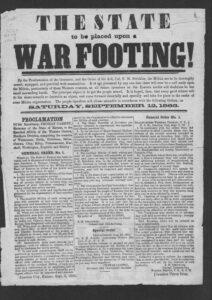 William S. Scherman worked as general counsel (the head lawyer) for the Federal Energy Regulatory Commission (FERC) from 1990-1993, during the presidency of George H.W. Bush (the elder Bush). Scherman worked in FERC when Iraq invaded Kuwait. President Bush wanted options from FERC, asap, about what the agency could do to help alleviate an energy crisis being caused by madman Saddam Hussein. Sound familiar with what’s happening today? Back then FERC went on a “wartime footing” and relaxed rules that restricted the output of traditional and alternative electric generators and granted special permission for natural gas to be produced and transported flexibly and freely nationwide. Scherman says it’s time for FERC to go on wartime footing again.
 In the early days of the Marcellus and Utica Shale, a number of studies and predictions were made about how the industry would bring tens of thousands of jobs and inject billions of dollars into state economies. In Ohio, a Cleveland State University (CSU) report issued in 2012 predicted that Ohio’s then-growing fracking industry would add 66,000 direct and indirect jobs and $5 billion a year to the state’s economy by the end of 2014 (see
 In May 2021 MDN told you that Louisville Gas and Electric Company (LG&E) had won Kentucky state approval to build a new 12-inch, 12-mile pipeline near Louisville to supply gas to 62 homes and businesses that can’t connect to LG&E’s local natgas utility system (see