
KM’s Elba Island LNG Fires Up 8th Liquefaction Unit
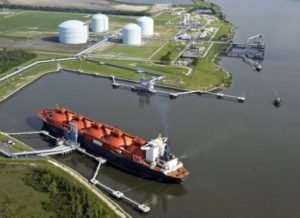
Last December the very first load of Marcellus molecules liquefied at the Elba Island, Georgia LNG export facility was loaded onto a ship and headed to Pakistan (see Elba Island Finally Exported First Marcellus LNG Cargo on Friday). Elba Island is a series of 10 small liquefaction units. At last check, in early March, the first five units were up and running (see First 5 Elba Island LNG Mini-Plants Now Online Exporting Marc Gas). You can add another couple of units to the list.
Read More “KM’s Elba Island LNG Fires Up 8th Liquefaction Unit”
 If an upstream (drilling) company with a long-term pipeline contract files for bankruptcy, does that give the company the right to break their pipeline contract? A major shipper on the Rockies Express (REX) pipeline, Ultra Resources, is expected to file for bankruptcy very soon. REX is concerned Ultra may claim its bankruptcy is a “get-out-of-the-contract free” card. REX has asked FERC to preemptively “assert its jurisdiction” as the arbiter of whether or not companies like Ultra can skip out of contracts.
 Oilandgaspeople.com was established 10 years ago to connect job seekers with companies looking to employ them, throughout the oil and gas industry. Oilandgaspeople.com has been merged into a new site called
  Josh Fox, the propagandist who made the Gasland fictional documentary bashing natural gas (see
  Last week MDN told you that the second phase of Sabal Trail, a $3.2 billion, 515-mile interstate natural gas pipeline in Florida, Georgia, and Alabama to deliver (in part) Marcellus gas to the southeast was approved by the Federal Energy Regulatory Commission (FERC) and is coming online now (see
  LNG Limited (LNGL), based in Australia, has been working on a couple of North American LNG export projects over the past half-decade or more. One of them, called Bear Head, would be built in Nova Scotia, Canada and (potentially) export Marcellus/Utica molecules. The other, Magnolia LNG, would be located in Louisiana and yes, potentially export M-U molecules as well. LNGL was in the process of selling itself and its LNG projects to Singapore investor LNG9 PTE for $75 million when LNG9 pulled out of the deal (see
  Last July MDN broke the news that LOLA Energy had filed a lawsuit in Greene County, PA against EQT for allegedly drilling shale wells under property EQT formerly leased, but property for which the leases had lapsed and were subsequently scooped up by LOLA Energy II (see
  Not unsurprisingly, the U.S. rig count (for both oil and gas, although mainly oil) continues to plummet week after week. The latest numbers show rigs taken out of active duty (laid down) decreased another 59 over the past week. That’s better than the 76 laid down the week before (see
  Everyone is still trying to get their heads around what has and is happening to the economies and energy markets around the world, suffering huge blows from being shut down due to the COVID-19 coronavirus pandemic. Everyone has their own models and predictions. The latest is the International Energy Agency which has just published its World Energy Review–an analysis of how the virus pandemic is likely to affect world energy markets based on what has happened over the past 100 days.
 In a piece of stellar investigative journalism and reporting, MDN friend Bob Downing (at
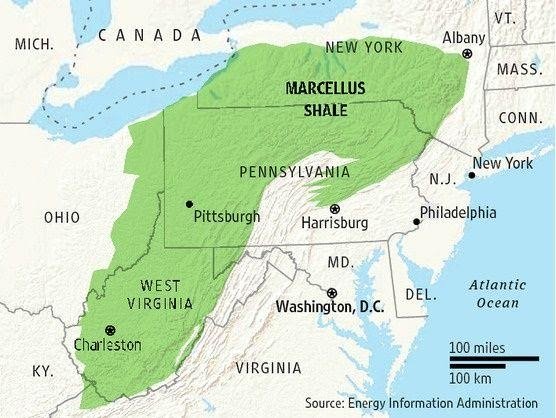
 A partnership between Penn State EMS Energy Institute researchers and a Pittsburgh-based start-up company may hold the answer to reducing so-called greenhouse gas emissions while also paving the way to disrupt the chemical and material industries. The collaboration has resulted in several research projects that aim to “reinvent” both coal and natural gas as clean, cost-effective sources of fuels and high-performance materials.
 Our favorite government agency, the U.S. Energy Information Administration, published a blog post yesterday to outline the differences between the oil markets and natural gas markets and how each market responds to world events vis-à-vis pricing. EIA says crude oil markets respond quickly and often dramatically to world events, but natural gas markets have tended to be driven by regional factors and have been less connected to the international market. Oil markets are from Mars, natgas markets are from Venus.