
M-U Pipeline Expansion Scenarios Could Reshape U.S. Gas Market
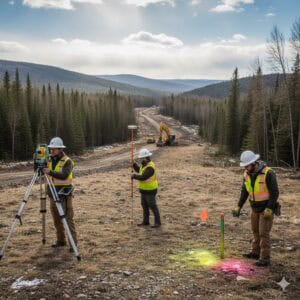 Powerhouse consulting firm McKinsey & Co. has released a new report titled, “The infrastructure imperative: Who benefits from pipeline expansion?” The report digs into some of the key considerations, upsides, and challenges of pipeline expansion for consumers, operators, and beyond. In the report, McKinsey analysts model two hypothetical infrastructure development plans for the Appalachian Basin—northward pipeline expansion and southward pipeline expansion—and compare them to a baseline scenario. The report finds a southward expansion could potentially reduce costs to consumers by $4-5 billion from 2025 to 2030 vs. reducing costs by $2-3 billion with a northward expansion. Read More “M-U Pipeline Expansion Scenarios Could Reshape U.S. Gas Market”
 Venture Global’s Calcasieu Pass (CP) LNG export facility in Louisiana began operations in March 2022 (see
  Donald Trump once famously said, “We’re gonna win so much. You’re gonna get tired of winning. And you’re going to say, ‘Please, please, it’s too much winning. We can’t take it anymore. Mr. President, it’s too much.’ And I’ll say, ‘No, it isn’t. We have to keep winning. We have to win more!'” He’s keeping his promise to win! However, we’re not tired of winning just yet. 😉 Last Friday, Williams announced that both New York and New Jersey have issued the required federal water permits needed to build the Transco pipeline project called the Northeast Supply Enhancement (NESE). President Trump made a deal (so the rumor goes) with NY Gov. Kathy Hochul, allowing her to continue building a $5 billion offshore wind farm boondoggle in return for building NESE and another project, the Constitution Pipeline (see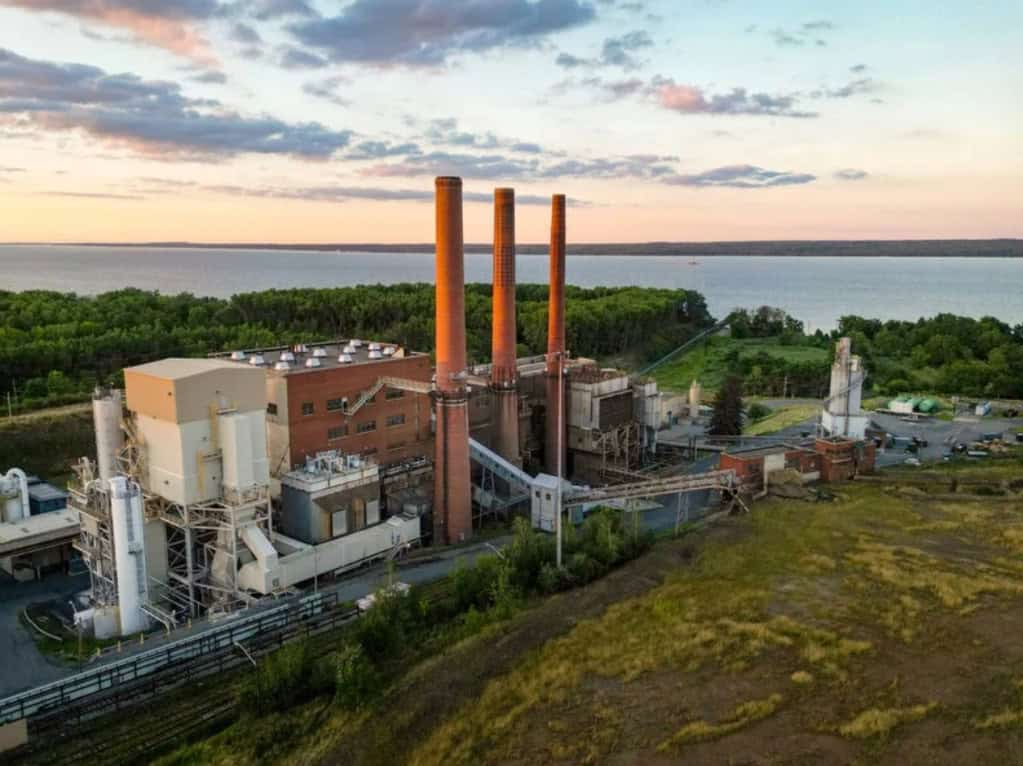
 Last week, the Pennsylvania Public Utility Commission (PUC) approved a Tentative Order by a 3-2 vote, proposing a statewide model tariff (tax) to manage the growing impact of large-load customers, such as AI data centers, on the electric grid. The goal is to encourage investment and job growth while protecting existing ratepayers from cost-shifts and ensuring reliability. The PUC failed. The proposed order was passed on a partisan basis, with the three Democrat commissioners voting to make it harder and more expensive for data centers to locate in the Keystone State, potentially jeopardizing $92 billion of investments promised to the state related to data centers (see
 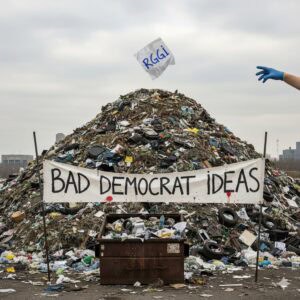 We may finally, after seven long years of torture, have a resolution to the issue of forcing Pennsylvania to join the Regional Greenhouse Gas Initiative (RGGI) carbon tax scheme. The rumors are swirling around Harrisburg that the Democrats (including Governor Josh Shapiro) and Republicans in the state Senate are close to a budget deal. The budget was supposed to be adopted by July 1st. It’s now over four months late, and school districts and government agencies dependent on state funding are hurting. The rumor is that the budget deal includes a provision to dump PA’s participation in RGGI. Lefty environmentalists are having a CO2-emitting cow at the news.
  In April, we told you that Energy Transfer’s (ET) Lake Charles LNG project had landed a new partner to help pay for the project, MidOcean Energy, which will cover 30% of the cost of building the plant (see
  Last week, the Baker Hughes U.S. national rig count gained rigs again after dropping rigs in the prior week. The national count added two rigs, going from 546 to 548. The BH rig count has added rigs in three of the last four weeks. Rigs in the Marcellus/Utica remained the same last week at a combined 37, the same number for six weeks in a row. Pennsylvania remained unchanged at 17 active rigs (six weeks in a row). Ohio was the same at 13 rigs (seven weeks in a row). And West Virginia maintained its 7 rigs, which it has operated since May 30 (24 weeks in a row). There were 23 rigs targeting the Marcellus and 14 targeting the Utica.
  The mystery may have been solved by MDN… In September 2022, the Delaware River Basin Commission (DRBC) voted to extend a permit to build a special LNG export dock along the shoreline of the Delaware River in New Jersey by an extra three years (see
  Bluegrass Power Generation has proposed an 800-megawatt, $2.5 to $3 billion natural gas-fired electric generation facility in Fayette County, Ohio, pending approval from the Ohio Power Siting Board. The plant is designed to operate “behind-the-meter,” exclusively supplying power to dedicated nearby third-party facilities, like the L-H Battery Company (Honda/LG Energy Solution), for at least 30 years, disconnected from the main power grid. The project is expected to create 500 construction jobs and 30 permanent operational positions, generating significant tax revenue and strengthening Ohio’s high-tech infrastructure to support future industrial growth. Construction is currently slated to begin in February 2026.
  Mon Power and Potomac Edison are local utilities and subsidiaries of FirstEnergy Corp. The two companies recently submitted an Integrated Resource Plan (IRP) to the West Virginia Public Service Commission, outlining how they will continue to deliver reliable, cost-effective power to West Virginia homes and businesses over the next decade (see
  We are SO tired of activist judges appointed by Obama/Biden ruling against the will of the majority (and against the Constitution). It just happened again earlier this week. Before leaving office, the Biden Department of Energy (DOE) implemented new regulations that essentially ban gas-fired furnaces and water heaters (see
  In January 2023, Ohio House Bill (HB) 507 became law with the signature of Gov. Mike DeWine (see
  Following some intense conversations between President Trump and New York Governor Kathy Hochul earlier this year, she caved (according to the White House) and agreed to allow two long-stalled pipeline projects—the Constitution and NESE—to get built in NY in return for Trump allowing her to continue to sink $5 billion into an offshore wind project (see
  Yesterday, the Pennsylvania House Environmental and Natural Resource Protection Committee (the House has a one-Democrat majority) held a hearing on a proposal by Penn America to locate a 1 Bcf/d (billion cubic feet a day) LNG natural gas export facility in the City of Chester, Delaware County. The hearing was hosted by Rep. Carol Kazeeme (D-Delaware) and was exclusively attended by Democrats who were there to bash the project. There was no “How can we make this better?” There was only, “No way, no how, go to hell.” That’s the new Democrat Party and its political “leaders.”
  The Regional Greenhouse Gas Initiative (RGGI) is a carbon tax scheme. The RGGI tax is supposed to reduce the amount of carbon dioxide (CO2) produced by gas- and coal-fired power generators. The intent is to force fossil fuel power generators out of business. That’s what RGGI is designed to do, all in the name of reducing CO2. However, the only thing it accomplishes is to drive electricity prices higher. A new study from the Lawrence Berkeley National Laboratory (full copy below) finds that every state that belongs to RGGI has higher electricity prices than Pennsylvania. And each of those RGGI states saw their prices jump more over the past five years than the national average.