
Supreme Court Restores Nationwide 12 Permits for MVP, Other Pipes
 In May a Montana federal judge appointed by Barack Obama capriciously blocked the use of U.S. Army Corps of Engineers Nationwide Permit (NP) 12 for all pipeline projects across the country (see Obama Judge Blocks New Pipe Projects that Use NP12 Permit). In June the Trump administration asked the U.S. Supreme Court to lift the judge’s ban (see Trump Administration Asks Supreme Court to Lift NP12 Permit Ban). Late yesterday the Supremes did just that–lifted the ban. NP12 can now be used for pipeline projects other than the Keystone XL project.
Read More “Supreme Court Restores Nationwide 12 Permits for MVP, Other Pipes”
 Brian Lego, research assistant professor in the West Virginia University (WVU) Bureau of Business and Economic Research, says while canceling the $8 billion Atlantic Coast Pipeline (ACP) project is a blow to WV because of lost jobs, the even bigger impact will be less new markets for Marcellus/Utica gas, meaning growth in M-U drilling will be stunted.
 On Sunday, June 28, Chesapeake Energy, with major operations in the northeast Pennsylvania Marcellus, filed for bankruptcy (see
  We’ve had enough of activist leftist judges attempting to shut down the will of the people by using obscure legal loopholes as their justification–when the real reason for the action is to block President Trump and fossil fuels. A U.S. District Court judge appointed by Barack Hussein Obama, Judge James Boasberg (D.C. Circuit) has ordered the Dakota Access oil pipeline in the Midwest to stop flowing oil because he doesn’t like it.
 Dominion Energy has decided to exit the natural gas pipeline and storage business, selling off its vast network of pipelines in the Marcellus/Utica (and beyond) to Warren Buffett’s Berkshire Hathaway for $9.7 billion ($4 billion in cash, the rest in assumed debt). In a related announcement, Dominion said it is throwing in the towel and canceling the 600-mile Atlantic Coast Pipeline (ACP) project that would have stretched from West Virginia to North Carolina. We are in grieving. This is a tremendously sad day–not only for Marcellus/Utica drillers and landowners, but for the families of pipeline workers who will now remain out of high-paying jobs. You have the Sierra Club and other radicalized green groups to thank.
 In 2016 MDN told you about the Holleran family who didn’t want the much-needed Constitution Pipeline to cross their land in Susquehanna County, PA (see
  It’s such a breath of fresh air (and so rare) when we spot actual, in-the-field, real science being done. So many times the “studies” we see published are nothing more than rehashed interpretations, speculation, and outright fabrications parading as scientific inquiry. We spotted a new study published just yesterday in the journal MDPI Atmosphere by researchers with the U.S. Dept. of Energy’s National Energy Technology Laboratory (NETL) in Pittsburgh. In 2019 researchers flew specially outfitted drones with methane sniffers over 73 kilometers (45 miles) of Utica Shale gathering pipelines and associated infrastructure. Know what they found? There were ZERO methane leaks from the pipelines.
 Yesterday the U.S. Court of Appeals for the District of Columbia (DC Circuit) handed down a decision that was expected, but sad nonetheless. The court told the Federal Energy Regulatory Commission (FERC) it can no longer use “tolling orders” to stretch out the time to respond to a “rehearing” request when a FERC decision has been challenged. It sounds complicated. The simple version is FERC no longer has the ability to prevent anti-fossil fuel Big Green groups (with loads of money) from challenging each and every pipeline decision FERC makes in court, tying up those decisions for years at a time. Antis now have free rein to game the system and shut down new pipelines from getting built.
 Once again agitators who pretend to care about the environment and about people (they care about neither) from Big Green groups like Chesapeake Climate Action Network and the Sierra Club, say a tiny pipeline project in northeastern Virginia is racist and should not get built. On Monday we told you the Virginia State Corporation Commission will not (yet) approve Virginia Natural Gas’ (VNG) Header Improvement Project, a project to build 24 miles of new pipeline and two new compressor stations (expanding a third compressor) to connect to the mighty Transco pipeline system to flow Marcellus/Utica gas to the northeast Va. region (see
  The media spin machine and anti-fossil fuelers are in overdrive, but they can’t paper over this fact: Yesterday the U.S. Supreme Court expressed a very loud and clear interest in hearing the PennEast Pipeline vs. New Jersey case–and that spells bad news for NJ and its radical Attorney General who is trying to block the pipeline from entering the state.
 Former Chester County, PA District Attorney Tom Hogan (RINO), and his successor Deb Ryan (Democrat) are 100% humiliated after a Chester County Magisterial District Judge dismissed the entire case against the local head of security for Energy Transfer in what the DA’s office lyingly calls a “buy a badge scheme.” Judge John Bailey dismissed all 54 criminal counts against Frank Recknagel over his hiring of constables as off-duty security guards for the Mariner East pipeline project. The DA’s office tried to criminalize moonlighting for the pipeline.
 A landowner in Allegany County, NY who tried to block National Fuel Gas Company (NFG) from crossing her property with its Northern Access Pipeline to flow PA fracked gas into the Empire State, has failed. Last week New York’s highest court, called the State Court of Appeals, overturned a lower court ruling. The high court decision clears the way for NFG to use eminent domain to cross the woman’s property when (not if) the pipeline gets built.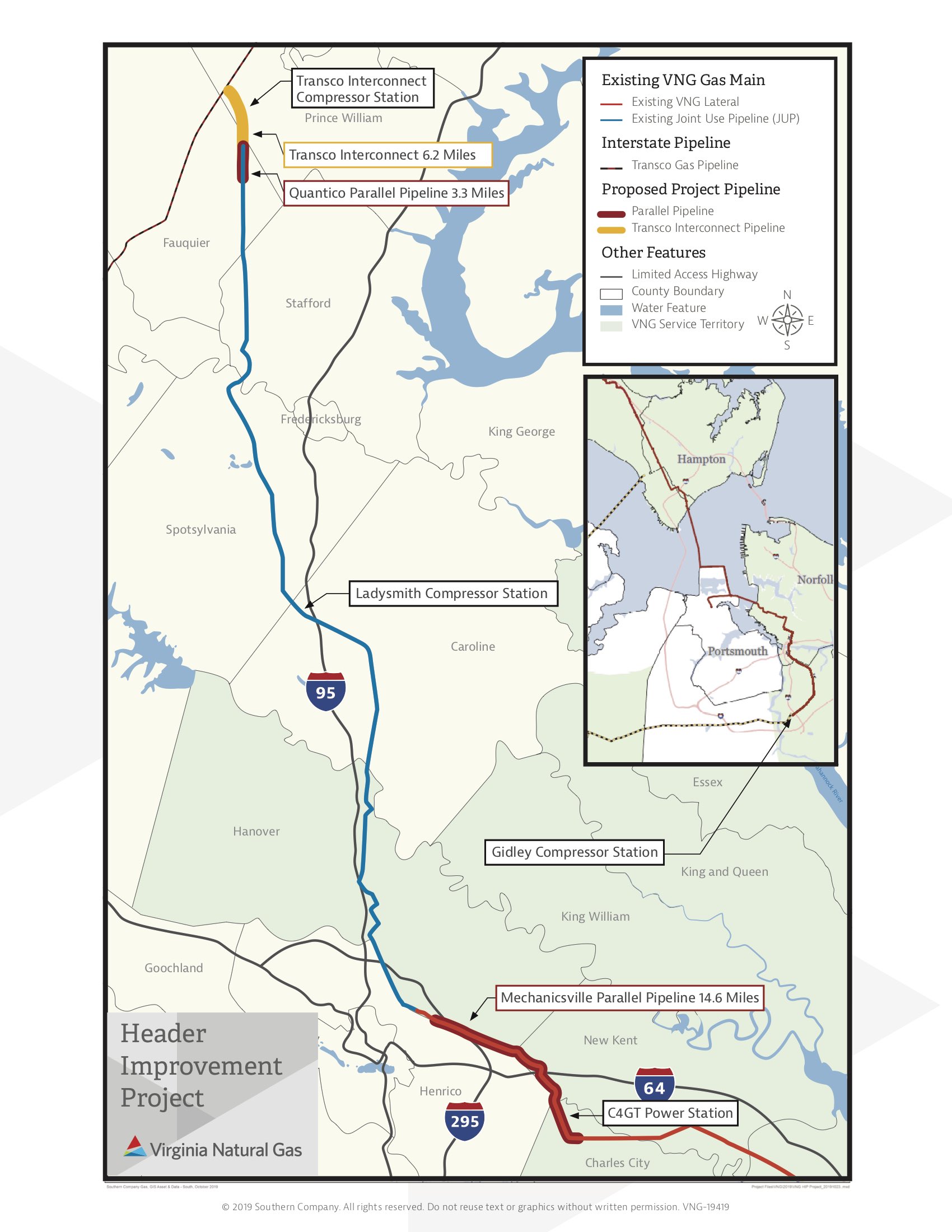
 Pennsylvania’s Pipeline Investment Program (or PIPE) grants cover part of the cost of building new natgas pipelines to connect homes and businesses in rural parts of the state to homegrown Marcellus Shale gas supplies. We’ve written about many of the more-than-a-dozen (so far) PIPE grant projects in the past (
 Columbia Gas of Massachusetts (NiSource) never quite recovered (reputationally) from a series of explosions in September 2018 that occurred with its local delivery pipelines north of Boston (see