
Same Old Liars Tell the Same Old Lies re Transco NC Pipe Project
 Last November, Williams officially filed with the Federal Energy Regulatory Commission (FERC) to build an expansion of its mighty Transco pipeline system in the southeastern U.S., a project called the Southeast Supply Enhancement Project (see Williams Files with FERC to Expand Mighty Transco Pipe in Southeast). The SSE project will add 1.6 million dekatherms per day (1.6 Bcf/d) of natural gas transportation capacity, equivalent to what is needed to serve approximately 9.8 million homes. The North Carolina Department of Environmental Quality (DEQ) held a hearing last Thursday and is accepting public comments until Oct. 6. The same old liars were out in force peddling the same old lies about pipelines and water quality, air quality, etc., to try to defeat this project. Read More “Same Old Liars Tell the Same Old Lies re Transco NC Pipe Project”

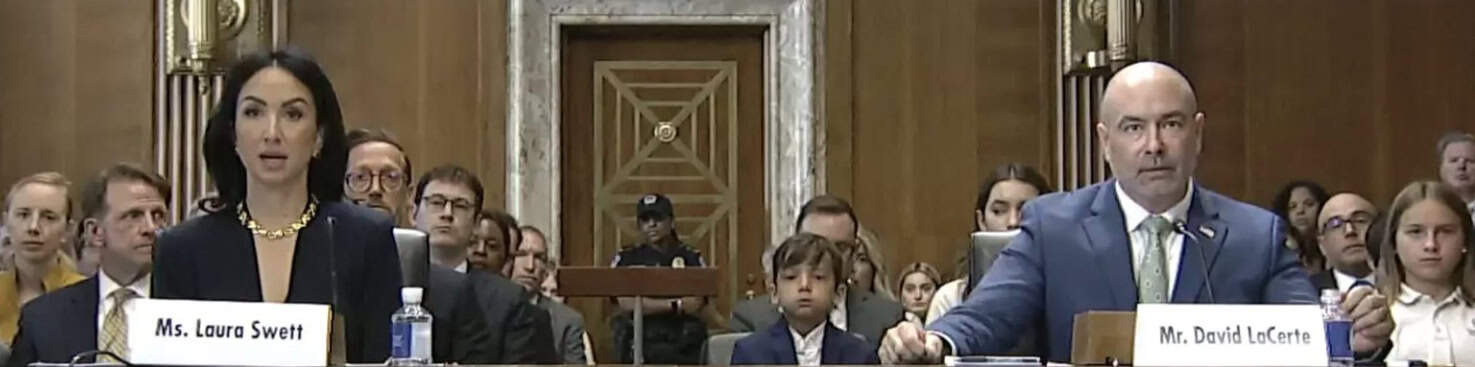 We’re still waiting for the Federal Energy Regulatory Commission (FERC) to gain two new members, which would give the commission its full complement of five members (with three of them Republicans). In June, President Trump nominated Laura Swett of Vison & Elkins to replace Republican Mark Christie, who had been elevated to Chairman under Trump (see
  We’re not sure how to feel about this story. Outrage. Relief. Sarcasm. Befuddlement. All of those emotions swirl in our heads. For years, we have chronicled the radical/left position of former Attorney General (and now Governor) Maura Healey in Massachusetts with her opposition to pipelines and natural gas energy (here’s one of many examples:
  Range Resources sunk the very first Marcellus well back in 2004. It was the beginning of the shale revolution in the northeast. Range CEO Dennis Degner spoke at the recent Hart Energy DUG Appalachia Conference in Pittsburgh (August 27th). He discussed driving sustainable growth in the Marcellus/Utica region. The number one way to do that? More pipelines. But what about the coming Constitution Pipeline that will flow another 660 MMcf/d of Marcellus molecules out of northeastern Pennsylvania into New York and beyond?
  In May, pipeline giant Williams filed a 246-page request with the Federal Energy Regulatory Commission (FERC) to expedite the reissuance of a certificate for the Northeast Supply Enhancement (NESE) project, a billion-dollar-plus project designed to increase Transco pipeline capacity and flows of Marcellus gas heading into New York City and other northeastern markets (see
  Coming out of left field, Enbridge (based in Canada, owner of significant Marcellus/Utica pipeline assets) announced yesterday that it had reached a final investment decision (FID) on two new pipeline projects, one of which will flow an additional 75 million cubic feet per day (MMcf/d) of Marcellus/Utica molecules through the Algonquin Gas Transmission pipeline throughout New England and the northeast. The project is called the Algonquin Reliable Affordable Resilient Enhancement (AGT Enhancement) project and is estimated to cost $300 million for “system upgrades within, or adjacent to, existing rights-of-way.”
  Eastern Gas Transmission and Storage (EGTS), a wholly owned subsidiary of Berkshire Hathaway Energy Company (Warren Buffett’s company), filed a new project with the Federal Energy Regulatory Commission (FERC) in July (see
  The Iroquois Gas Transmission’s Enhancement by Compression (ExC) project will increase horsepower at three compression stations — two in New York and one in Connecticut — by an extra 125 MMcf/d, to flow more Marcellus/Utica gas into New York City and New England. The two NY compressor expansions include one in Dover and one in Athens. The CT compressor expansion is located in Brookfield. Another CT compressor will get minor upgrades (gas cooling, no extra compression) in Milford. The NY DEC approved the permits for the NY compressors with the condition that Iroquois pays a $1.5 million contribution to the “Disadvantaged Community Benefit Program” (see
  Back in May, a prominent Wall Street fund manager (investor) was skeptical that Williams would be able to revive and build two pipeline Marcellus projects: the Constitution Pipeline and the Northeast Supply Enhancement (NESE) Project. Then he sat down to dinner with Williams executives. He came out of that meeting with his mind changed. “I came out of that dinner pretty optimistic. I went in very skeptical. It changed my mind.” If you had any reservations that maybe, just maybe, antis would once again defeat these two projects, set your mind at rest. People with significant financial stakes don’t invest their money in ventures that aren’t a sure thing. That’s our takeaway.
  Over the past year, gas utilities have increasingly targeted data centers as customers for on-site power generation, driven by rising demand from hyperscale, leased, and crypto-mining facilities, particularly in Ohio, Pennsylvania, and Texas. Companies, including Atmos Energy, Chesapeake Utilities, National Fuel Gas, and Enbridge, have signed agreements to supply gas or build pipelines to co-located gas-fired or converted coal-to-gas plants. Utilities view medium-sized data centers as a “sweet spot,” but face hurdles such as limited pipeline capacity, equipment backlogs, and coordination challenges across the gas value chain. Smaller turbines and fuel cells are increasingly used, though supply constraints remain a concern.
  Despite a “public outcry” (of 13 people), the Chesapeake City (Virginia) Council voted 6-3 in July to approve a compressor station for Virginia Natural Gas (see
  Black Bear Transmission (BBT), the owner of nine regulated short pipeline transmission systems in the Southeastern U.S. totaling approximately 1,700 miles of pipeline, with a throughput capacity of about 2.6 billion cubic feet per day (Bcf/d), is selling itself to Enstor Pipeline Holdings, LLC, for an undisclosed sum. Black Bear’s pipelines interconnect with 16 major long-haul pipelines and storage facilities across seven states, including Alabama, Arkansas, Louisiana, Mississippi, Missouri, Oklahoma, and Tennessee. Believe it or not, there is a connection to the Marcellus/Utica.
 Big Green is keeping up the pressure on New York Governor Kathy Hochul to block two natural gas pipeline projects that have roared back to life at the prompting of President Trump. Just a week and a half ago, a Big Green rent-a-mob of some 400 (paid) protesters held a rally in New York City and proceeded to march across the Brooklyn Bridge to register their opposition to new natural gas pipelines (see
  DT Midstream (DTM), headquartered in Detroit, owns major assets in the Marcellus/Utica region and in other regions, such as Haynesville. The company recently issued its second quarter report with some interesting updates on new pipeline projects coming. We’ll discuss those below. However, it was comments about a potential expansion of capacity along the DT-owned Millennium Pipeline (which flows Marcellus molecules) that caught our attention. The company announced an open season in May for added capacity along the Millennium (see