
FERC Wants More Info, Route Tweaks from Atlantic Coast Pipeline
 One of the oft-repeated lies we hear from anti-fossil fuelers against the Federal Energy Regulatory Commission (FERC) is that the agency “never” rejects a pipeline proposal, and “hasn’t in 20 years.” The conclusion, according to liemeisters like THE Delaware Riverkeeper, is that FERC is simply a “rubber stamp” for “big oil and gas”–not to be trusted and (preferably) shut down. That’s the kindergartenish meme they pedal to unthinking, left-leaning enviro lapdogs (their followers), who believe them. But you and I know the truth. This is that truth: FERC picks over pipeline projects with a fine-tooth comb. When FERC finds something they don’t like, they respond back to the project builder with “suggestions” about route changes, construction guidelines, request for more information, etc. If the project builder decides to disregard FERC’s “suggestions,” the builder runs the risk of having the project rejected. So they change it. It is an ongoing negotiation. What if FERC demands something really wacky? The project builder will push back, but in the end, what FERC wants, FERC gets. Period. And so it is with Dominion’s $5 billion, 594-mile Atlantic Coast Pipeline–a natural gas pipeline that will stretch from West Virginia through Virginia and into North Carolina. Atlantic Coast is winding its way through the FERC regulatory process. Last week was the deadline for filing comments on FERC’s draft environmental impact statement (EIS) for the project. On Tuesday, FERC sent Dominion a 36-page letter (full copy below) regarding the Atlantic Coast Pipeline, identifying 100 areas of concern with the “suggestion” that minor route changes and workspace reductions would button up most issues. You can bet your bottom dollar Atlantic Coast Pipeline will bend over backwards to make those adjustments. This is how adults handle things…
Read More “FERC Wants More Info, Route Tweaks from Atlantic Coast Pipeline”
 We previously highlighted a video that shows the massive project underway to construct the Rover Pipeline (see
  MDN spotted an announcement issue by the Pennsylvania Dept. of Environmental Protection (DEP) stating they’ve assessed a $185,000 fine on the Constellation Pipeline and its builder EM Energy (i.e. EdgeMarc) for a series of violations when building the pipeline in 2014-2015. That sent us digging. We don’t recall a Constellation Pipeline (and we’ve been writing MDN since 2009). What is the pipeline? Where, in PA, is it located? What is its purpose? We think we found most of the answers…
 For months MDN has encouraged its readers to get behind and support Williams’ Atlantic Sunrise Pipeline project–a $3 billion, 198-mile pipeline project running through 10 Pennsylvania counties to connect Marcellus Shale natural gas from northeastern PA with the Williams’ Transco pipeline in southern Lancaster County. In February the Federal Energy Regulatory Commission (FERC) gave its final seal of approval for the project (see
 In January 2014 MDN brought you the story that due to incessant nagging from the NJ Sierra Club and the NJ League of [Liberal Democrat] Women Voters the Pinelands Commission, which oversees a stand of scrub pines in South Jersey, nixed a plan for a new natural gas pipeline to bring cheap, clean, abundant Marcellus Shale natural gas to South Jersey for use by residents and to feed an electric plant a local utility wants to convert from burning coal to natgas (see
  Soon after President Trump was inaugurated, some of the first Executive Orders he signed dealt with the Dakota Access Pipeline (now completed, thank God), and the Keystone XL Pipeline. Trump also signed a “Presidential Memorandum”–similar to, but not the same as, an Executive Order. On Jan. 24, President Trump signed the “Presidential Memorandum Regarding Construction of American Pipelines,” which instructs the Dept. of Commerce to ensure the pipelines used for new projects, and for major repairs, are Made in America–from the smelting stage through the final fabrication stage. That order has had the midstream industry squirming, quite frankly. Why? Because so much of the pipelines we now use are foreign made. While the goal of 100% American made pipeline is laudable (and something we support), the fact is, our domestic industries are not currently set up to produce all of the pipeline we need. So until our own domestic industries are capable, the midstream sector will have to continue relying on “global sourcing” for at least some pipeline materials. That was the message conveyed by five trade associations representing the industry in comments jointly filed with the Dept. of Commerce last Friday. The industry is walking a tightrope. On one hand they want to support Trump’s efforts to use American manufacturing of pipes, on the other, they want to be able to finish projects under way or planned to begin soon…
 We’ve now written two posts addressing the jaw-dropping audacity of the corrupt New York Dept. of Environmental Conservation in their refusal to grant water crossing permits to a second major pipeline project (see
  Last week MDN brought you the news that Energy Transfer’s $3.7 billion, 711-mile Rover Pipeline needs up to 15,000 workers to build it. They currently have ~4,500 workers. And they want to complete the first stage of the pipeline by July (see
  Last Thursday was the last day for people, agencies, nutjobs, supporters–for anyone–to file an official comment with the Federal Energy Regulatory Commission (FERC) on the agency’s draft environmental impact statement for the Atlantic Coast Pipeline project. Dominion has proposed building the $5 billion Atlantic Coast Pipeline (ACP) project from West Virginia through Virginia and into North Carolina. One of the problems they’ve had is resistance from U.S. government agencies, including the U.S. Forest Service. In January 2016, the USFS told Dominion it was a no-go for running the pipeline through tiny pieces of either the Monongahela or George Washington national forests in West Virginia and Virginia (see
  Yesterday we brought you the sad (and angering) news that once again Gov. Andrew Cuomo has caved to political pressure from environmental Nazis and instructed the now-corrupted Dept. of Environmental Conservation (DEC) to deny stream crossing permits for National Fuel Gas Company’s Northern Access Pipeline project (see
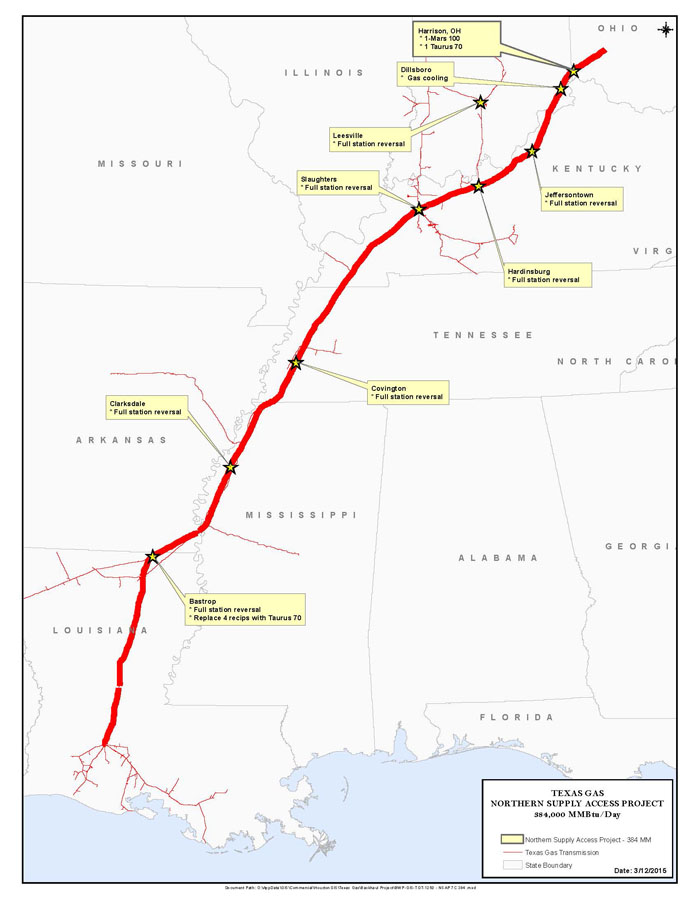
  Compressor Engineering Corp. (CECO) popped the cork on completing 50 years of business in 2014 when it discovered it had a huge problem. The company had expanded into the pipeline business–laying pipelines–and the people the company had hired to manage that part of the business were dishonest, according to CECO. Money the company thought it had wasn’t there–but they still had to complete projects already signed and sealed. So the company, which works in Ohio and Pennsylvania, completed the projects, borrowing heavily to do it. They nearly went bankrupt. After exiting the pipeline business in Ohio, they considered shutting down the company. But then a miracle happened. One of CECO’s core businesses is manufacturing pipeline valves. As it happens, pipelines that used to flow gas from the Gulf Coast to the northeast were beginning to reverse and flow Marcellus/Utica gas the other way. That required a special kind of valve–manufactured by CECO. You can probably guess where this story is going…
 On Friday the Federal Energy Regulatory Commission (FERC) finally, after delaying a decision three times adding an extra eight months, issued a final Environmental Impact Statement (EIS) for the PennEast Pipeline project. We should add, it was a favorable EIS. While FERC found (as they always do) that there would be “some adverse environmental impacts” from the project, those impacts “would be reduced to less than significant levels” with PennEast’s proposed construction plans. This is a major milestone and all but assures the project will now go forward and will be built and go into service sometime in 2018. What potential roadblocks remain? For one, PennEast will need water crossing permits from New Jersey, which they filed for last week (see