
Hydraulic Fracturing | Industrywide Issues | Pennsylvania | Pike County | Regulation | Statewide PA | Wayne County
PA Rep. Fritz Introduces 2 Bills Aimed at Ending DRBC Frack Ban

Pennsylvania State Rep. Jonathan Fritz (Republican from Wayne County) has introduced two new bills aimed at the rogue Delaware River Basin Commission (DRBC) and its ban on hydraulic fracturing and shale drilling. One bill would change the voting structure of the DRBC, giving PA more votes on key decisions because PA is the state with the most land that comes under the jackboots of DRBC regulations. The second bill would outright end the ongoing frack ban enacted by the DRBC in one form or another since 2010. Three cheers for Jon Fritz!
Read More “PA Rep. Fritz Introduces 2 Bills Aimed at Ending DRBC Frack Ban”
 While yesterday’s news that the Federal Energy Regulatory Commission (FERC), under the thumb of the Biden administration, has made a major about-face with respect to using global warming factors when evaluating pipeline projects (at least for now) is good, there is much more than can and should happen. On Wednesday four of the largest trade groups representing natural gas–the Interstate Natural Gas Association of America, the Natural Gas Supply Association, the American Gas Association, and the Independent Petroleum Association of America–sent a letter to President Biden requesting that he push his various agencies (like FERC) to go ahead and approve more LNG export plants and more pipelines.
 The Pennsylvania House Environmental Resources and Energy Committee, chaired by State Rep. Daryl Metcalfe (Republican from Butler County) is scheduled to hold a meeting on Monday, March 28 to consider two proposed bills. One is a bill that would give the legislature authority to participate in any decision about adopting the Regional Greenhouse Gas Initiative (RGGI) carbon tax scheme. The other bill is a resolution that would be sent to the leftist governors of New York and New Jersey asking them to allow new pipelines to be built into and through their states, to flow more fracked PA gas.
 Bitcoin “mining” is a rapidly expanding new customer for natural gas across the country, including in Pennsylvania. Gigantic computer server farms run complex mathematical computations and the result of those computations is a blockchain. When a blockchain is formed, the server farm doing the computations gets compensated with bitcoins, a form of digital money. Bitcoin (the generic term is cryptocurrency) mining uses huge amounts of electricity to run all of those computers. That’s where natural gas comes in. In PA the state Dept. of Environmental Protection (DEP) has applied different standards to different requests from bitcoin miners to set up shop. A new bill aims to fix the problem of inconsistent treatment of these requests.
 If an upstream (drilling) company with a long-term pipeline contract files for bankruptcy, does that give the company the right to break its pipeline contract? A major shipper on the Rockies Express (REX) pipeline, Ultra Resources, filed for bankruptcy with the express plan to skip out on its obligations to REX (see

 It’s always a sad day when radical Big Green groups win a victory over American energy. Such has happened with the New Fortress Energy (NFE) LNG plant proposed for Wyalusing in Bradford County, PA. Three Big Green groups challenged an extension for a permit previously issued for a new liquefaction facility proposed by NFE located in northeastern PA. NFE has caved and agreed that should it proceed with the project, it will need to file all over again and get a new permit–which doesn’t look likely.
 You can’t quantify it. Heck, you can’t even actually prove it’s happening. But the U.S. Securities and
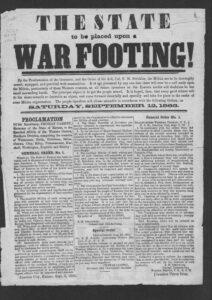 William S. Scherman worked as general counsel (the head lawyer) for the Federal Energy Regulatory Commission (FERC) from 1990-1993, during the presidency of George H.W. Bush (the elder Bush). Scherman worked in FERC when Iraq invaded Kuwait. President Bush wanted options from FERC, asap, about what the agency could do to help alleviate an energy crisis being caused by madman Saddam Hussein. Sound familiar with what’s happening today? Back then FERC went on a “wartime footing” and relaxed rules that restricted the output of traditional and alternative electric generators and granted special permission for natural gas to be produced and transported flexibly and freely nationwide. Scherman says it’s time for FERC to go on wartime footing again.

 The left always fights dirty. One of their favorite tactics is to demand a change in the rules of the game when they are losing. Free enterprise, allowing the best companies and best solutions to win based on economics, doesn’t work in the world of leftwing radicals. They seek to skew things–change the rules–tie a 50-pound weight on the back of the runner next to them in order to give themselves an advantage in a race. Which is exactly what’s happening in New England, where UNRELIABLE renewables (solar and wind) are complaining to FERC and FERC’s Chairman, Richard “Dick” Glick, a former wind lobbyist, that electricity auctions are awarded to natgas-fired power plants instead of so-called renewables because natgas is 100% reliable and renewables are not. Time to change the rules.
 In January a new Senate bill was introduced in the West Virginia Senate requiring the entire state government, all of the various state agencies and governmental departments, to stop doing business with any bank or investment firm that refuses to support coal, oil, and natural gas companies (see
 Yesterday the U.S. Dept. of Energy issued two long-term orders authorizing liquefied natural gas (LNG) exports from two current operating LNG export projects: Cheniere Energy’s Sabine Pass facility in Louisiana, and Cheniere’s Corpus Christi facility in Texas. The order allows the two facilities together to ship an extra 0.72 billion cubic feet per day (Bcf/d) of LNG over and above the amounts previously authorized. Wait a minute…aren’t all LNG export facilities exporting at their maximum capacity? Yes they are, but…
 In his first two days in office, Joe Biden declared war on the oil and gas industry. One of the first things he did was to revive an interagency working group on the “social cost” of greenhouse gas emissions and directed the issuance of an “interim” cost (see
