OEPA Continues to Hunt Rover Pipe, Claims 2nd Spill Near River
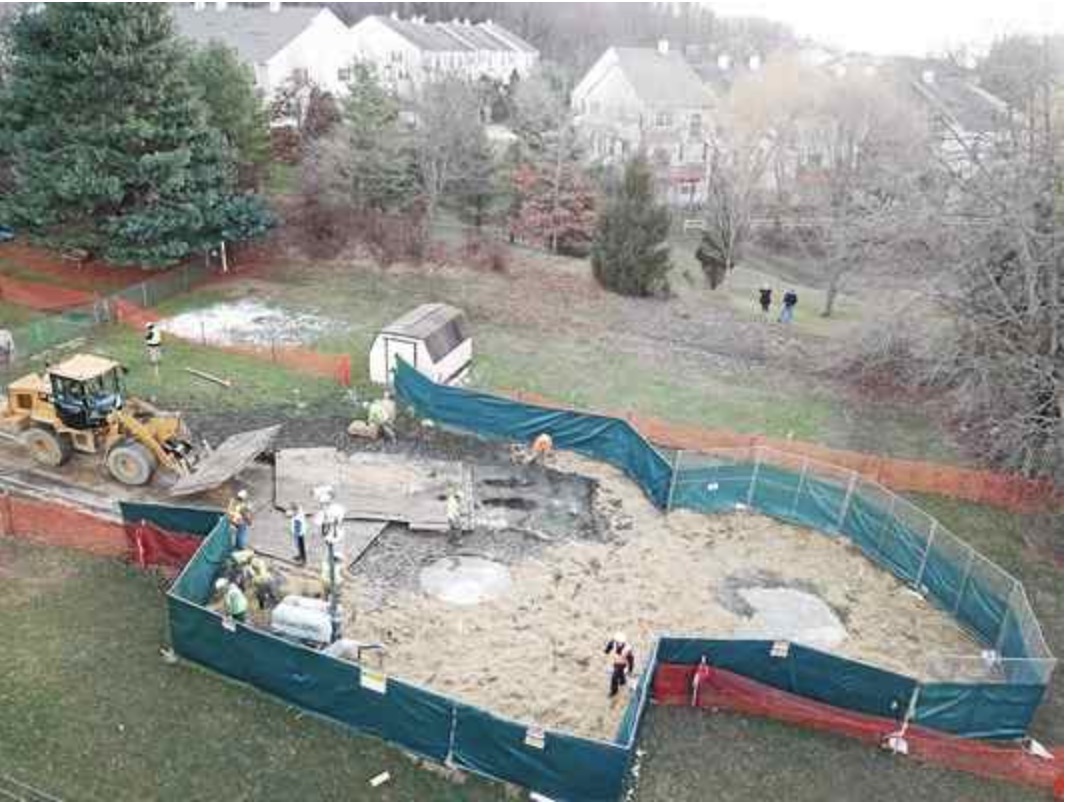
Ohio EPA (OEPA) director Craig Butler, aka Captain Ahab, continues his mission to harpoon that rascally great white whale known as the Rover Pipeline. Somehow Captain Ahab, er, a, Mr. Butler has “learned” that underground horizontal directional drilling (HDD) Rover was recently allowed (by the Federal Energy Regulatory Commission) to resume near the Tuscarawas River (over the objections of OEPA) has “lost” 146,000 gallons of drilling mud “down hole.” This is at the same location where Rover previously lost 2 million gallons of drilling mud down hole, some of which turned up back on the surface, at a swamp (aka “wetland”) located next to the Tuscarawas (see Rover Pipeline Accident Spills ~2M Gal. Drilling Mud in OH Swamp). That 2 million gallon “spill” in April of last year triggered a shutdown of all HDD work in Ohio. It was only in December that Rover was allowed, by FERC, to resume more HDD work at the Tuscarawas site (see FERC Gives Rover OK to Resume All HDD Work, Incl. Tuscarawas River). Butler’s spies have reported to him that more drilling mud, some 146,000 gallons, has disappeared into the earth during HDD drilling at the Tuscarawas site. Some perspective on this alleged news: First, how did Butler even know of a “problem”? OEPA doesn’t regulate the Rover project! Second, since Rover doesn’t answer to OEPA (which frosts Butler), Butler runs like a tattling child to FERC with every perceived violation he can trump up–even though he doesn’t have all the facts. Third, even though drilling mud may disappear down hole, that doesn’t mean the mud comes back to the surface. Sometimes it stays down there–forever. Fourth, even if the mud does come back to the surface, drilling mud is nontoxic–the same stuff used in kitty litter, cosmetics and toothpaste. The only thing an overabundance of spilled mud can do is smother a few fish. This latest ploy by Butler to tattle on Rover to FERC is his attempt to try and manipulate FERC into shutting down Rover’s HDD work once again…
Read More “OEPA Continues to Hunt Rover Pipe, Claims 2nd Spill Near River”


This is a bitter and sad day. The five Commissioners of the Federal Energy Regulatory Commission (FERC) released a decision yesterday (copy below) that FERC will not overrule an illegal decision by the corrupt Cuomo Dept. of Environmental Conservation (DEC) to block construction of the Constitution Pipeline (which FERC approved in 2014). Is this truly “lights out” for the Constitution? It would seem so. Cuomo’s DEC took more than two years to evaluate and eventually reject the Constitution Pipeline–a $683 million, 124-mile pipeline from Susquehanna County, PA to Schoharie County, NY to move Marcellus gas into NY and New England (see
On Wednesday, Dominion Energy filed a request with the Federal Energy Regulatory Commission (FERC) to expand capacity along the existing Dominion Energy Transmission Inc. (DETI) pipeline from Pennsylvania to Ohio. Why? To flow more gas that will be used to generate electricity for the Midwest market. The project, called the Sweden Valley Project, is projected to cost $48 million and add another 120 million cubic feet per day (MMcf/d) of PA Marcellus Shale gas to the existing flow along DETI. Dominion says all 120 MMcf/d are already contracted and spoken for–by an unnamed customer. Notice the headline says “expand” and not “extend.” This project would build a tiny three miles of new pipeline, with the new pipeline lying next to existing pipeline (in Greene County, PA). The only greenfield construction is building a 1.75-mile pipeline to connect with the Tennessee Gas Pipeline in Tuscarawas County, OH. The other main part of the project is updating three units a compressor station in Licking County, OH. In the constellation of pipeline projects that disturb earth and disrupt landowners, this one is pretty minor–yet it will deliver big results by flowing an extra 120 MMcf/d of gas west to a new market…
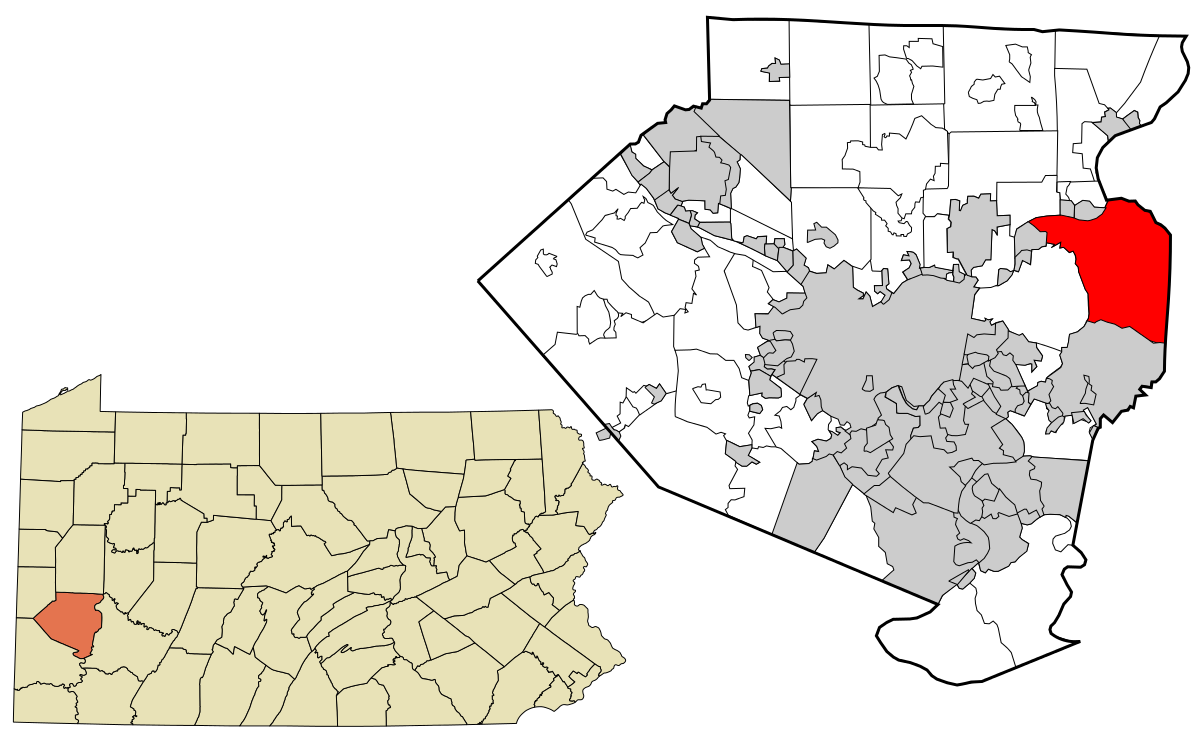
The dunderhead leaders of Monroeville, PA (Allegheny County, suburb of Pittsburgh) are at it again, acting hostile toward the shale industry, attempting to stymie any kind of shale activity within its borders. In September, Monroeville Council voted to enact a super-restrictive seismic testing ordinance (see
In April 2017, MDN brought you the news that Columbia Pipeline (now owned by TransCanada) had filed an application with the Federal Energy Regulatory Commission (FERC) to build a 3.5 mile, 8-inch pipeline that will carry natural gas from Pennsylvania to connect the Mountaineer Gas system in the Eastern Panhandle of West Virginia with the Columbia Gas Pipeline in Pennsylvania (see 
Pennsylvania State Rep. Brian Ellis (Republican from Butler County) introduced House Bill (HB) 1960 on Jan. 5. The bill, known as the “State Agency Regulatory Compliance Officer Act,” would create a new Regulatory Compliance Officer position in each state agency, including the Dept. of Environmental Protection (DEP). The new Compliance Officer would have the authority “to block an agency from imposing fines and penalties for violations and to rewrite the policies under which fines and penalties are imposed.” The aim of the bill is to force all PA state agencies (including the DEP) to work *with* the people and companies they regulate. It would create a different mindset–instead of “gotcha” enforcement of regulations, it’s aimed at making it easy to comply with regulations. The bill states this in its opening lines: “(1) It is the purpose of this act for agencies to work collaboratively with, instead of acting punitively towards, regulated communities. (2) Agencies should strive to make the regulations which the agencies administer and enforce as clear and easily navigable as possible for regulated communities. (3) In administering a regulation, an agency’s primary goal should be to ensure compliance rather than to exact punishment.” Those who love Big Government don’t like this bill. Will this bill go anywhere? Who knows! What the bill indicates to us is that at least some legislators (Republicans) in Harrisburg are listening and “get it.” What do they get? That PA has developed a reputation for burdensome regulations and if the state wants the Marcellus miracle to continue, and grow, things need to change at the DEP. A $83.7 billion investment by China in neighboring WV’s shale/petrochemical industries should be a bright, red slap across every PA legislator’s face. Wake up! If you don’t fix the DEP, quickly, you’ll lose PA’s Marcellus momentum to someone else…
Last week MDN reported the news that the Pennsylvania Dept. of Environmental Protection (DEP) has suspended all construction work on the Mariner East 2 Pipeline (ME2) project until further notice (see
We don’t know how many times we have to keep ringing the bell–this is a five-alarm situation! Wake up! A group of Democrats elected to the Jessup, PA Borough Council (Scranton suburb) are actively trying to block the completion of the state’s largest natural gas-fired electric generating plant–the first phase of which will be ready to go online in a little over a month. A bunch of ninny nanny antis didn’t like that they couldn’t stop the project, so they used money and help from Big Green groups last November to launch successful campaigns to defeat incumbent Council members who voted to authorize the Lackawanna Energy Center to be built by Invenergy (see
Pennsylvania legislators (Democrats and RINOs) who were banking on the federal government to “fix” the problem of the free market are panicking after the Federal Energy Regulatory Commission rejected DOE Sec. Rick Perry’s so-called Grid Resiliency Pricing Rule that would tip the scales in favor coal and nuclear energy, keeping unprofitable electric generators in business longer (see 
On September 29, U.S. Energy Secretary Rick Perry sent a letter to the Federal Energy Regulatory Commission (FERC) directing the agency to complete action on a “Grid Resiliency Pricing Rule”–ostensibly within 60 days. The proposed rule Perry proffered, sometimes referred to as the Notice of Proposed Rulemaking (NOPR), would put in place regulations that favor electric generating plants powered by coal and nuclear. That is, it would allow unprofitable ventures to pass along new costs, making them profitable–in the name of protecting the electric grid. The theory Perry (and by extension President Trump) subscribe to is that if the free market drives out coal and nuke plants, the electric grid would be “vulnerable” to far fewer sources to power it. If coal and nukes are all but gone, and all of sudden there’s a natural gas shortage, or prices spike for natural gas, it would endanger the electric supply in this country. On one side of the argument are those who believe the free market sometimes needs a helping hand (via regulation), and on the other those who believe the free market will sort it all out and we are not vulnerable. The incoming/new chairman of FERC, Kevin McIntyre, asked for an extension so he and another new FERC member could take a little time to do a proper review (see
In September, MDN told you that the obsequious members of the Delaware River Basin Commission (DRBC) had slavishly obeyed their radical environmental masters by voting to move forward with a permanent ban on fracking in the Delaware River Basin (see
In December, the Pennsylvania Dept. of Environmental Protection (DEP) released “interim final technical guidance” (i.e., new regulations) for drilling Marcellus Shale natural gas wells in areas where there is longwall coal mining. Sometimes drillers want to lease and drill under coal mines. Since coal mines sink large holes in the ground, there are existing guidelines in place for how closely an oil/gas well can be drilled on or under a coal mine–guidelines put in place in 1957. As a result of legislation passed in 2011 called Act 2, a review was conducted to see if the standards for oil/gas drilling near coal mines might be modified, allowing such drilling to happen in conditions not currently allowed. A study was performed and in January 2017 the DEP rejected that study–preferring to keep a default ban on any drilling under coal mines for the time being (see
A new shale wastewater treatment facility that works in tandem with a local sewage treatment plant may be on the way in Coudersport (Potter County), PA. Epiphany Water Solutions, via a subsidiary company called Epiphany Allegheny, filed for a permit to build a centralized water treatment facility in Coudersport in July 2017. The initial application with the Dept. of Environmental Protection (DEP) was deemed “incomplete”–so Epiphany filed again and this time the application was complete. The DEP will hold a Jan. 16 public hearing in Coudersport to gain local resident’s input on the facility. This is not the first we’ve heard of Epiphany. They were one of four winners of the Ben Franklin Institute’s Fifth Annual Shale Gas Innovation Contest in 2016 (see