
Belmont County | Guernsey County | Harrison County | Hydraulic Fracturing | Industrywide Issues | Ohio | Regulation
Ohio Gets Ready to Open Another 23K Ac. of State Land for Fracking
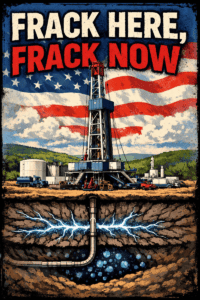 The Ohio Oil and Gas Land Management Commission (OGLMC) is set to vote on Monday to open roughly 23,000 acres of publicly owned wildlife preserves in eastern Ohio to fracking. The panel will weigh accepting bids on about 15,000 acres split between Jockey Hollow and Egypt Valley, plus opening another 8,000 acres of Egypt Valley. Approval would bring Ohio’s leased public land to more than 30,000 acres across Salt Fork State Park and six wildlife areas, mostly in the Belmont-Harrison-Guernsey region. Ohio has already collected roughly $57 million in signing bonuses, plus 18–20% royalties. Read More “Ohio Gets Ready to Open Another 23K Ac. of State Land for Fracking”
 In October 2025, we reported that Ohio Republican Senators had introduced Senate Bill (SB) 219, the first significant update to Ohio’s oil and gas laws since the Kasich administration more than a decade ago (see
  This is a momentous occasion. Yesterday, the Federal Energy Regulatory Commission (FERC) issued a “Notice to Proceed with Construction” order authorizing Mountain Valley Pipeline (owned by EQT Corporation) to proceed with construction of MVP Southgate pipeline in North Carolina. This follows FERC granting permission to begin building Southgate in Virginia in April (see
  The thing about the political left is that they NEVER give up. EVER. And so, neither must we. The left wants to destroy new shale drilling in Pennsylvania. They couldn’t do it via regulation. They couldn’t convince a majority of residents that shale drilling is bad. So they search out other ways to make it happen. Among those ways are efforts to increase setbacks (distance from wells to homes and other structures) from the current 500 feet to over 3,200 feet, which would ban drilling in 95%+ of the state (see
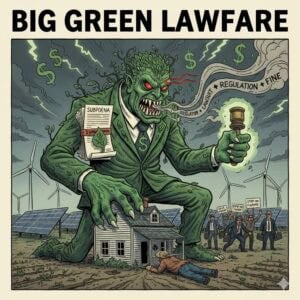
 Honestly, this story is likely to spike your blood pressure the way it did ours. Breathe in, breathe out. Find your calm, center space. OK. Now you’re ready to hear about it. Foreign companies and billionaires are funneling money to American NGOs and law firms that use the money to attack (in court) fossil energy companies. If a lawsuit prevails and either a settlement or a judgment is entered, the foreigners who helped finance it receive a cut of the “profits” from the settlement. And they don’t pay taxes on their so-called profits! IT IS DISGUSTING and an outright attack on our country. AND IT MUST STOP. NOW. A group of 21 energy-related organizations has sent a letter to both the U.S. House and Senate, outlining a loophole in our laws that allows this immoral practice and urging them to fix it. Pronto.
  In March, we told you about a deal made by Maryland Eastern Shore developer TeraWulf to acquire the retired Morgantown Generating Station in Charles County (on the Potomac River), proposing to transform the site into a massive natural gas-powered data center campus (see
  Last week, the Federal Energy Regulatory Commission (FERC) launched a sweeping investigation into how power grids and utilities divide the soaring costs of supplying electricity to data centers. FERC issued six “show-cause” orders directing regional grid operators—PJM, SPP, MISO, CAISO, ISO New England, and NYISO—to prove that data center connection rates are “just and reasonable” and shield ordinary ratepayers from cost-shifting, or face federal fixes. FERC wants regional grids to speed up data center connections while protecting residential ratepayers. And they WILL do it, or else.
 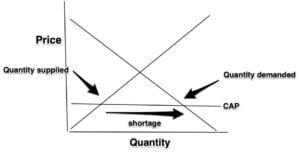 Pennsylvania’s Senate Republicans are speaking truth to power, calling out PA Democrat Governor Josh Shapiro’s policies as one of the primary reasons why PA residents pay more for electricity. And Joshie doesn’t like being called out. State Senate President Pro Tempore Kim Ward argues the state is losing out under a roughly $325-per-megawatt-day price cap on PJM Interconnection’s capacity auctions, approved by the federal government after a lawsuit by Gov. Josh Shapiro (see
  In February 2024, members of the South Carolina Public Service Commission (PSC) approved a proposed project to build a 1,020-megawatt (MW) gas-fired power plant in the state’s Lowcountry, in Colleton County (see
  In early May, MDN brought you details about a proposed NSCALE data center project in Mason County, WV (see
  New York State, with its bizarre energy policies, has officially bankrupted yet another company. Danskammer Energy, which operates a gas-fired peaker power plant along the Hudson River in Newburgh, NY, had tried for years to upgrade the plant (since 2018), but finally threw in the towel in June 2024 (see
  In early April, the EPA revised certain Biden-era oil and natural gas regulations, specifically aspects of the 2024 Clean Air Act rules (OOOOb/c, known as “Quad O”), to reduce compliance burdens and lower energy costs (see
  Earlier this year, the board of commissioners in Montour County, PA, voted unanimously to reject Talen Energy’s request to rezone empty agricultural land near Talen’s Montour Power Plant for a proposed data center (see
  We are encouraged by recent developments in two Pennsylvania townships, one in northeast PA, the other in southwest PA, with respect to moving forward with data center projects. We get it. People are up in arms, some feeling as though data centers are being “forced” on them by less-than-transparent builders. Noise. Lights. Water usage. All are concerns. However, as we’ve stated many times, reasonable people can work together, sort through the issues, and move these projects along. That’s what we’re seeing in Olyphant, PA, a suburb of Scranton in Lackawanna County, and in South Strabane Township in Washington County.