
FERC Issues Final EIS for Boardwalk Pipe Carrying M-U Gas to SE
 In April, we brought you the news that the Federal Energy Regulatory Commission (FERC) had issued a Draft Environmental Impact Statement (DEIS) for the Kosciusko Junction Pipeline Project (see FERC Issues DEIS for Boardwalk Pipe to Carry M-U Gas to Southeast). In June, we followed up with word that Boardwalk is dangling temporary capacity on the line during the gap between when the pipe can flow and when its anchor customer actually starts taking gas (see Boardwalk Offers Temporary Capacity Along Pipeline to Southeast). Now comes the next big milestone. Last Friday, FERC staff issued the final EIS (FEIS) for the $1 billion project. Kosciusko Junction — run by Gulf South Pipeline Company, LLC, a subsidiary of Boardwalk Pipelines — will lay 110.9 miles of new 36-inch pipe across nine Mississippi counties and take over 98 miles of existing pipe from sister company Texas Gas Transmission. It’s built to move 1.16 billion cubic feet per day (Bcf/d) of gas, expandable to 1.58 Bcf/d, from the Marcellus/Utica, Haynesville, and Fayetteville plays to power-hungry Southeast markets. Read More “FERC Issues Final EIS for Boardwalk Pipe Carrying M-U Gas to SE”
 Yes, there is a direct connection between the Federal Energy Regulatory Commission’s (FERC) approval of the expansion of an underground salt-dome storage cavern project in Mississippi and the Marcellus/Utica. FERC has approved Leaf River Energy Center’s expansion of its New Home Salt Dome storage facility in Smith, Jasper, and Clarke counties, Mississippi, adding 19.18 Bcf of working gas capacity through new cavern development and facility upgrades. The project includes a new Cavern 5, expansion of Caverns 2 and 4, new compression, and pipeline additions, raising total working gas capacity from 36.0 to 55.18 Bcf.
 Last week, New York Governor Kathy Hochul had the ignominious distinction of signing an Executive Order establishing the nation’s first statewide moratorium on new hyperscale data centers, temporarily pausing state environmental permit issuance for up to 1 year (see
 Thanks to the work of David Hess at the PA Environment Digest Blog, which tracks Department of Environmental Protection (DEP) notices published in the Pennsylvania Bulletin, we know of two water pipeline projects (for EQT and Expand Energy) approved by the DEP related to drilling new shale wells in two different northeastern PA counties: Lycoming and Bradford. Water is used for fracking. New water pipelines mean new fracking is on the way in those locations.
  Despite claims by anti-fossil-fuelers that the Tenaska Westmoreland Generating Station in southwestern PA would spread disease and death if it were built, it’s been up and running since 2018, producing power and generating revenue for both its builders and the community. Oh, and everyone is in good health. However, the plant has been operating under a state permit since it opened. It needs a federal Title V permit for long-term operation. The state Department of Environmental Protection (DEP) issues such a permit. Good news! The DEP recently issued the Title V permit for this power plant.
  In May, Dominion Energy announced plans to construct a multibillion-dollar, 3-gigwatt (GW) combined-cycle natural gas power plant in Cumberland County to address the state’s rapidly increasing electricity demand, particularly from data centers (see
 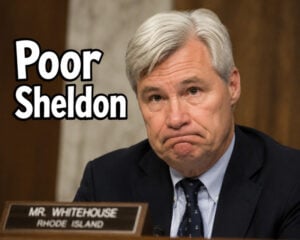 Poor lefty U.S. Senator Sheldon Whitehouse (Democrat from Rhode Island). He’s in a bind. Sen. Whitehouse sits on the committee currently negotiating how to loosen up on permitting rules for all sorts of projects, including natural gas pipelines. Whitehouse has traditionally been opposed to natgas pipelines getting built to furnish New England with more gas, but the governor of his own state, along with Dem governors from other New England states, want those pipes (for fear of being tossed out of office if they don’t bring down the price of gas and electricity). But on Whitehouse’s wacko left sit Massachusetts Senators Elizabeth “Pocahontas” Warren and Ed “wacky” Markey, who are 100% opposed to changing the rules for pipelines. Also opposing a change are foreign-backed environmental groups (big contributors to Whitehouse). What’s poor Sheldon going to do?
 In June, Ohio Governor Mike DeWine signed Senate Bill (SB) 219 into law. The new law, the first significant update to Ohio’s oil and gas laws since the Kasich administration more than a decade ago, reforms Ohio’s orphaned oil and gas well program and other elements of Ohio’s O&G laws. One aspect of the new law establishes an expedited drilling and plugging permit process. The law prevents the state from rejecting expedited permit requests (capped at 10 per owner annually), shortens timelines for leasing and drilling on public lands—including 30-day permit approvals—and limits landowners’ ability to challenge expired lease renewals. Anti-fossil fuelers are fuming. What’s new?
 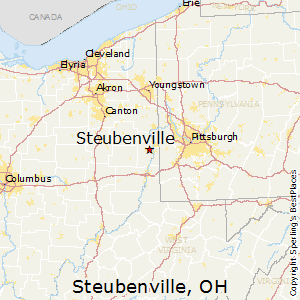 After months of deliberation, Steubenville (Jefferson County), Ohio, City Council voted to accept a bid and proceed with leasing the city’s mineral rights to the oil and gas industry, including areas near residential neighborhoods and Beatty Park. Some residents voiced strong opposition, citing threats to the park’s ecosystem, health concerns, and insufficient public involvement, urging the council to reject bids or form a resident-inclusive committee. Fourth Ward Councilman Royal Mayo voted against it, questioning fracking’s health effects. First Ward Councilman David Albaugh supported it, noting that surrounding areas are already fracked and that no well pad would be built in Steubenville. The money (over $1 million!) is expected within 90 days.
  What a disappointment. We don’t know why, but at yesterday’s U.S. House Committee on Transportation and Infrastructure meeting on the Water Resources Development Act (WRDA), an amendment to overturn the Delaware River Basin Commission’s (DRBC) authority to ban fracking was NOT introduced. The WRDA passed and now goes to the House for a vote — without the amendment that would have overturned the DRBC frack ban, which illegally strips landowners’ property rights in Wayne and Pike counties (in Pennsylvania). The only conclusion we can draw is that the Republican leadership, for whatever reason, didn’t want it attached to the bill. Meaning they caved. Again, what a disappointment.
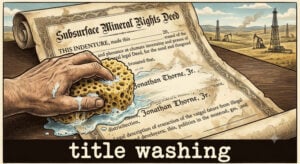 Last year, we reported on a Pennsylvania Supreme Court decision issued in the case of Commonwealth of Pennsylvania, Pennsylvania Game Commission v. Thomas E. Proctor Heirs Trust (see