
EQT Gives Up an Automatic Win in Elizabeth Twp Permit Fight
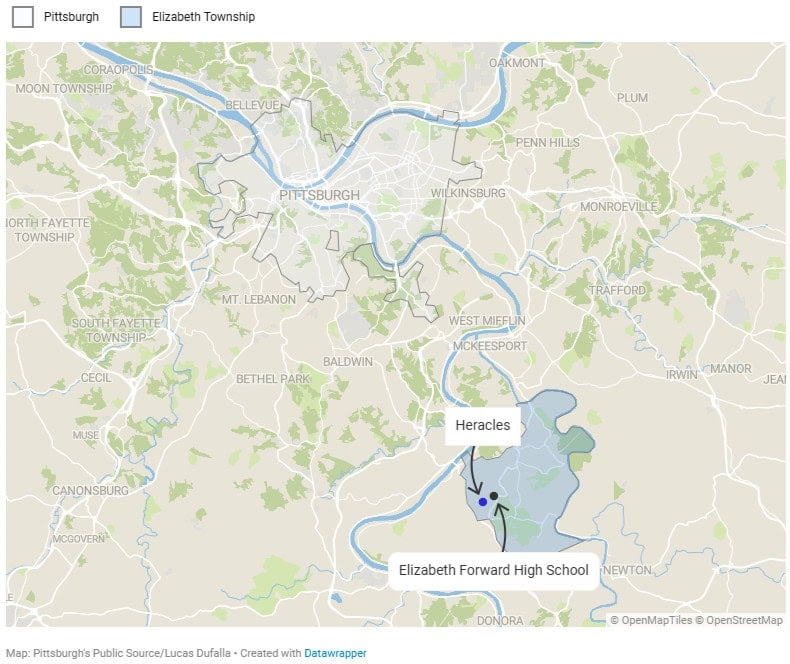
Elizabeth Township’s (Allegheny County, PA) Board of Commissioners was supposed to vote by August 21 on EQT’s conditional use permit for the six-well Heracles pad near Elizabeth Forward High School. Instead, at an August 17 workshop meeting, commissioners announced they’d cut a deal with EQT to push the decision into September — saying they need more time. Here’s the part the news coverage skipped: under Pennsylvania’s Municipalities Planning Code, blowing that 45-day deadline would have handed EQT an automatic, deemed approval. The clock was running in EQT’s favor. EQT gave it up voluntarily. That’s not a company scrambling for cover — that’s a company building a record it expects to defend on appeal. Read More “EQT Gives Up an Automatic Win in Elizabeth Twp Permit Fight”
 Gov. Josh Shapiro signed Executive Order 2026-05 on Tuesday, imposing what he called “the strictest guardrails in the nation” on AI data centers — and, we’d argue, on the gas-fired power plants that will run them. Two western PA projects lost fast-track permitting status the same day. But the real damage is buried in a 33-page model consent order that got almost no attention. We don’t think it’s unfair or hyperbole to say Shapiro just destroyed the AI data center industry in the Keystone State.
  Virginia’s environmental cops have hit Transcontinental Gas Pipe Line Company (Transco) with a $179,068.50 civil charge over erosion and sediment control violations on the Pittsylvania County stretch of the Southeast Supply Enhancement (SSE) Project — the single most important new outlet for Marcellus/Utica gas heading south.
  Both federal and state regulators signed off last Thursday on PowerTransitions’ purchase of the 1,242-megawatt (MW) Roseton Generating Facility in Newburgh, New York — the sixth and by far the largest gas-fired plant the Houston-based company has grabbed in the Empire State this year. The Federal Energy Regulatory Commission (FERC) issued its order Aug. 13 (Docket EC26-95-000), and the New York Public Service Commission approved the transfer the same day. But the most interesting thing in the FERC order isn’t the approval. It’s the name of the company doing the buying.
  PJM Interconnection, the grid operator that keeps the lights on for 67 million people across 13 states including Pennsylvania, Ohio, and West Virginia, filed its long-awaited data center framework with the Federal Energy Regulatory Commission (FERC) on Wednesday, August 13. The short version: if you’re a new data center and you don’t bring your own electricity to the party, you get switched off first when the grid gets tight. Homes and small businesses get cut last. It’s a rule that, read correctly, is one enormous purchase order for Marcellus/Utica gas.
  Here’s a puzzle for you. The Trump EPA has spent 18 months dismantling the Biden administration’s carbon rules for power plants. The final repeal has been parked at the White House Office of Management and Budget since May 14 — and as of this writing it’s still sitting there, past the 90-day review window that ran out on August 12. Everybody in the business assumes it’s a done deal. So why are state regulators still writing those very same carbon limits into brand-new permits for brand-new gas plants — including two projects that will burn Marcellus and Utica gas?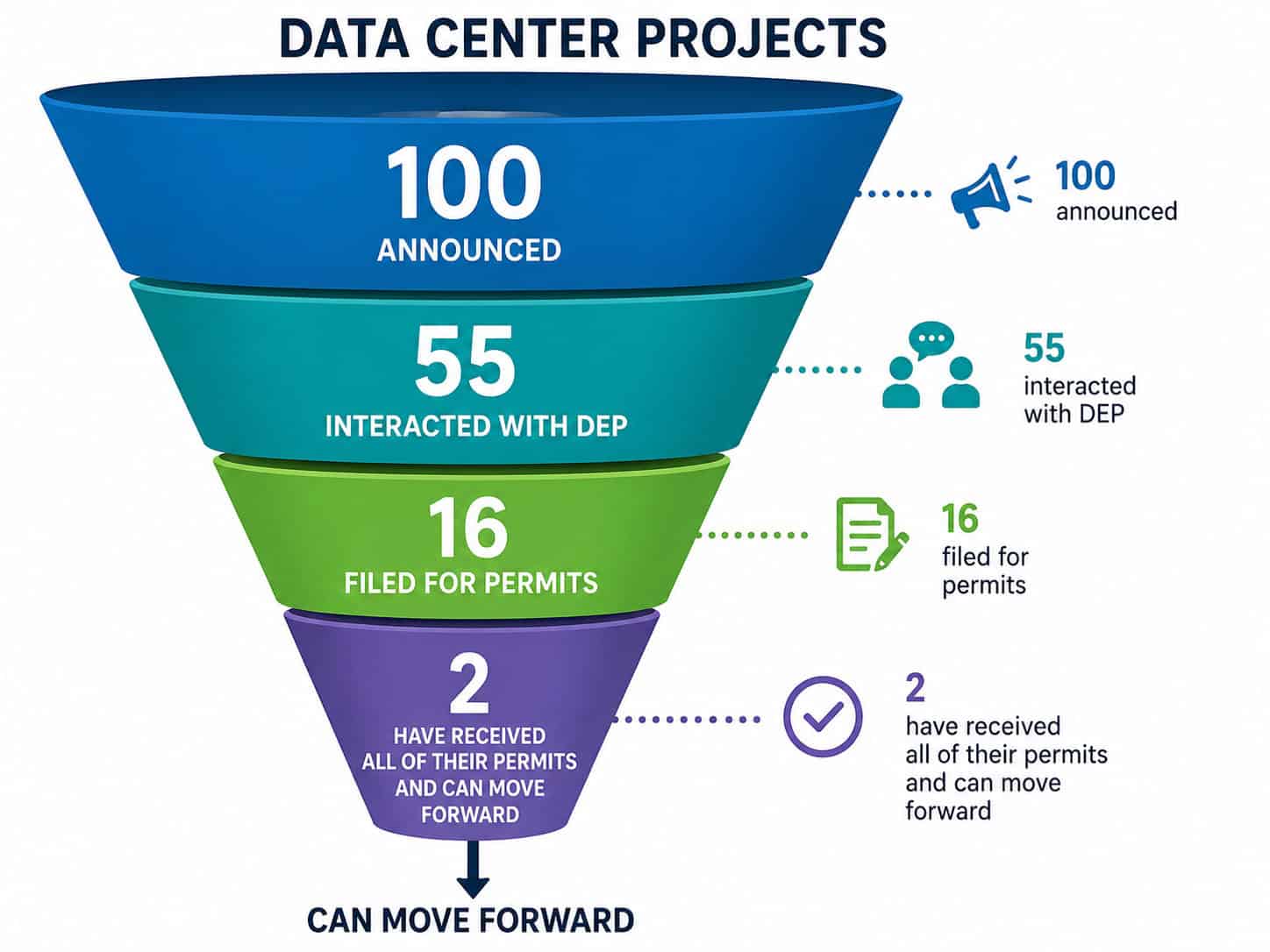
 PJM Interconnection and Dominion Energy are reviewing a July 22 event in Northern Virginia in which roughly 3,800 megawatts (MW) of data center load — the largest such disconnection in PJM’s history — unexpectedly ripped itself off the grid after a routine, correctly cleared transmission fault, forcing PJM operators to scramble to keep the grid stable. The event has reignited a fight over whether data centers, which are growing explosively across the PJM footprint (including Marcellus/Utica territory), need to be held to new “ride through” standards so they stop treating minor grid hiccups like five-alarm fires.
  Pennsylvania got off easy in the 2026-27 budget. Only one data center bill made it into law, and it was a toothless one. But the Pittsburgh Business Times reports Harrisburg is loading up for another round this fall — and this time the antis have a working blueprint to copy. It’s called New York, where Gov. Kathy Hochul banned new hyperscale data centers last month, and where the anti-fracking crowd has already spent a decade proving what happens when a state tells industry to go away.
  We missed one, and it’s a big one. On July 31, the Federal Energy Regulatory Commission (FERC) handed Kinder Morgan certificates of public convenience and necessity for BOTH of its blockbuster Southeast projects — the Mississippi Crossing Project (MSX) on Tennessee Gas Pipeline, and the South System Expansion 4 Project (SSE4) on Southern Natural Gas and Elba Express. Put together, that’s roughly 500 miles of new steel, about $5.2 billion of capital, and something on the order of 3.8 million dekatherms per day of new firm transportation capacity aimed squarely at the fastest-growing gas market in the country. FERC issued the order right on time — the FAST-41 schedule said “no later than July 31,” and the Commission delivered on the last possible day.
 The last 18 months have been about as good as it gets for anyone who moves Marcellus and Utica molecules. President Trump’s Executive Order 14154 killed the Biden LNG export pause on day one. FERC rewrote its environmental review procedures in June 2025 to speed things up. And FERC finally drove a stake through Order No. 871, the Biden-era rule that let Big Green freeze construction on an approved pipeline just by filing an appeal (see
  New York’s Department of Environmental Conservation (DEC) and New York State Energy Research and Development Authority (NYSERDA) announced Wednesday they’ve formally adopted regulations tightening the Regional Greenhouse Gas Initiative (RGGI) — the multi-state carbon tax on coal- and gas-fired power plants — through 2037. The agencies used the words “affordable” or “affordability” six times in their joint announcement. Here’s what they didn’t mention: the price of an RGGI permit jumped 40% in one quarter this year, from $24.99 per ton in March to $35.00 in June. And New York households now pay the third-highest electricity prices in America, behind only Hawaii and California (according to federal data). Six mentions of affordability, zero mentions of the auction price. Funny how that works.
 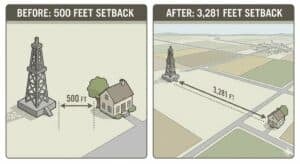 Every so often the antis tell you exactly what they’re up to, and you just have to sit back and enjoy it. On Saturday, Inside Climate News ran a story on the ongoing campaign by the Environmental Integrity Project (EIP), Clean Air Council, and their friends to jack up setbacks — the required distance between a well pad and the nearest building — from the current 500 feet to distances that would end new shale drilling in Pennsylvania. The new twist? They’ve hitched the campaign to the data center boom. More data centers means more gas, and more gas means (in their telling) more danger, so hurry up and pass the rules. It’s the same petition MDN has been tracking since 2024, dressed in a 2026 outfit.
  Back in May we told you about FERC’s proposal to modernize its natural gas “blanket certificate” program (see
  The highly functional and responsible Susquehanna River Basin Commission (SRBC), unlike its dysfunctional and irresponsible counterpart, the Delaware River Basin Commission (DRBC), continues to support the shale energy industry by approving water withdrawals and consumptive use requests for responsible, safe shale drilling. The SRBC published a notice in the July 25th Pennsylvania Bulletin that the SRBC approved and/or renewed 21 general water use permits in June for individual shale gas well drilling pads in Clearfield, Lycoming, Sullivan, Susquehanna, Tioga, and Wyoming counties.