
Tenaska Floats Plan for New 1.7 GW Gas-Fired Power in Ohio
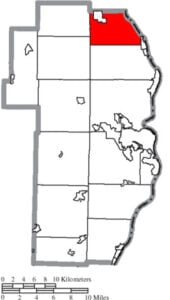
Yesterday, Tenaska announced plans to expand its Tri-State Energy Hub project by adding a natural gas power plant in Saline Township, Jefferson County, Ohio. The new plant will be capable of generating up to 1,700 megawatts (1.7 GW) — enough to power approximately 1.7 million homes. The expansion builds on the company’s existing carbon capture and storage (CCS) hub, for which 30 carbon dioxide injection wells have already been submitted for approval (see Tenaska Set to Dig Test Well for Carbon Capture Storage in WV). Officials estimate the CCS portion alone could deliver a $1 billion economic impact, with additional job creation, tax revenue, and landowner payments expected. Read More “Tenaska Floats Plan for New 1.7 GW Gas-Fired Power in Ohio”
 President Donald Trump’s proposal for a $33 billion, 9.2-gigawatt gas power plant in Ohio—funded by Japanese investment, including SoftBank—aims to address soaring energy demands from data centers (see
  Last week, the combined Marcellus/Utica Baker Hughes rig count remained at 37 active rigs for the sixth week in a row. The M-U’s chief competitor, the Haynesville, added two rigs and now runs 58 active rigs, some 21 more than the M-U. Clearly, drillers are choosing to put their money into the Haynesville over the M-U despite that play’s higher costs because (a) it’s closer to the Gulf Coast LNG export facilities, and (b) it’s easier to build pipelines in Louisiana and Texas than it is in the northeast. The national count added three rigs last week and now operates 547 rigs.
  The Marcellus/Utica region received 12 new drilling permits last week, Apr. 20 – 26, down 10 from the 22 permits issued two weeks ago. Pennsylvania issued all 12 of last week’s permits. Neither Ohio nor West Virginia issued any new permits. What a disappointment! The drillers who received new permits in PA last week included: Expand Energy, PennEnergy Resources, and Snyder Brothers.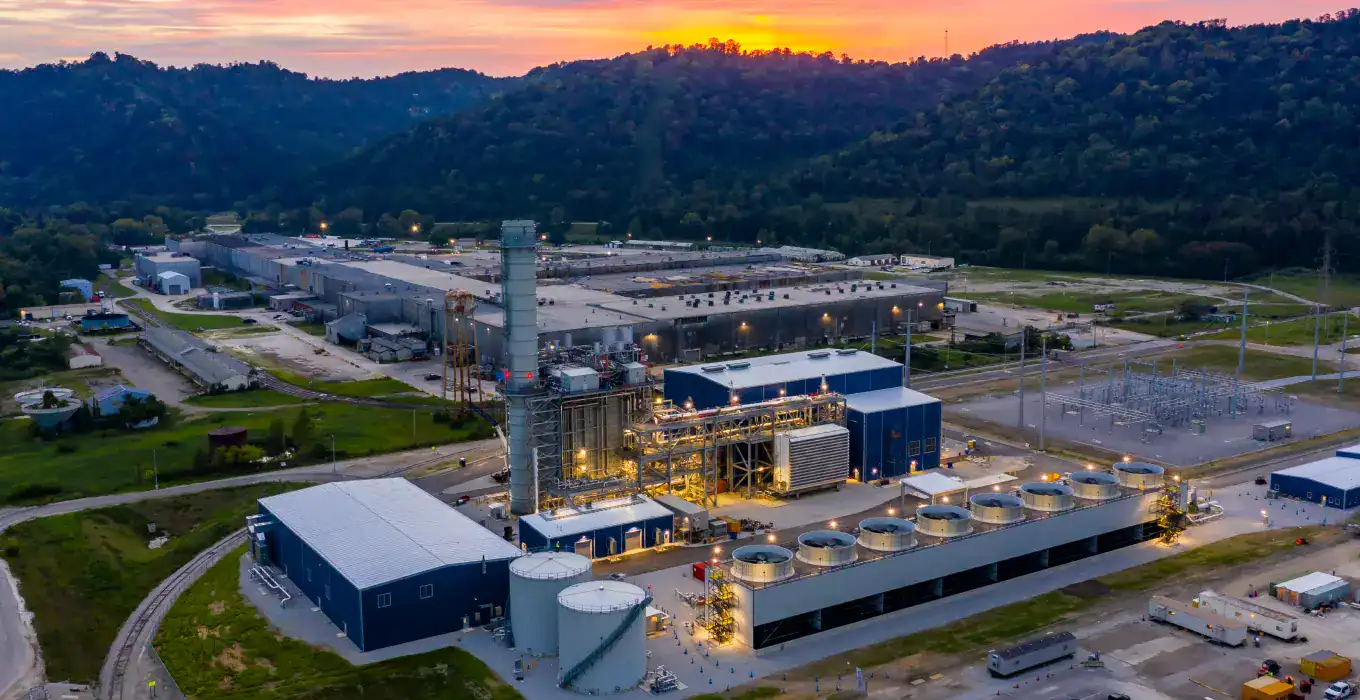
 We’ve been tracking a story that we consider an ongoing tragedy for more than a decade. American Water Management Services (AWMS) owns a wastewater injection well in Trumbull County, Ohio, that supposedly caused a low-level earthquake (that nobody could feel) in 2014. Actually, there are two injection wells located at the site, both operated by AWMS. They were both “temporarily” shut down by the Ohio Department of Natural Resources (ODNR) following the quake nobody could feel (see
  Last May, MDN brought you the news that the Ohio Department of Natural Resources (ODNR) was laying the blame for a series of low-level earthquakes in southeastern Ohio on fracking at a shale well in Noble County (see
 In March, Hull Street Energy (HSE) entered an agreement to acquire two peaking power plants from Rockland Capital, LP, significantly expanding its Milepost Power portfolio (see
  Last November, the Buckeye Environmental Network, backed by lawyers from the controversial Earthjustice, sued the Ohio Department of Natural Resources (ODNR) over permitting two new shale wastewater injection wells in the Marietta area, claiming the standard used to evaluate the wells was old and out-of-date (see
  EQT Corporation delivered its latest quarterly update yesterday for the first quarter of 2026. EQT sees the materialization of “in-basin demand growth” improving Appalachian market conditions through the end of the decade. The company says it is positioned as a preferred partner for large-scale power, midstream, and data center projects in the region. EQT plans to continue drilling and completing a significant number of wells throughout 2026, indicating ongoing development in the Marcellus and Utica regions. However, the company is curtailing (restricting) 10-15 Bcf (billion cubic feet) of production during the second quarter due to current low prices.
  Natural gas flows along the Rover Pipeline have been cut by 387 MMcf/d (out of 3.25 – 3.4 Bcf/d) due to maintenance at the Bulger Compressor Station, which is expected to last through the end of the month, curbing Appalachian takeaway capacity to the Midwest and Canada. Additionally, the MarkWest Harmon Creek gas processing plant in Washington County, PA, is reported to be offline due to this work.
 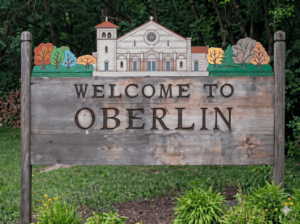 Oberlin, Ohio, officials are weighing a proposal to amend the city’s Community Bill of Rights to allow Dominion Energy Ohio to build a gas pipeline connection to a planned eco-industrial park, unlocking possible state support. Environmental groups and students at Oberlin College (neither of which pay any property or income taxes in Ohio, meaning they don’t have a say) argue the change would weaken Oberlin’s anti-fossil-fuel commitments and revive ties to Enbridge, whose NEXUS pipeline previously “divided” the city. City officials and utility experts counter that renewables alone are not yet feasible, citing constraints on electric capacity and on wind, solar, and geothermal options.