
Baker Hughes | Energy Services | Industrywide Issues | Ohio | Pennsylvania | Research | West Virginia
M-U Rigs Even @ 36; Haynesville Even @ 55; Nat’l Up 3rd Week @ 580
 Last week was (once again) noteworthy for the Baker Hughes rig count. Although the Marcellus/Utica count didn’t budge, the national count increased by another 7 rigs. The national count has risen over the last three weeks — by 18 rigs! The new national count, 580, is also the highest the combined count has been since May 2025. The combined M-U rig count remained at 36 active rigs for the eighth consecutive week. The M-U’s chief competitor, the Haynesville, maintained its count of 55 active rigs, operating 19 more than the M-U. Read More “M-U Rigs Even @ 36; Haynesville Even @ 55; Nat’l Up 3rd Week @ 580”
 The Marcellus/Utica region received 31 new drilling permits last week, June 22 – 28, the very same number issued two weeks ago! Can’t remember the last time that happened. Last week, Pennsylvania issued just 5 new permits. Ohio issued 13 new permits. West Virginia also issued 13 new permits last week. The drillers who received new permits included: Antero Resources, EOG Resources, EQT, Expand Energy, Infinity Natural Resources, Laurel Mountain Energy, and Pennsylvania General Energy.
  Ohio’s Utica shale boom ignited around 2011 in northeastern counties, with Carroll County emerging as the epicenter of early drilling. Operators like Chesapeake Energy targeted the oil and liquids-rich “wet gas” windows in Carroll, Columbiana, and Harrison counties. However, as operators refined their geologic understanding, they discovered the formation’s most prolific “dry gas” window lay to the southeast. Development steadily migrated toward Belmont, Monroe, Jefferson, and Guernsey counties, where deeper, overpressured rock formations yielded massive volumes of natural gas. By the mid-2010s, these southern counties dominated Ohio’s Utica production, eclipsing the northern pioneers that first proved the play’s potential. However, three years ago, Encino Energy “cracked the code” on Ohio Utica oil drilling, and activity began migrating north again (see
  Data center growth is rapidly reshaping Northeast power and natural gas markets, with projects clustering near transmission lines, substations, gas-fired power generation, and pipeline corridors. Virginia remains the epicenter, led by Northern Virginia’s massive hyperscale hub and tens of gigawatts of planned capacity. Ohio is emerging fast around Columbus, with more than 15 GW proposed. Pennsylvania could become a major growth story, pairing Marcellus/Utica gas resources with large campuses such as Homer City’s planned 4.5-GW gas-fired/data center redevelopment. However, PA is attempting to shoot itself in the foot with talk of both short- and long-term moratoriums on new data center construction. So, the jury is still very much out on how successful PA will be with data centers.
  In February, MDN alerted you to yet another gas-fired power plant project that Williams (the pipeline giant) was adding to its roster. Williams entered the gas-fired power plant space (actually building and operating them) in April 2025 via a subsidiary called Will-Power (see
 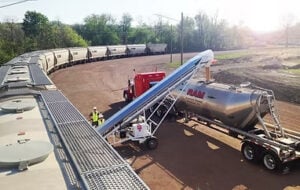 We love a good railroad story, and at its core, that’s what this story is. Investment firm FTAI Infrastructure has completed its acquisition of Tidewater Logistics, a barge-and-rail transloading company operating in Ohio, West Virginia, and Texas, for about $45 million in cash. Tidewater serves producers, shippers and industrial customers in Appalachian Basin and Gulf Coast shale and energy markets, making it complementary to FTAI’s Wheeling & Lake Erie Railway. Tidewater’s facilities include frac sand transloading in Steubenville, OH; Fairmont, WV; and Allenport, PA.
  Chestnut Run Energy plans to construct a $2 billion natural gas-powered electric power plant in Carroll County, Ohio, capable of powering up to 900,000 homes (see
  The Ohio Oil and Gas Land Management Commission (OGLMC) is set to vote on Monday to open roughly 23,000 acres of publicly owned wildlife preserves in eastern Ohio to fracking. The panel will weigh accepting bids on about 15,000 acres split between Jockey Hollow and Egypt Valley, plus opening another 8,000 acres of Egypt Valley. Approval would bring Ohio’s leased public land to more than 30,000 acres across Salt Fork State Park and six wildlife areas, mostly in the Belmont-Harrison-Guernsey region. Ohio has already collected roughly $57 million in signing bonuses, plus 18–20% royalties.
  In October 2025, we reported that Ohio Republican Senators had introduced Senate Bill (SB) 219, the first significant update to Ohio’s oil and gas laws since the Kasich administration more than a decade ago (see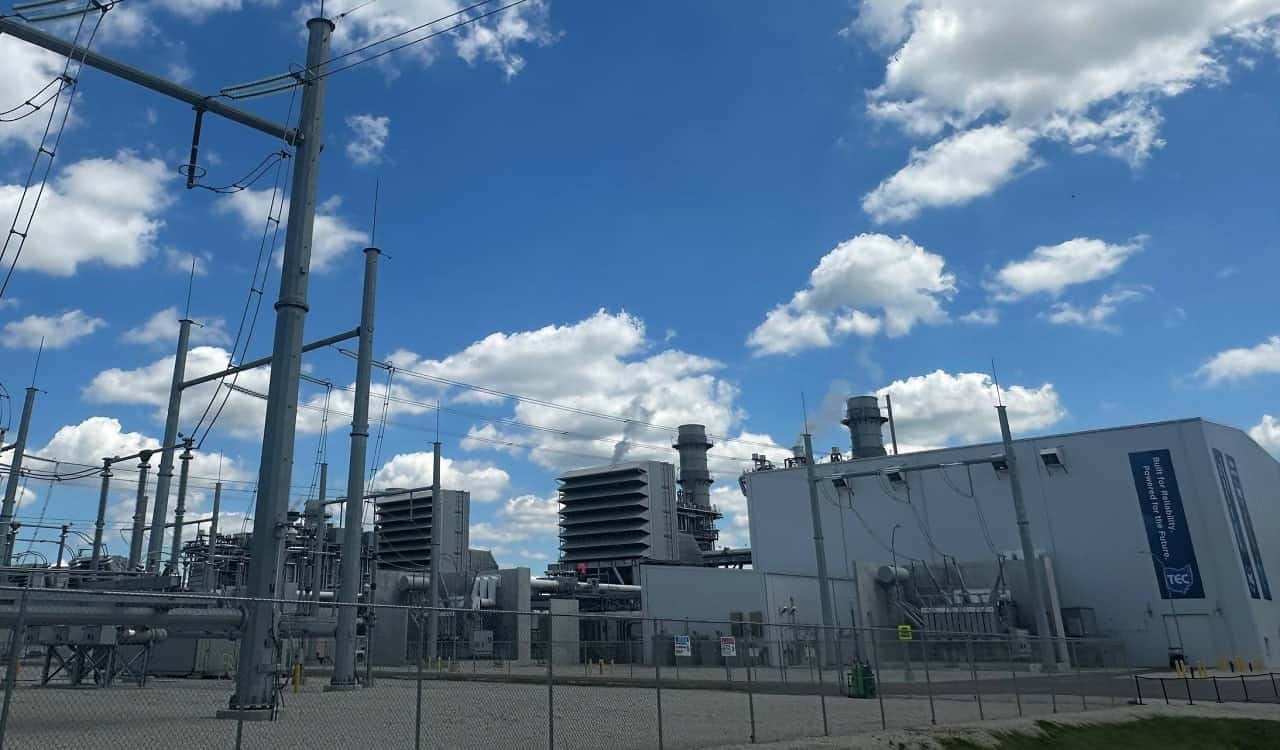
 In February, President Donald Trump unveiled a record-breaking $33 billion natural gas power plant in Piketon (Pike County), Ohio, to be operated by SB Energy, a subsidiary of Japan’s SoftBank (see
  JobsOhio, a private, nonprofit corporation that works on behalf of the state to drive job creation and new capital investment in Ohio by attracting business, contracts its economic research to Cleveland State University (CSU) to monitor the Utica Shale industry. JobsOhio released the latest CSU twice-a-year report yesterday (full copy below). It shows that Ohio’s shale energy sector drew another $2.9 billion in direct investment between January and June 2025, pushing cumulative investment in the Utica since 2011 to nearly $117.5 billion. All private money! It’s massive.