
Veolia Lands 350 MW OH Microgrid 6 Days After Paying Antero $371M
 On July 30, French environmental services giant Veolia announced it had been picked by “a major project developer” to operate and maintain a 350-megawatt (MW) microgrid that will power an artificial intelligence data center campus in Ohio. The press release carried a New Albany, Ohio dateline. It’s a genuinely big deal — a behind-the-meter power plant that will supply 100% of a data center campus without leaning on the grid at all. Here’s the dots nobody else has connected. This is the same Veolia that Antero Resources and Antero Midstream spent six years suing over a botched frack wastewater plant in West Virginia. And Veolia announced this shiny new Ohio contract exactly six days after wiring Antero a check for $371 million. You can’t make this stuff up. Read More “Veolia Lands 350 MW OH Microgrid 6 Days After Paying Antero $371M”
 A Harrison County landowner and longtime pro-drilling voice is now accusing EOG Resources of “theft” — and while the word grabs headlines, the underlying dispute is a lot more nuanced than one company stealing one man’s mineral rights. A recent report from Your Ohio News lays out landowner Ron Ott’s grievances against EOG, but bundles together at least four separate issues into one story. We think MDN readers deserve the untangled version.
  Something of an upset last week for rigs operating in the Marcellus/Utica region. We maintained the same cumulative count of 36 last week, which has been at that level for 12 weeks in a row. However, Ohio lost one rig in the Utica (now operating 10 rigs), while West Virginia gained that lost rig in the Marcellus (now operating 9 rigs). Pennsylvania maintained its rig count of 17. The national count increased by 1 to 588, which ties with a few weeks ago to be the highest national rig count in more than a year.
  The Marcellus/Utica region received 19 new drilling permits last week, July 20 – 26, down 7 from two weeks ago. Last week, Pennsylvania issued 10 new permits. Ohio issued 4 new permits. And West Virginia issued 5 new permits. The drillers who received new permits included: Ascent Resources (1), EOG Resources (1), EQT (7), Expand Energy (5), Infinity Natural Resources (2), Range Resources (2), and Snyder Brothers (1).
  We periodically go pipeline-notice hunting to see what’s throttling Marcellus/Utica molecules on any given day (see

 In June, Ohio Governor Mike DeWine signed Senate Bill (SB) 219 into law. The new law, the first significant update to Ohio’s oil and gas laws since the Kasich administration more than a decade ago, reforms Ohio’s orphaned oil and gas well program and other elements of Ohio’s O&G laws. One aspect of the new law establishes an expedited drilling and plugging permit process. The law prevents the state from rejecting expedited permit requests (capped at 10 per owner annually), shortens timelines for leasing and drilling on public lands—including 30-day permit approvals—and limits landowners’ ability to challenge expired lease renewals. Anti-fossil fuelers are fuming. What’s new?
  There’s been a change in the Marcellus/Utica. Despite fewer visible rigs and water trucks across Pennsylvania, the Marcellus Shale isn’t declining—it’s maturing. Counting wells or permits no longer measures success, because fifteen years of learning have made modern wells dramatically more productive. Longer laterals, better geologic mapping, and refined completion techniques enable operators to produce more gas from fewer wells, reducing land disturbance, road construction, and traffic while improving economics. This shift from expansion to optimization arrives as demand surges from manufacturing, LNG exports, and AI data centers. For Appalachian communities, the takeaway is clear: the Marcellus isn’t slowing down—it’s getting better.
 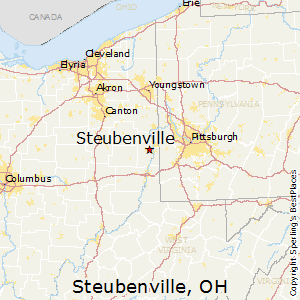 After months of deliberation, Steubenville (Jefferson County), Ohio, City Council voted to accept a bid and proceed with leasing the city’s mineral rights to the oil and gas industry, including areas near residential neighborhoods and Beatty Park. Some residents voiced strong opposition, citing threats to the park’s ecosystem, health concerns, and insufficient public involvement, urging the council to reject bids or form a resident-inclusive committee. Fourth Ward Councilman Royal Mayo voted against it, questioning fracking’s health effects. First Ward Councilman David Albaugh supported it, noting that surrounding areas are already fracked and that no well pad would be built in Steubenville. The money (over $1 million!) is expected within 90 days.
  Pipeline giant Williams announced a $5.34 billion investment led by Blackstone Credit & Insurance, in partnership with Apollo and KKR, to fund its five behind-the-meter Power Innovation projects: Socrates, Apollo, Aquila, Socrates the Younger, and Neo. All five projects are located in Ohio and will use Utica (or Marcellus) shale gas. In exchange for the money, the investors receive a 49% noncontrolling ownership stake, while Williams retains 51% ownership and operational control, plus a buyout right between years 7 and 14. While the headline numbers focus on high-finance metrics, the practical, on-the-ground effect of this deal directly reshapes the Appalachian natural gas landscape, pipeline dynamics, and the regional race to power the AI-driven data center boom.
  Four Washington County, Ohio, Class II injection wells voluntarily stopped operating July 1-2 after state regulators from the Ohio Department of Natural Resources (ODNR) said they may be affecting nearby oil and gas production wells. The wells are Redbird Nos. 4 and 5, American Growers No. 1, and Nichols No. 1-A, although the Nichols owner disputed that operations had ceased at that well. ODNR and operators will develop corrective plans, while a third-party consultant examines nearby private water wells. Activists want broader, long-term groundwater testing, noting that Redbird No. 4 waste has previously migrated more than 5 miles underground. It’s important to note that the alleged migration of fluids affected other (conventional) oil and gas wells, NOT water wells.
  Ohio’s program to lease state-owned land for fracking beneath it (never on top) has been an astonishing success. Ohio has earned $314 million from leasing roughly 22,000 acres of state parks and wildlife areas for fracking. Most came from signing bonuses: $62 million for 6,200 acres under Salt Fork State Park and $238 million for Jockey Hollow and Egypt Valley wildlife areas. Royalties have also begun flowing—Infinity Natural Resources has paid $11.3 million from Salt Fork production since October 2025.