
Enviros Seek to Ban Ohio Data Centers via Constitutional Amendment
 A supposed “group of rural Ohioans” in Adams and Brown counties is seeking a constitutional amendment to ban data centers exceeding 25 megawatts, citing concerns over resource consumption and a lack of local control. The “rural Ohioans” argue these massive facilities drain electricity and water supplies while providing few permanent jobs, often facilitated by secretive non-disclosure agreements between tech companies and officials. After submitting initial signatures to the Ohio Attorney General, supporters must gather approximately 413,000 more by July to reach the November ballot. Because modern AI-driven facilities typically require over 200 megawatts of power, this amendment would effectively ban large-scale data center expansion across the state. In its reporting, the media left out an important part of the story. Read More “Enviros Seek to Ban Ohio Data Centers via Constitutional Amendment”
 An unidentified natural gas driller has applied to open over 8,300 additional acres of the Egypt Valley Wildlife Area for fracking, potentially making it Ohio’s largest fracking operation on public land. This request follows a January decision that already opened 4,400 acres of the 18,000-acre preserve, which is primarily used for conservation, hunting, and fishing. While the state’s Oil and Gas Land Management Commission (OGLMC) has historically favored industry requests despite significant public opposition, environmentalists and some Democratic lawmakers argue that the expansion exploits public resources and threatens local ecosystems. A public comment period remains open until April 27.
  The Energy Cooperative (TEC) has proposed a 24-mile-long, 24-inch natural gas pipeline across Licking County, Ohio, stretching from Bennington Township to the New Albany International Business Park. Estimated at $150 million, the project is designed to supply energy to a specific, unnamed data center, which will fully fund the construction. (We think we’ve identified the “unnamed” data center, which we’ll do below.) While TEC maintains the pipeline will enhance system reliability and stabilize pressure for its 58,000 members, the project faces scrutiny from local landowners. Concerns involve the potential use of eminent domain and the environmental impact on agricultural land.
  Two weeks ago, the Marcellus/Utica saw a realignment in rig counts, at least in Ohio and West Virginia. Pennsylvania kept the 20 rigs it has had since early February. Ohio lost two rigs, from 13 to 11, the fewest active rigs in the Buckeye State since last September. And West Virginia picked up one rig, from 7 to 8 rigs, for the first time since last May! Overall, the M-U region had a net loss of one rig two weeks ago, going from 40 to 39 active rigs. The same numbers for the M-U held last week—no changes. One thing we didn’t mention last week (we just noticed this week) is that, along with the change in rigs between OH and WV, came a shift in Marcellus-focused and Utica-focused rigs. The Marcellus gained one rig (now runs 27), and the Utica lost two rigs (now runs 12).
  The Marcellus/Utica region received a combined 21 new drilling permits last week, Mar. 2 – 8, up 10 from the 11 permits issued two weeks ago. Pennsylvania issued 21 of the permits. Ohio issued 7. And, West Virginia issued no new permits last week. The drillers receiving new permits last week included: Ascent Resources, CNX Resources, EOG Resources, EQT, Expand Energy, Range Resources, and Repsol.
  Just coming to light for us is a lawsuit filed in June 2025 seeking to hold DeepRock Disposal Solutions responsible for the $1.28 million cleanup of a 2021 environmental incident in Noble County. The incident involved fracking brine migrating from a DeepRock injection well into the inactive Gant Well, triggering a massive eruption that contaminated local waterways and killed a couple of hundred fish and salamanders (see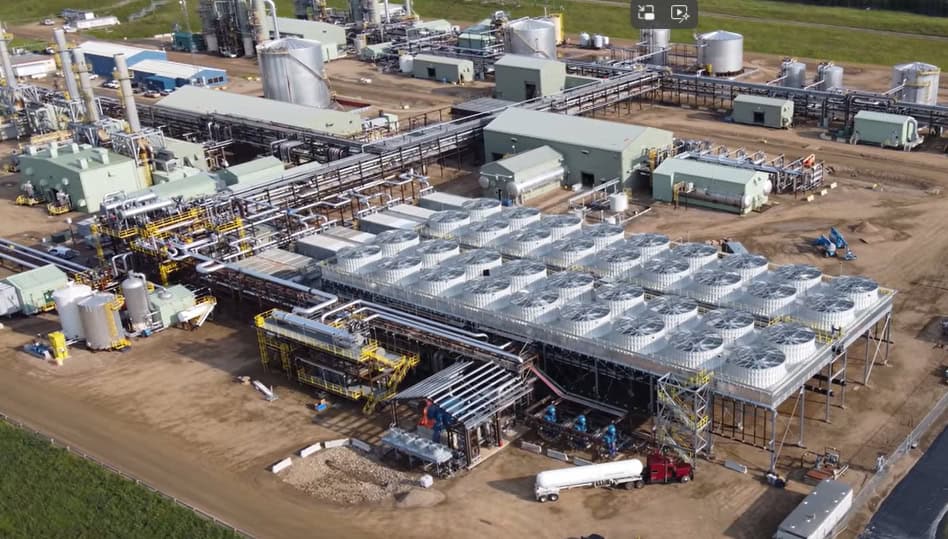
 Wastewater injection wells are an essential, safe, and highly regulated component of Southeast Ohio’s fracking industry. Banning these wells would trigger an economic catastrophe, leading to job losses and reduced public funding, without providing any actual environmental benefits. Yet that’s exactly what the political leaders of Marietta, OH, in collusion with virulent anti-fossil fuel groups, are attempting to do. Opposing injection wells while supporting fracking (as Marietta’s “leaders” are doing) is contradictory, as the two are inseparable for regional energy production and the area’s continued economic stability.
 Here’s a lawsuit that had (until now) escaped our radar screen. It’s a lawsuit dealing with the issue of post-production deductions. The case is Kirkbride v. Antero Resources Corp. and is being litigated in the U.S. District Court for the Southern District of Ohio. On March 6, 2026, Magistrate Judge Elizabeth Preston Deavers denied a motion to certify the case as a class action. This is a significant development in the ongoing legal friction between Ohio landowners and energy companies over how royalties are calculated.
  Ascent Resources, formerly American Energy Partners, was founded by Aubrey McClendon, a gas industry legend, and is a privately held company that focuses 100% on the Ohio Utica Shale. Ascent, headquartered in Oklahoma City, OK, is Ohio’s largest natural gas producer and one of the largest natural gas producers in the U.S. The company issued its fourth quarter and full-year 2025 update last week. The company plans to expand its 2026 drilling program, increasing land spending by 40% to nearly $225 million. The company aims to strengthen its long-term inventory and supply natural gas to power-hungry Appalachian data centers.
  Last week, EOG Resources reported strong full-year 2025 results, earning $5.0 billion in net income and returning $4.7 billion in free cash flow to shareholders. For 2026, EOG announced a $6.5 billion capital plan targeting 13% total production growth and increased operational efficiency. A central component of this strategy is EOG’s Ohio Utica play, which the company has identified as a top priority alongside the Delaware Basin and Eagle Ford. Following its transformational Encino Energy acquisition last August, the company expects significantly higher activity in the Utica throughout 2026.