
Annual SRBC Water Report Finds No Impacts from Shale Drilling

The Susquehanna River Basin Commission (SRBC) established the Remote Water Quality Monitoring Network (RWQMN) in January 2010 in response to natural gas drilling activities in the basin. More than 50 water quality monitoring stations are operating in watersheds experiencing unconventional shale gas development. Each station continuously monitors the following parameters: pH, temperature, specific conductance, dissolved oxygen, turbidity, and relative water depth. The data are collected at five-minute intervals and uploaded to SRBC’s publicly accessible web site. Each year the SRBC releases an annual report evaluating their findings. So far, since, 2010, the SRBC has found no adverse impacts on the basin’s water supplies due to Marcellus drilling and fracking. The SRBC has just released the latest report, for 2016 (full copy below). The trend continues yet again for last year: no impacts from natural gas drilling on the Susquehanna River Basin…
Read More “Annual SRBC Water Report Finds No Impacts from Shale Drilling”
 Williams representatives were on hand earlier this week in Tunhannock, PA (Wyoming County) to present a briefing to local politicians and community leaders on the status of the now-under construction Atlantic Sunrise Pipeline project. Atlantic Sunrise is a $3 billion, 198-mile natural gas pipeline project running through 10 Pennsylvania counties to connect Marcellus Shale natural gas from northeastern PA with the Williams’ Transco pipeline in southern Lancaster County. Much of the attention has focused on Lancaster County and a small group of antis who oppose the project there. However, Atlantic Sunrise will begin its journey to Lancaster in Susquehanna County, PA–in the northeastern tip of the state. Construction in Susquehanna and adjacent counties is scheduled to begin “very soon,” according to Williams rep Mike Atchie. When it does begin, some of the people working on it will come from the same counties where it’s getting built. Last week the Teamsters held a job fair in Harrisburg (see
  The Pittsburgh Post-Gazette has done it again. They’ve posted another fake news story about the Marcellus Shale industry. Here’s how it works: A Big Green group, like the odious Earthworks, enlists the help of a servile, biased “reporter”–feeding all sorts of false information to said “reporter”–the “reporter” essentially takes dictation, writes it up, and publishes it as “news.” Earthworks and Moms Clean Air Force, both national, radical, out-of-the-mainstream anti fossil-fuel groups, have colluded with the Post-Gazette to release a fake news “report” that says because some of Pennsylvania’s children go to school within a half mile of an oil or gas well, those children are endangered from emissions, including methane. Yeah, methane–you know, natural gas. IF methane happens to leak (which doesn’t happen often) it simply goes straight up into the atmosphere where it supposedly contributes to man-made global warming. It certainly doesn’t endanger anyone on the ground. The Big Green groups publishing the report say 311,000 kids in PA go to school near an oil or gas well (the vast majority being conventional, non-shale wells). Big Green totally lies about the risks. But let’s set that aside for the moment. Why are only children endangered? Why not adults too? Or pets? Or zombies? Big Green is (ab)using children in their narrative because everyone has a knee-jerk reaction when it comes to kids. We all will protect our children with our own lives–it’s an ingrained, automatic reaction. These sleazeballs are playing off that fear with a false report–and the Pittsburgh Post-Gazette is complicit in spreading the lie…
 Ahead of providing its third quarter 2017 update, yesterday Rex Energy, a driller focused mainly on the Marcellus/Utica (headquartered in State College, PA) has issued an update on two wells recently connected to sales. The two wells are located in Rex’s Butler County, PA “Moraine East” area. What’s unique is that both wells were completed with a newly revamped/tweaked completion design. Completions is that part of drilling a well when you frack it and hook it up to production. Rex doesn’t comment on how they tweaked their completion design. Typically, changing up completions may involve how long each frack stage is, the type (and quantity) of sand or other proppant used, the kind of slick water used, etc. Rex worked with an engineering firm to review their completions process and made some changes–and they are happy with the results. Initial daily production for the two wells averaged 9.4 million cubic feet equivalent per day (MMcfe/d). Rex reports the methane (natural gas) portion was 4 MMcf/d, NGLs of 820 barrels per day, and condensate averaged 70 barrels per day. Looks like Rex has a couple of winners, with more on the way using the new completion design…
 Sadly, the severance tax issue in Pennsylvania is not yet dead, as we had hoped. Last week budget negotiations broke down and PA Gov. Wolf took matters into his own hands by borrowing $1.25 billion from the state’s Liquor Control Board to plug a gap in this year’s budget (see
 In August 2016, energy giant Tenaska (headquartered in Omaha, NE) broke ground to build a 925-megawatt natural gas-fueled power plant in South Huntingdon (Westmoreland County), PA (see
  It’s been a few months since we’ve brought you news about the monthly average for Baker Hughes’ venerable rig count–largely because after GE completed it’s merger with Baker Hughes they quit issuing monthly press releases from their website! We spotted a story in the Pittsburgh Business Times that talks about Ohio coming close to parity in their rig count with Pennsylvania–which is a really big deal–and the reasons for it. That story sent us looking for the latest rig count numbers and indeed, it’s true. As of September, PA averaged 33 shale rigs in operation, while OH averaged 29–the closest we’ve ever seen it. If you look at the counts for last week (BH does a weekly rig count too), the numbers are even closer: PA with 31 rigs, OH with 29. We don’t typically monitor the weekly counts as they always fluctuate up and down–better to look at monthly averages. But the fact remains that PA has been pretty steady, operating between 32 and 34 rigs per month since January of this year, while OH has gone from operating an average of 20 rigs in January to 29 last month, and West Virginia has gone from operating an average of 8 rigs in January to 15 rigs last month (nearly doubling). Yet PA is static. Is there an explanation? Some experts think there is, and it can be explained in a single word: pipelines…
 A decade ago the petrochemical industry in the U.S. was in the toilet–in the midst of a downturn. Plants were leaving our shores, heading to other countries. And then the shale revolution hit full force–and changed everything. Petrochemical plants and investment is now skyrocketing here at home, because of shale. Petrochemicals are chemical products derived from petroleum (i.e. oil) and natural gas. The entire plastics industry comes from oil and gas–you knew that, right? Ethylene (which comes from ethane) and propylene (which comes from propane) are used to make polyethylene and polypropylene respectively–that is, plastics. And plastics are used in just about everything you touch, live in, ride in, etc. Plastics make modern life possible. Without plastics, we’d be back in the Stone Ages–living short, brutish lives. Ten years ago our petrochemical industry was flailing, but today it’s thriving. According to an expert speaking last week at Pittsburgh Chemical Day (an annual event), the Shell ethane cracker now under construction is in the “the second wave” of ethane crackers. According to the same expert, we are witnessing the “biggest buildup in the U.S. petrochemical industry we have ever seen.” And it’s all because of shale…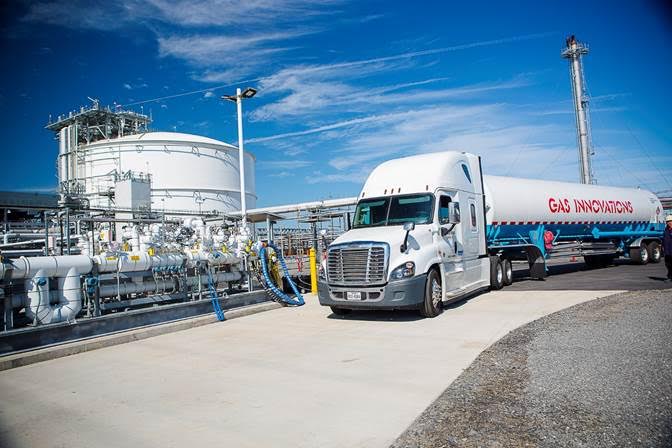
 Environmental radicals from a group called Lancaster Against Pipelines made good on their promise to disrupt work on Williams’ Atlantic Sunrise Pipeline project–a $3 billion, 198-mile natural gas pipeline project running through 10 Pennsylvania counties to connect Marcellus Shale natural gas from northeastern PA with the Williams’ Transco pipeline in southern Lancaster County. Lancaster Against Pipelines is headed up by Mark Clatterbuck (who participated in the protests against the Dakota Access Pipeline) and his wife Malinda. The clattering Clatterbucks got 20-35 wackos from Lancaster County to load themselves into 16-18 vehicles (numbers change depending on the news source), which they then drove onto an access road used by Williams, where workers are beginning to clear land. The wackos parked themselves right in the middle of the road and stood in front of machinery, preventing Williams personnel from accessing the site. The only problem, for the wackos, is that it was raining so hard (leftovers from Hurricane Nate moving through), that Williams personnel weren’t working at the site anyway! However, it’s the principle of the thing. So the police were called. The so-called protesters were asked to move (or be arrested)–so they moved. End of story. Nobody hauled away in handcuffs, no striking images of people laying down refusing to move (too wet for that). Just a bunch of wackos with nothing better to do for a few hours, along with a few reporters…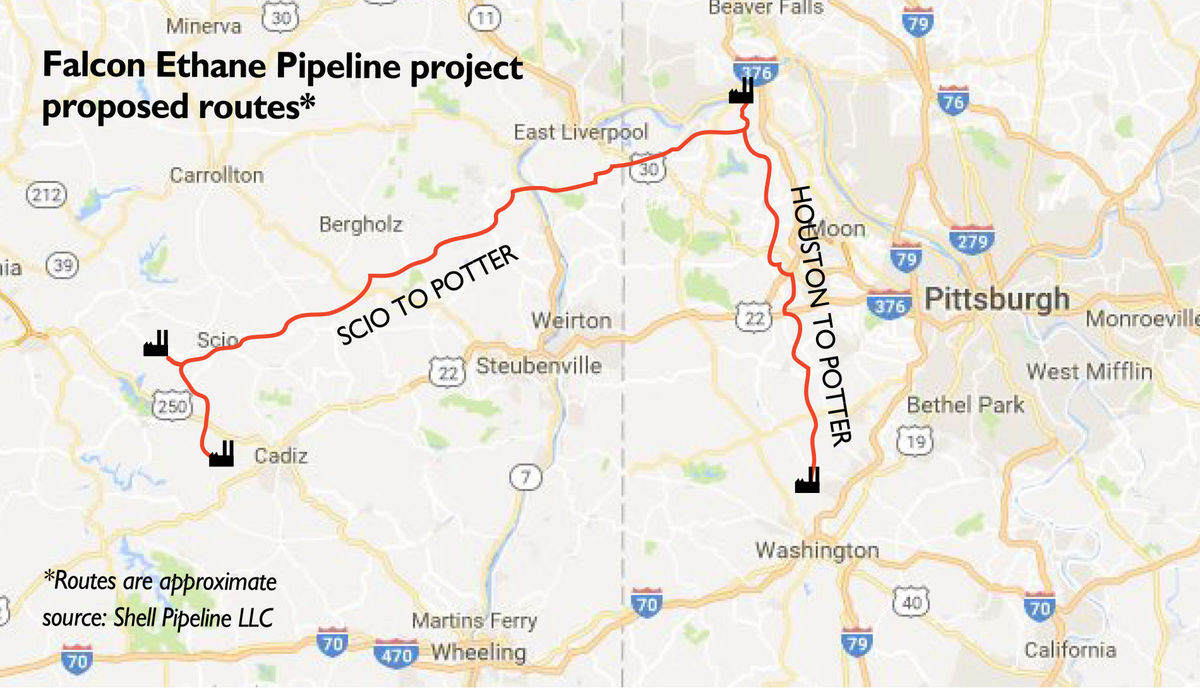
 MDN has run two stories about a new Marcellus/Utica drilling company called Pin Oak Energy Partners, one in August (see
  Listen up job seekers in eastern Pennsylvania: The International Brotherhood of Teamsters is looking for 400 people to work on building Williams’ Atlantic Sunrise Pipeline–a $3 billion, 198-mile natural gas pipeline project running through 10 Pennsylvania counties to connect Marcellus Shale natural gas from northeastern PA with the Williams’ Transco pipeline in southern Lancaster County. The job fair is happening TODAY (Friday) and TOMORROW (Saturday) ath the Harrisburg-Hershey Crown Plaza located at 23 South 2nd Street in Harrisburg (8am-4pm both days). According to the Teamsters, there are “hundreds of jobs to fill” and they are “looking to expand our workforce quickly.” Qualifications? You need to be 21 years old or older, have a driver’s licence, and be willing to travel. Construction experience is a plus, but not required. Here’s the deets…