
Potter County, PA Could Support 3K+ Shale Wells, Theoretically
 When it comes to shale drilling in the northern-tier of Pennsylvania, counties like Susquehanna (#1 producing county in the state), Bradford (#3 producing county) and event Tioga (#7 producing county) may come to mind. But what about the county west of Tioga–Potter County? Potter isn’t even in the top 10 producing counties in the state. But that doesn’t mean there’s not shale drilling activity. In July MDN reported that JKLM Energy (owned by Buffalo Bills owner Terry Pegula) is in the process of drilling a dozen Utica wells in Potter this year (see JKLM Drilling 12 Utica Wells in Potter County, PA This Year). The residents in the county are being proactive about promoting shale drilling in Potter. They’ve formed the Potter County Natural Gas Resource Center Steering Committee, complete with its own website. At a recent meeting of the Steering Committee, Penn State’s Jim Ladlee told attendees that Potter County could, theoretically, support 3,000+ shale wells. That certainly doesn’t mean it will ever see that many, but what it does indicate is that there is potential in Potter County far beyond the dozen or so shale wells currently planned. Here’s a report from the meeting…
Read More “Potter County, PA Could Support 3K+ Shale Wells, Theoretically”
 South Jersey Resources Group has cut a five-year deal to provide natural gas for the Hickory Run Energy Station in Lawrence County, PA. Just two weeks ago MDN told you that the Hickory Run Energy Marcellus gas-fired electric plant planned for Lawrence County appears to be active and moving forward once again (see
  Juniata County just became the fifth central Pennsylvania county to join the SEDA-COG Natural Gas Cooperative. SEDA-COG stands for Susquehanna Economic Development Association – Council of Governments. Collectively, SEDA-COG is a group of 11 central PA counties. The other four counties that belong to the Natural Gas Cooperative include Clinton, Centre, Mifflin, and Perry. So what’s the big deal about this group? In 2013 MDN reported that SEDA-COG was working on an initiative to bring natural gas to more residents and businesses in their collective 11-county region (see
  Range Resources and the Pennsylvania Dept. of Environmental Protection (DEP) have officially “settled” something we thought was already settled–alleged methane migration from a well Range drilled in 2011. In June 2015, then-Secretary of the DEP, John Quigley, slapped Range with an $8.9 million fine–the largest such fine ever levied by the DEP (see
  Exactly two years ago, two Big Green groups–the Philadelphia-based Clean Air Council and the Washington, DC-based Environmental Integrity Project (both disgusting litigation factories)–filed a complaint against Shell to block the air quality permit needed to build the $6 billion ethane cracker in Monaca, PA (see
  The Allegheny Institute is out with another top notch policy brief. This one tackles the state’s existing impact fee and addresses the issue of why revenues from the impact fee have slid over the past several years. The Institute is not denigrating the impact fee, but lauding it as a better system of taxation than a severance tax. The Allegheny Institute exists to conduct research, education and advocacy work in a mission to defend taxpayers and businesses against burdensome taxation, inefficiency and intrusiveness of an ever expanding government–a pretty tall order because government at all levels is always expanding, like a voracious monster. Think of the Allegheny Institute as a mini version of the Heritage Foundation–focused specifically on Pennsylvania. The newest brief, titled “Shale Gas Impact Fee Revenue Continues to Slide” (full copy below) takes an honest, and hard look, at the impact fee. Researchers conclude that slapping a severance tax on top of the impact fee would be a disaster and violate the state’s commitment to drillers when they passed the impact fee…
 The Pennsylvania Dept. of Environmental Protection has put drillers (and everyone) on notice that it will bump up the fee to file for a permit to drill a Marcellus Shale well. Prior to 2013, the permit fee for a new Marcellus well was $3,200. In 2013 the DEP bumped it up by 56%, to $5,000 (see
  The Sisters of the Corn have lost their battle to prevent the Williams Atlantic Sunrise Pipeline from crossing their cornfield. Last month MDN told you about a group of Catholic nuns who, with the help of radical Big Green groups, cleared a portion of a corn field they own (local farmer uses for planting corn), plopped a couple of wooden park benches and portable flower trestle in the middle of the corn field, and declared the spot a “chapel” (see
 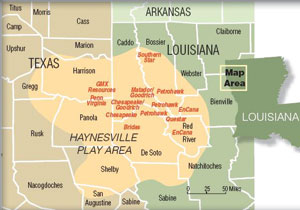 The Haynesville Shale, found in East Texas and Louisiana, last week surpassed the Marcellus for total number of active drilling rigs. That’s the first time the Haynesville has had more active rigs than the Marcellus since 2011–six years. What’s up with the “sleepy” Haynesville? It’s not so sleepy anymore. Last year one of the biggest and best drillers in the Marcellus, Range Resources, paid $4.4 billion to buy out and take over a Louisiana driller (see
  We have more evidence that a so-called “Conservative” environmental group, calling themselves Conservatives for Responsible Stewardship, is anything but conservative. Let’s strip the euphemisms away, shall we? Conservatives for Responsible Stewardship is a group of liberal Democrats pretending to be conservative Republicans. It is a pretense. A lie. How do we know? It all goes back to the budget bill passed by the Pennsylvania Senate. Republicans, which control both the House and Senate in Pennsylvania, passed an unbalanced budget of $32 billion. Problem is, there’s only $30 billion of projected revenue. So after passing the spending part of the budget, the legislature (i.e. Republicans) now have to “come up with” $2 billion to cover the difference. The pressure has been intense to punish the successful Marcellus industry by stealing even more of their money (PA already takes an overly generous portion of their profits). Senate Republicans caved to the pressure and floated a spending plan that includes a severance tax (see
  Uwchlan Township in Chester County (near Philadelphia) has put itself on a path to get sued. The town is in the process of proposing and adopting new zoning ordinances that govern how pipelines can get built within town boundaries. The problem, of course, is that they don’t have that right. Federal pipeline projects are governed by federal law and the Federal Energy Regulatory Commission. State pipeline projects are governed by the state’s Public Utility Commission. Local yahoos can’t just take it on themselves to overturn federal and state law. Sorry boys and girls, it doesn’t work that way. You’ll need to suppress your inner anarchist. Some of the things the town wants sounds pretty tame: install secure fencing at the site, have an evacuation plan ready. But some things are certain litigation waiting to happen: pipeline operators must compensate the town for “any loss of tax revenue that results from a decline in real estate values” caused by construction the pipeline. And how, prey tell, will the town calculate that? Home values go up and down with the wind–year in and year out. Many factors beyond a pipeline affect property values. This is real hubris on the part of Uwchlan…
 In March, Big Green group THE Delaware Riverkeeper (leftist political lobbying arm for the William Penn Foundation that funds it) filed a lawsuit in the U.S. Court of Appeals for the Third District requesting the court overturn a Clean Water Act permit granted by the U.S. Army Corps of Engineers for Kinder Morgan’s Orion Project in northeast Pennsylvania. Yesterday, in a humiliating defeat, the Third Circuit rejected Riverkeeper’s request and ruled the Army Corps was well within its right to grant the permit (full copy of the ruling below). In October 2015, Kinder Morgan’s Tennessee Gas Pipeline (TGP) filed their official, full application with the Federal Energy Regulatory Commission (FERC) seeking approval for the Orion Project (see
  There is a growing storm of opposition to a plan put forward by the Pennsylvania Senate in the current budget bill to fix the problem of long delays in issuing permits by the state Dept. of Environmental Protection (DEP). Enough traitorous Republicans in the Senate joined with just about all of the Democrats in the Senate to pass a budget bill that slaps new taxes on natural gas–a severance tax on drillers and a gross receipts tax on consumers (see
  In March of this year, Williams filed a full, official application for the Northeast Supply Enhancement project (see
  Not only did the Pennsylvania Senate pull a real boner by voting for a severance tax and gross receipts tax (see
  As the mighty $6 billion Shell ethane cracker begins construction in Beaver County, PA, plenty of local (and regional) businesses are asking the question: How can we get in on the action? How can we win contracts for goods and services? The Beaver County Chamber of Commerce aimed to help answer that question yesterday at a 3-hour event held at the Club at Shadow Lakes. The “Doing Business in the Era of Shell” seminar drew a crowd of 300+. Some of the speakers were from Louisiana–where they went through a similar process when SASOL built an $11 billion petrochemical project there. Here is some of the wisdom passed along to those who attended…