
NFG’s Northern Access Pipe in NY/PA Gets FERC Approval

National Fuel Gas Company (NFG), the Buffalo-based utility giant with both a drilling subsidiary (Seneca Resources) and a midstream/pipeline subsidiary (Empire Pipeline) filed an application with the Federal Energy Regulatory Commission (FERC) in March 2015 for a pipeline project they call Northern Access 2016 (later renamed to simply Northern Access Project, dropping the “2016” part). The $455 million project includes building 97 miles of new pipeline along a power line corridor from northwestern Pennsylvania up to Erie County, NY. The project also calls for 3 miles of new pipeline further up, in Niagara County, along with a new compressor station in the Town of Pendleton (see NFG’s Marcellus Pipeline from NWPA to NY Hits Resistence). In July 2016, FERC issued a favorable Environmental Assessment, paving the path for full approval (see NFG’s Northern Access Pipeline Gets Favorable FERC Review). NFG had hoped to have the project done and in-service by November of this year. However, due to foot-dragging by FERC, NFG recently announced the project would get delayed (see FERC Delay Pushes Back NFG’s Northern Access Pipeline Project). Perhaps that announcement was premature? On Friday, FERC approved the project and granted NFG their certificate to build it, although NFG is still saying the new/delayed schedule is the schedule they will stick to in building it…
Read More “NFG’s Northern Access Pipe in NY/PA Gets FERC Approval”

 According to rumors floating around the Pennsylvania environmental wacko movement, today is the day the Pennsylvania Dept. of Environmental Protection (DEP) will issue the final permits needed by Sunoco Logistic Partners to begin construction of the Mariner East 2 NGL pipeline that will stretch across the entire state. Neither Sunoco nor the DEP would confirm the rumor, but the wackos are agitated and saying their “inside sources” (of which they appear to have many) are telling them it’s today. And what if it happens? According to Maya van Rossum (THE Delaware Riverkeeper), the antis will employ their two favorite tactics: Sue in court, and whip up the more radical folks in the movement into a frenzy so they “rise up in protest.” You know, like the “protesters” (i.e. criminals) did in North Dakota–the ones who fired shots at police officers, burned tires, and engaged in illegal actions to stop work on the Dakota Access Pipeline (see

 An accident related to shale drilling is responsible for dumping some (not sure how much) acid mine drainage (AMD) from an abandoned coal mine into the Monongahela River last weekend. Which sounds worse than it actually is. Water that seeps into old coal mines mixes with pyrite (iron-sulfide) and oxidizes, turning the water an orange/brown color. The water becomes somewhat acidic. We previously talked at length about acid mine drainage coming from the Old Forge bore hole near Scranton, and about Marcellus money being used to help clean it up (see
 It’s not often these days we get to witness the birth of a new driller in the Marcellus/Utica, so it’s with great pleasure we announce the birth of S.T.L. Resources. According to an announcement, S.T.L. recently closed on the acquisition of 8,000 acres in the “core of the Marcellus Fairway” in north central PA. Along with the acreage comes “significant in-place infrastructure, current Marcellus production and is prospective for the Marcellus and Utica Shale as well as the Upper Devonian.” The privately-held S.T.L. declined to say exactly where the acreage is located, who they purchased it from and for how much. Why? They continue to try and lease more acreage in the same area and would rather keep competitive information close to the vest. S.T.L. was founded and is run by three veterans in the O&G industry with deep experience in the Marcellus/Utica: William Dressel, Founder and Managing Partner; William Hayward, Chairman & Senior Geological Advisor; and Clinton Coldren, CEO. When you look at a map you find that north central PA includes counties like Potter, Tioga and Lycoming. Which got us to thinking–who might have sold some acreage there? We have a guess…
 Recently a biased editorial ran in the biased Pittsburgh Post-Gazette, taking aim at methane. The editorial, penned by Brian O’Neill, misrepresented the facts about methane in PA, in an attempt to garner support for onerous new regulations put forward by Gov. Wolf’s Dept. of Environmental Protection. State Sen. Guy Reschenthaler, R-Jefferson Hills (representing parts of Allegheny County and Washington County), responded with his own editorial. To their credit, the Post-Gazette published it. Reschenthaler said the air is actually getting cleaner in PA, not dirtier, thanks to Marcellus Shale gas. And the new regulations being pedaled by Wolf will not make things better environmentally. The only thing the new regs will do is kill jobs…
 World Oil calls itself “the premier trade publication for the international upstream industry.” Perhaps it is–who are we to say otherwise? The folks at World Oil have done us all a favor. They surveyed the upstream (i.e. drilling) oil and gas industry to find out what drillers are planning for 2017. Overall, they find drillers plan to drill 18,552 wells in North America this year–a big 26.8% jump from last year. In releasing a summary of the results, Wold Oil outlines region by region in the U.S. what they predict will happen this year, based on survey results. The northeast section caught our eye. World Oil predicts Pennsylvania will see a 29% increase in new well drilling this year (total of 774 new wells drilled). Ohio will see an increase of 19.1% in new well drilling (380 new wells). And West Virginia will see a big 21.9% increase (245 new wells). Here’s the full summary from World Oil…

 Pennsylvania hired research firm IHSMarkit to study the Marcellus and Utica and how many ethane cracker plants the region can comfortably support. Denise Brinley, a special assistant to the Secretary of the state Department of Community and Economic Development, offered a preview of that report at this week’s Hart Energy Marcellus Utica Midstream conference in Pittsburgh. Although the report is due to be published “in the next few weeks,” Brinley spilled the beans on what it concludes: The PA Marcellus can support another two cracker plants, and the Utica can support two crackers. That’s another four cracker plants, theoretically, that our region can support, in addition to Shell’s ethane cracker. However, the study will also show we need more infrastructure (i.e. pipelines) in order to support such projects. Here’s a glimpse into some very exciting news…
 The organization that represents county governments in Pennsylvania, the County Commissioners Association of Pennsylvania (CCAP), has a message for Gov. Wolf and state legislators: Even if you pass a severance tax, keep the impact fee in place. It has, over the past five years, become critically important for all counties across the state–not just counties where drilling takes place (those “impacted”). Not only do counties want to maintain the impact fee in general, they specifically want to keep it as it is currently structured–how much drillers are taxed and how the revenue is split. The message loud and clear coming from CCAP: don’t screw with the impact fee, even if you want to (boneheadedly) add a severance tax…
 The issue of “setbacks” has always been a contentious issue when it comes to oil and gas drilling. A setback is the distance from a well to nearby structures–like water wells, homes, schools, whatever. In Pennsylvania the state law requires a minimum of 500 feet between a well and nearby structures. But here’s the thing: Do you measure the distance (as drillers maintain) from the bore hole drilled into the ground? Or from the edge of the well pad? A pad is typically 3-5 acres, and if you measure from the edge of the pad, the “actual” distance from the well to a nearby structure may be 1,000 feet instead of 500 feet. Some argue that measuring from the edge of the pad makes more sense–to protect nearby residents from noise, lights, air emissions, etc. But drillers in some locations are hamstrung, especially if the the location where they drill is on a slope or other tough terrain. Measuring from the edge of the pad may mean not drilling at all. It is that very issue now being debated in Murrysville, in Westmoreland County, PA (near Pittsburgh). It is a wisdom of Solomon kind of issue…
 Rabidly anti-drilling organizations like the Philadelphia-based Clean Air Council (CAC) have been using the deep pockets of their contributors to stir up dissent against Sunoco’s Mariner East 2 NGL pipeline, particularly in towns in the Philly orbit (see
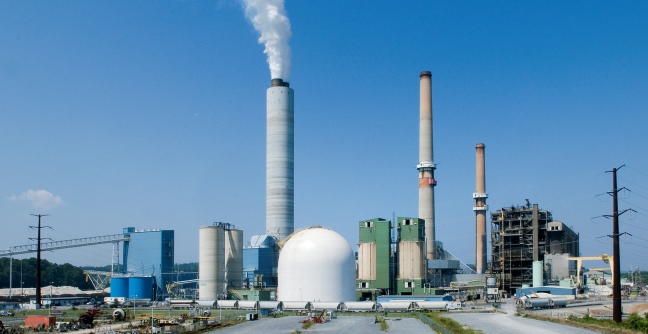
 Domtar Corporation designs, manufactures, markets, and distributes pulp, paper, and personal care products from facilities in Elk and Clearfield counties in North Central Pennsylvania. PA Gov. Tom Wolf’s office excitedly announced yesterday that the company has decided to stay in PA and not move, making “significant infrastructure and equipment upgrades at its facilities.” The decision means that 438 jobs will stay in the Keystone State rather than move elsewhere–good for Pennsylvania. Which is all mildly interesting. However, the primary reason they’re sticking around is what caught our eye: the operation is converting from burning coal for energy to burning clean, cheap Marcellus Shale gas. The PA Commonwealth Financing Authority is kicking in $1 million from the Pipeline Investment Program (PIPE) grant fund to pay for a three-mile natural gas pipeline to Domtar’s Elk County paper mill facility…
 One of the worst of the worst non-profit organizations that continues to fund anti-shale activities in the Marcellus/Utica is the William Penn Foundation. By all rights their non-profit (i.e. tax-free) status issued by the IRS should be revoked because of their overt support of anti-fracking initiatives. But we’re not holding our breath. MDN friend Tom Shepstone has written extensively about this odious organization and the many puppet groups it supports (see Tom’s article