
Belmont County | CNX Resources | Energy Companies | EOG Resources | Gulfport Energy | Ohio | Pennsylvania | Seneca Resources | Tioga County (PA) | Tuscarawas County | Weekly Permits | West Virginia | Westmoreland County
12 New Shale Well Permits Issued for PA-OH-WV Dec 15 – 21
 The combined number of new permits issued to drill shale wells across the Marcellus/Utica region was 12 for the week of Dec. 15 – 21. Pennsylvania issued 8 new permits, while Ohio issued 4. West Virginia issued no new permits for that period. Among the companies receiving new permits were Seneca Resources, CNX Resources, Gulfport Energy, and EOG Resources. Read More “12 New Shale Well Permits Issued for PA-OH-WV Dec 15 – 21”
 The venerable Baker Hughes rig count turned in its weekly report early last week, on Dec. 23 (Tuesday instead of the usual Friday) due to the holiday. The Marcellus/Utica rig count gained 1 rig three weeks ago in the Ohio Utica, bringing the total to 39 rigs. For the past three reports in a row, the M-U has maintained that count—the most rigs it has operated in more than a year. Pennsylvania has held at 18 active rigs for six consecutive weeks. Ohio has operated 14 rigs for three straight weeks (its highest in over a year). And West Virginia maintained 7 rigs, which it has operated since May 30. There were 24 rigs targeting the Marcellus and 15 targeting the Utica. The national count picked up 3 rigs, bringing the total to 545 active rigs.
  Two weeks ago, MDN brought you the news that Antero Resources, the country’s fifth-largest natural gas producer and largest producer in West Virginia, had cut a deal to buy WV driller and midstreamer HG Energy II for a combined (upstream & midstream) $3.9 billion (see
 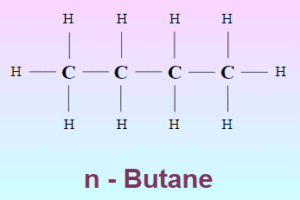 Natural gas liquids (NGLs) include “heavier” hydrocarbons that come out of the ground along with methane (CH4). The most prevalent NGL by volume is ethane (C2H6). Another common NGL is propane (C3H8). And yet another is butane (C4H10). Depending on the location, all of those NGLs are produced in abundance in the Marcellus/Utica region. So, it should not come as a surprise that manufacturing plants that use NGLs as feedstock would decide to locate facilities in the region to leverage low-cost NGLs. India-based Thirumalai Chemicals Ltd. (TCL) is moving into pre-commissioning and startup activities at its new manufacturing facility in West Virginia (near Moundsville, Marshall County) and is progressing toward startup operations.
  Volatility is the watchword for new permits in the Marcellus/Utica. Three weeks ago, the combined count between Pennsylvania, Ohio, and West Virginia was a measly 8 new permits (see
  In August 2014, the Marshall County, WV board of commissioners voted to approve a plan to build a Marcellus Shale-powered electric plant in the county (see
  Data centers—large facilities full of computers—have been in the news a lot over the past year. The internet and tech companies like Facebook, Google, and Amazon gave rise to data centers. But a new/renewed emphasis emerged a year ago with the unveiling of artificial intelligence (AI), which is now being used by a large portion of the population. Did you know that there are currently 4,149 active data centers in the U.S.? And that another 2,788 have been announced/planned, primarily related to AI? That’s from a fantastic new report from the American Edge Project (AEP) and the Technology Councils of North America (TECNA). Earlier this week, they released “America’s AI Surge: Powering Investment, Jobs, and Growth in Every State” (full copy below). We’ve extracted information specific to the Marcellus/Utica region from the report.
 Pipelines in West Virginia (like most other states) pay property taxes. It’s a significant revenue generator for counties. There are many pipelines in Wetzel County, including three NGL pipelines owned and operated by MarkWest (aka MPLX) that connect to the Mobley Gas Plant. In 2022, MarkWest filed a tax return for the pipelines showing a 35% reduction in value due to less-than-forecasted pipeline usage, a concept called “economic obsolescence based on inutility.” The County Assessor for Wetzel County challenged MarkWest’s claim.
 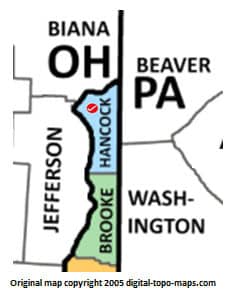 Hancock County, WV, is located in the tippy top of the northern panhandle of West Virginia, surrounded by Pennsylvania on one side and Ohio on the other. Yet somehow Hancock County has been left out of the Marcellus/Utica bonanza happening all around it. It’s not like there isn’t good rock under Hancock. Every other county that touches Hancock has drilled M-U wells within the last year. However, we can’t find any permits for a single shale well in Hancock. Ever. What gives?
  Antero Resources, the country’s fifth-largest natural gas producer and largest producer in West Virginia, is growing its WV operations. This morning, the company announced a deal to buy privately held WV driller and midstreamer HG Energy II for a combined (upstream & midstream) $3.9 billion. The deal will add a massive 385,000 net acres to Antero’s existing ~475,000 net core Marcellus acreage position, bringing with it another 850 MMcfe/d in production. The upstream part of the deal will fetch $2.8 billion, while the midstream will get $1.1 billion. HG Energy is a West Virginia corporation with its headquarters office located in Parkersburg.