
M-U Rig Count Stays @ 39 But PA & OH Swap 1 Rig; Nat’l Count @ 546
 The Marcellus/Utica rig count gained 1 rig eight weeks ago in the Ohio Utica, bringing the regional total to 39 rigs. The combined number of 39 remained the same last week, however, there was an important change. The Pennsylvania Marcellus picked up one rig last week, while the Ohio Utica lost a rig. PA is now operating 19 rigs, OH is operating 13 rigs, and WV maintains its 7 rigs, which it has operated since May of last year. There were 25 rigs targeting the Marcellus and 14 targeting the Utica last week. The national count gained 2 rigs last week, bringing the national total to 546 active rigs. Read More “M-U Rig Count Stays @ 39 But PA & OH Swap 1 Rig; Nat’l Count @ 546”
 The Marcellus/Utica region received a combined 10 new drilling permits last week, Jan. 19 – 25, down significantly from the 27 issued two weeks ago. Pennsylvania issued 6 new permits, Ohio issued 4, and West Virginia issued none. The drillers receiving new permits last week included: Ascent Resources, EOG Resources, Expand Energy, and Pennsylvania General Energy.
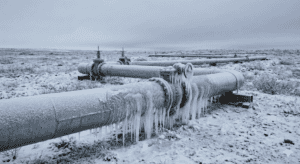 We’ve recently begun to highlight flow restrictions along pipelines that carry Marcellus/Utica molecules. When flows slow or stop (can’t reach other markets), the price typically falls because supply exceeds demand. But sometimes, the opposite happens. If pipelines are restricted due to outages and freeze-offs (as is happening right now with Winter Storm Fern), the supply of natural gas is diminished, leaving insufficient supply to meet increased demand due to the cold weather. When that happens, spot prices for natural gas soar. Wood Mackenzie reported that natural gas freeze-offs across the country reached a single-day high of 17 billion cubic feet (Bcf) on January 25th, approaching the record 18 Bcf set during Winter Storm Uri, as an intense Arctic weather system sweeps across the United States. What about the situation in the M-U?
  The Intermediate Court of Appeals of West Virginia vacated an order combining 58 oil and gas tracts into a Harrison County drilling unit, ruling that the state’s Oil and Gas Conservation Commission failed to provide sufficient findings of fact. The case involves the “JOsborn 213 Unit” operated by Arsenal Resources, which mineral rights owners claim failed to negotiate in good faith as required by law. The court found the Commission ignored conflicting testimony and provided only summary conclusions rather than a detailed analysis. Consequently, the case was remanded for further proceedings, requiring the Commission to properly evaluate all evidence and issue a new order.
  In December, MDN brought you the great news that a long-dead natural gas-fired power plant project in Moundsville (Marshall County, WV) was back from the dead (see
  Sorry, Field of Dreams, but if you build it, they don’t necessarily come. That’s the hard lesson for one of the biggest boondoggles of the Biden years—seven hydrogen hub projects (from 33 finalists) promised a collective $7 billion in federal funding (see
  In August, the parents of four children under the age of 18 (from three families) filed a lawsuit on their kids’ behalf against EQT subsidiaries EQT Production Company and EQT XL Midstream Operating, claiming that emissions from a nearby compressor station and nearby shale wells operated by EQT have led to severe health-related problems for the kids (see
  Vickery Energy Partners, LLC, a portfolio company of the private equity firm Quantum Capital Group, announced yesterday that it has closed on the acquisition of Tribune Resources. The transaction includes assets located primarily in Wetzel, Tyler, Harrison, and Doddridge counties, West Virginia, totaling approximately 38,000 net acres and more than 200 million cubic feet equivalent per day (MMcfe/d) of net production.