
WV Supreme Court to Rehear EQT Post Production Royalty Case, Maybe
 More twists and turns to report with respect to an issue we previously reported with the potential to impact every mineral rights owner and driller in West Virginia. In December MDN reported on the huge West Virginia Supreme Court decision against driller EQT that disallows EQT from deducting post-production expenses from royalty checks, even with signed contracts in place (see WV Supreme Court Rules EQT Can’t Deduct P-P Costs from Royalties). The justices, in their ruling, said that drillers can “not deduct from that (royalty) amount any expenses that have been incurred in gathering, transporting or treating the oil or gas after it has been initially extracted, any sums attributable to a loss or beneficial use of volume beyond that initially measured or any other costs that may be characterized as post-production.” A really big deal. Then in February, with a brand new justice on the bench, the WV Supreme Court agreed to rehear the case after an appeal filed by EQT–a rare and unusual step (see EQT Catches Big Break in WV Supreme Court re Royalty Deductions). A member of the West Virginians for Property Rights group said members are “pretty nervous about this.” Those who already won the case say the high court’s decision to rehear is tantamount to playing the fourth quarter of a playoff game all over again–fundamentally unfair. The court will rehear the case next Tuesday–IF they don’t grant a motion to dismiss the rehearing. The mineral rights owners involved filed the motion saying the newest justice who just came on the bench in January should not have voted to rehear a case she previously didn’t hear…
Read More “WV Supreme Court to Rehear EQT Post Production Royalty Case, Maybe”

 MDN has previously chronicled bought-and-paid-for research done by Duke University’s Avner Vengosh, professor of geochemistry and water quality at Duke University’s Nicholas School of the Environment (see
  The Baker Hughes rig count in the U.S. continued to rocket skyward in March. In January the average number of U.S. rigs was 683. In February, the count zoomed to 744, up 61 rigs in just a month. And in March, the U.S. rig count zoomed to 789, up another 45 rigs in a month. Each active rig translates into hundreds of jobs, both directly working at the rig and indirectly in services delivered to the rig and its workers. It also means more landowners will soon have royalty payments heading in their direction. When rigs are active, life is good. What about rig counts in the Marcellus/Utica? Disappointingly our region’s rig count lost a rig in March. PA lost two rigs, OH gained a rig, and WV stayed even. What does it all mean? It means that this zooming up in rig counts is happening in other locations–primarily in the Permian Basin in Texas. That is, oil rigs rushing to take advantage of an increase crude prices to a sustained $50+/barrel. While we’re happy the rig count is up, we’re not happy more it is not happening in the northeast. But honestly, without pipelines to take away an increase in production, can you blame our drillers? Once there is more takeaway capacity, you’ll see rig counts begin to climb again in our neck of the woods…
 There’s some good news and, depending on your perspective, bad news when it comes to severance tax collections from natural gas (and coal) in West Virginia. According to West Virginia Department of Revenue in a report released last week, severance tax collections on oil, gas and coal in the Mountain State exceeded revenue projections by $13 million for the first nine months of the current 2017 fiscal year. The surplus reverses the trend from the previous year when WV lost severance tax money due to the drop in the price of oil and gas. Severance tax revenue, as we’ve pointed out before, floats up and down with the commodity price of oil and gas, unlike impact fee revenues which are much less tied to commodity prices (and one reason why PA drilling flourishes). So WV is seeing higher severance tax revenue–that’s the good news. The “bad” news is that Gov. Jim Justice and the WV Senate plan to cut the severance tax–putting the state back in the position of doing more with less…
 In what has to be a major blow to the morale of anti-pipeline crusaders in West Virginia, Virginia and North Carolina, the top elected state officials in the legislatures of all three states, both Republicans AND Democrats (16 of them in all), sent a letter on Tuesday to the Federal Energy Regulatory Commission (FERC) requesting FERC approve the Atlantic Coast Pipeline project. Dominion wants to build a $5 billion, 594-mile natural gas pipeline that will stretch from West Virginia through Virginia and into North Carolina. The leaders of all three state legislators have told FERC, we want this pipeline, we NEED this pipeline, please approve it. Today is the last day FERC will receive public comments on the project. Here’s who signed, along with a copy of the letter sent to FERC…
 We find this news somewhat surprising. The West Virginia Oil & Natural Gas Association (WVONGA) has been pushing hard to get legislation passed in WV’s short legislative session on an issue we call “forced pooling lite”–WV Senate Bill 576 which addresses the issues of co-tenancy and joint development (see
  West Virginia has become a hotbed of pipeline projects. You don’t realize it until you stand back and consider all of the proposed projects for major interstate natural gas (or gas liquids) pipelines. There are, in fact, nine such major projects on the board. Some of them either are, or soon will be, under construction. Not all of them are yet approved by their respective regulatory agencies–but most are. If we were to bet, we’d bet most of the nine will get built. Can you name all nine projects? Let us give you some help: Atlantic Coast, Mountain Valley, Western Marcellus, WB XPress, Leach XPress, Mountaineer XPress, Buckeye XPress, Rover, and Appalachian Storage Hub. Actually that last one, the storage hub, is a series of six pipelines–but we lump them all into one project. Here’s a summary of each project, most of them coming soon to the Mountain State…
 Antero Resources is one of the biggest drillers in the Marcellus/Utica. Antero can’t seem to buy enough Marcellus acreage, mostly in West Virginia. Last year the company snapped up close to 80,000 Marcellus acres, mostly in WV (see
  Earlier this week MDN reported that West Virginia Senate Bill (SB) 576, which addresses the issues of co-tenancy and joint development, was a freight train on a fast track to approval (see
  The Mountain Valley Pipeline (MVP) is a $3.5 billion, 301-mile pipeline that will run from Wetzel County, WV to the Transco Pipeline in Pittsylvania County, VA. The project, which filed an official application with the Federal Energy Regulatory Commission in October 2015, is being built by EQT, NextEra Energy and several other partners. The project has faced stiff opposition from landowners in both West Virginia and Virginia. Although the project is not yet fully approved by the Federal Energy Regulatory Commission (FERC), the project did get a favorable Draft Environmental Impact Statement from FERC last September (see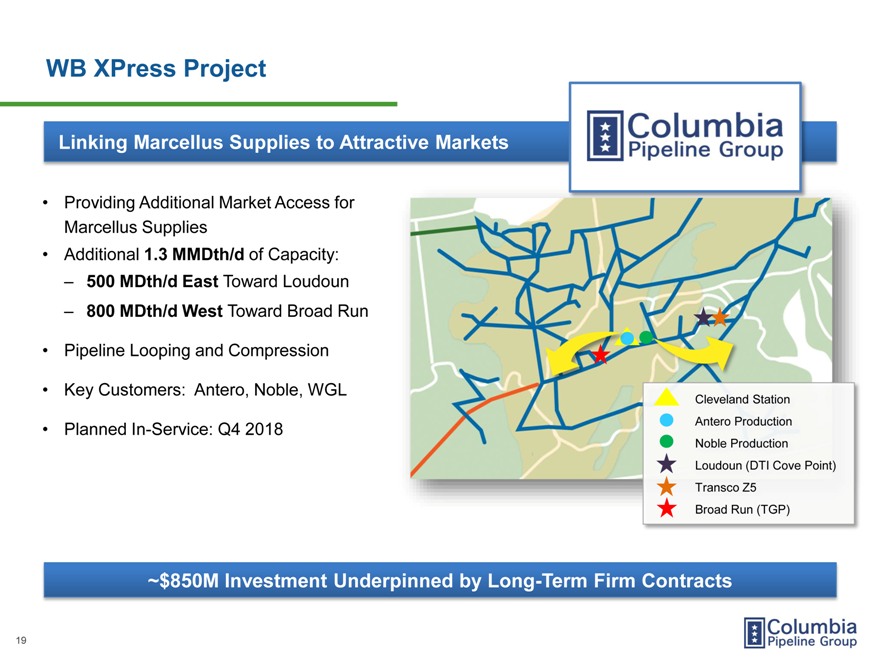
 The West Virginia Oil & Natural Gas Association (WVONGA) is pushing hard to get legislation passed that we call “forced pooling lite”–WV Senate Bill 576 which addresses the issues of co-tenancy and joint development (see
  We spotted an article on The Motley Fool website by one of our favorite authors, Matt DiLallo. The article shines a light on the states that produce the most shale oil. Surprisingly (for us), the Marcellus/Utica was in the list. Appreciable amounts of shale oil are coming from Ohio, Pennsylvania and West Virginia, from both the Marcellus and Utica formations. Of course the amount produced in our neighborhood pales in comparison to the enormous amounts of oil coming from the Texas Permian and North Dakota Bakken. But hey, the fact that we even show up in such a list is kind of exciting…