
Gulfport 3Q16 Operations Update: Production Up 13%, Prices Up Too
 Gulfport Energy, an Oklahoma City-based independent oil and natural gas exploration and production company (“driller”) that is a “top 5” driller in the Ohio Utica Shale, issued their third quarter operation update yesterday. Gulfport is one of a growing number of companies that issues their financial update separate from the operational update. Typically the operational update is the “good news” and the financial update the “not so good news,” so we’ll see what the financial update brings. In the meantime, let’s bask in the good news. Gulfport reports production is up 13% year over year, and the price they’re receiving for that production is also up. Here is Gulfport’s 3Q16 operational update…
Read More “Gulfport 3Q16 Operations Update: Production Up 13%, Prices Up Too”
 Last week we reported on a half joking (half not joking) comment by Pennsylvania State Senator Gene Yaw made at a PA midstream conference, in which he said maybe PA should stop sending its fracked gas to New York State (see
  The “best of the rest” – stories that caught MDN’s eye that you may be interested in reading. In today’s lineup: CELDF’s huge fundraising flop – and drive to continue OH lawsuits; PA regs could further boost natgas prices; CONSOL named Virginia “Operator of the Year”; latest research debunks EPA nonsense about global methane emissions from o&g; Cheniere’s Sabine Pass LNG export facility hits 89.44 Bcf; and more!
 A little over a month ago, Bradford County, PA commissioners voted to hire a public relations firm to create a video to force the issue of passing House Bill (HB) 1391, a bill ensuring PA’s landowners will receive a 12.5% royalty check regardless of post-production costs (see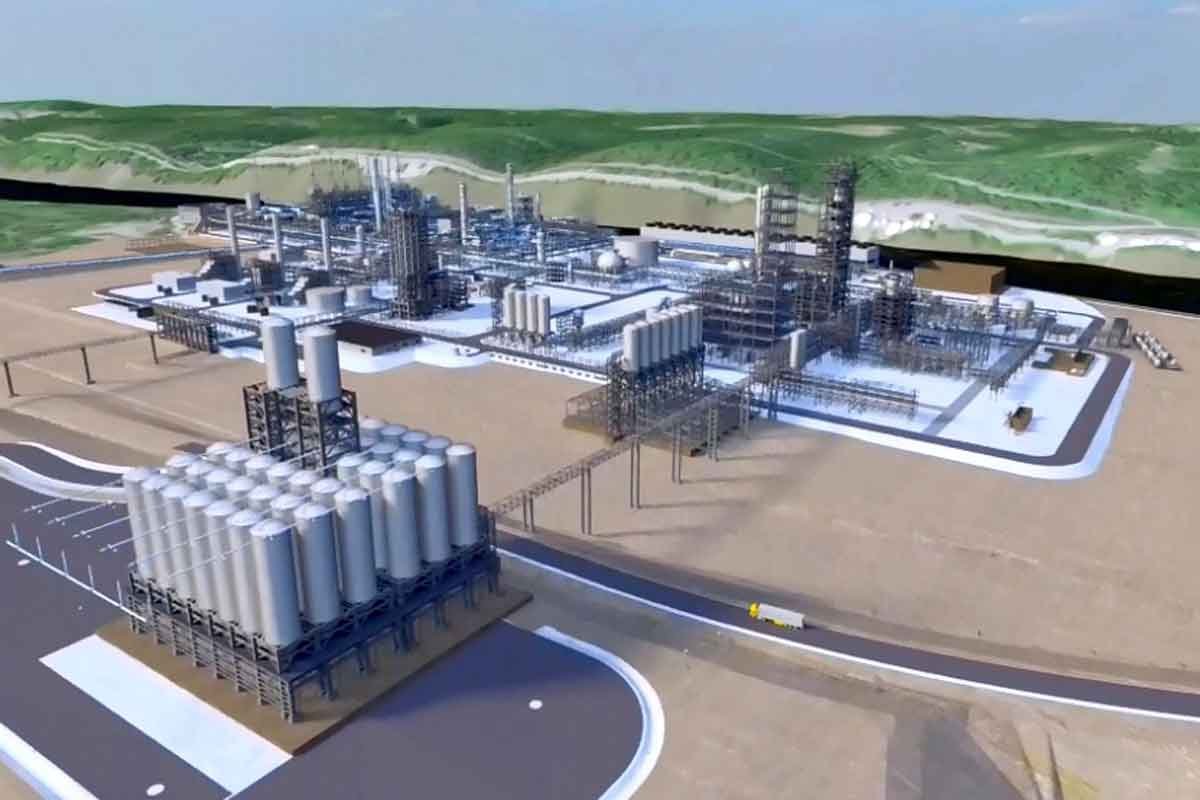
 Question: How can your business take advantage of the development of a petrochemical industry in your backyard? That was the question and premise behind a new white paper/report from the Ben Franklin Shale Gas Innovation and Commercialization Center. The white paper, titled “Shell Petrochemical Complex (“Cracker”) Project Overview – The First Step in Establishing a Regional Petrochemical Sector” (full copy below) provides an excellent overview of the coming ethane cracker in Beaver County, PA–with details for how and who can benefit from it. The paper is mainly aimed at manufacturers that will be able to leverage the output from the plant–but there’s plenty of other great information in this paper to inspire and get your creative business juices flowing. Take time to download and read it. The future of your business may depend on it!…
 The table has been turned on Massachusetts Attorney General Maura Healey and her corrupt co-conspirator, New York Attorney General Eric Schneiderman. A U.S. District Court Judge in Texas has granted Exxon the right to examine “internal phone records, other communications and depositions” related to Healey’s involvement in attempting to persecute Exxon Mobil for daring to say man-made global warming may not be all it’s cracked up to be. Perhaps the judge will also extend his order to NY AG Eric Schnedierman too? That would be terrific. At a minimum, when Exxon goes fishing, no doubt communications (i.e. corrupt collusion) between Healey and Schneiderman will be found and exposed to the light of day for all to see. In our wildest dreams both AGs will be forced to resign–an appropriate action considering their rabidly radical views against, and attempts to criminalize, fossil fuels. Here’s the low down on what the judge said and did…
 In May MDN brought you the story that Columbiana, OH was contemplating aiding and abetting a fracking company in its quest to expand (see
  As we pointed out last week, the Canadian Goldboro LNG export plant continues to see activity, with an expected commitment coming in the next couple of months (see
  When it comes to voting for a U.S. Senator in this year’s Pennsylvania race, there really is only one choice if you value the Marcellus industry: Hold your nose and vote for Pat Toomey. Toomey is a consummate Washington sleazebag insider. He represents everything we hate about Washington and the establishment politicians that infest it. However, his opponent, Katie McGinty, is a radical anti-drilling environmentalist. She is someone committed to eliminating the use of fossil fuels, and a disciple of blithering idiot Al Gore. Big Green groups have spent a collective $3.6 million, so far, to elect McGinty. That tells you everything you need to know. On the other hand, the Koch Brothers (i.e. “Big Oil”) have spent $7.2 million to re-elect Toomey. The Koch’s have earned their way onto our permanent feces list with their active opposition to The Donald. So we have no love for the Kochs, or for “bought” politicians like Toomey. However, these are the cards we’re dealt and the hand we must play. What is interesting to us is that the media is framing the race between McGinty and Toomey as Big Green vs Big Oil. Fine. We’ll bite. Here’s how the match shaping up…
 Two weeks ago MDN brought you news that oilfield services company Mammoth Energy Services, headquartered in Oklahoma City, OK, with operations in both the Utica Shale and Permian Basin, was floating a new initial public offering (see
  Over the past six months or so MDN has repeatedly read about drillers in the Marcellus/Utica drilling longer laterals (the horizontal part of the well) and using way more sand to keep the cracks propped open longer. And between longer laterals and more sand, drillers in the northeast are getting higher output from their wells. So it was with some interest (and skepticism) that we read about new research that says longer laterals don’t lead to greater production totals. The research is from a respected source: Bernstein Research. However, the data used was only from the Barnett Shale–so it’s not clear to us how relevant the findings are for northeast drillers. Here’s what the research says…
 Events related to drilling in the Marcellus and Utica Shale, primarily pro-drilling.
 In just about every state in the country, before you start digging a hole in the ground for some reason (water well, septic system, laying an underground electric line, etc.)–the first thing you do is call 811 or some similar phone number. The “one call” or “first call” reaches a state-authorized (not necessarily state-run) office where they have, on file, maps detailing any kind of underground cables, pipelines and other infrastructure. If such underground structures exist, a representative of the owner for the underground line will, if necessary, stop by and mark the areas so when you do begin digging, you don’t hit it. Makes sense. A bill under active consideration in the Pennsylvania legislature, Senate Bill (SB) 1235, “enhances” the existing 811 law in PA. One of the “enhancements” is that it removes an exclusion for low-pressure natural gas gathering pipelines from being required to be part of the 811 system. Many owners of excluded lines voluntarily participate in the programs. The bill also would transfer regulatory enforcement power over the lines from the Department of Labor to the Public Utility Commission. The Pennsylvania Independent Oil & Gas Association (PIOGA) is pushing back against the removal of the exclusion for conventional production lines and the most rural (“Class 1” under federal law) gathering lines…