
Request to Drill Under (Not On) OH’s Jockey Hollow Wildlife Area
 In January 2023, Ohio House Bill (HB) 507 became law with the signature of Gov. Mike DeWine (see OH Gov. Signs Bill Expanding Drilling in State Parks, NatGas “Green”). The law allows shale drilling under (but not on top of) Ohio state-owned land, including state parks and wildlife areas. HB 507 encourages (pushes for) more drilling under state-owned land. The special commission created to award contracts — called the Ohio Oil & Gas Land Management Commission (OGLMC) — met in September 2023 to consider 12+ “nominations” (requests to drill) received (see Ohio Comm. Says 12.5% Royalties for State Land Drilling Too Cheap). Since that time, environmentalists have been apoplectic at the prospect of drilling under state-owned land with every new request. It’s happening again with a request to drill under (not on) 1,460 acres of Jockey Hollow Wildlife Area in Belmont County. Read More “Request to Drill Under (Not On) OH’s Jockey Hollow Wildlife Area”
 The Tennessee Valley Authority (TVA) is the sixth-largest power supplier and the largest public utility in the country. In 2021, MDN told you that TVA is spending over $1 billion to replace six coal-fired plants with natgas-fired turbines (see
  On July 3, 2024, the Pennsylvania Department of Environmental Protection (DEP) issued an order to EQT asking the company to produce records as part of the agency’s ongoing investigation into the release of up to an estimated 940,000 gallons of wastewater at the Brova shale gas well pad in North Bethlehem Township, Washington County, and similar failures at six other EQT well pads. The issue revolves around the use of “dump lines” at well pads. EQT states that the DEP’s request for reviewing physical paperwork is onerous, and the agency lacks the authority to regulate dump lines anyway. The DEP wants to ensure that another dump line issue (spilling of wastewater) doesn’t happen.
  In April, Knighthead Capital Management, Homer City Redevelopment (HCR), and Kiewit Power Constructors Co. announced a plan to convert the former Homer City Generating Station, previously the largest coal-fired power plant in Pennsylvania (Indiana County, 50 miles east of Pittsburgh) into a more than 3,200-acre natural gas-powered data center campus, designed to meet the growing demand for artificial intelligence (AI) and high-performance computing (see
  The Eddystone Generating Station is a power plant owned by Constellation Energy Corporation, located in Eddystone, PA (near Philadelphia, in Delaware County). Units 3 and 4, each with 380 MW of generation capacity, can run on either natural gas or oil. The Eddystone Units were initially scheduled for retirement on May 31, 2025; however, the U.S. Department of Energy (DOE) intervened and ordered both units to remain online and active due to emergency energy conditions in the PJM grid. The original order kept both units online and active an extra 90 days, until August 28. DOE Secretary Chris Wright sent a new order to Constellation extending the operation of the two units for an additional 90 days, until November 26 (see
 OTHER U.S. REGIONS: Trump’s energy secretary rails against NY green energy efforts in visit to LI power station; Data center developers still eager to call Virginia home; $2.2 billion solar plant in California scheduled to be turned off after years of wasted money; NATIONAL: Exxon to cut 2,000 jobs; Protecting national security with domestic shale energy supply; Wall Street rediscovers oil and gas; U.S. LNG feedgas demand up slightly this week despite maintenance; New tactics, but climate crusaders running out of options; INTERNATIONAL: Oil slips as OPEC+ weighs faster output hikes; UN, EU, ICJ, climate cabal want to keep the poor impoverished; Net zero hobbits encounter realities outside Middle-Earth; Ed Miliband to announce ‘total ban’ on fracking in fight against Reform.
  It took over two years, but NextEra Energy finally sold its ownership interest in Meade Pipeline Co LLC to investment company Ares Management Corporation for $1.1 billion. You may recall that NextEra acquired Meade Pipeline for $1.37 billion in 2019 (see
  Last week, we told you that, although she has not publicly admitted it, New York Governor Kathy Hochul has approved the Northeast Supply Enhancement (NESE) pipeline project (see
 The fight in Marietta, OH, over DeepRock Disposal Solutions’ plan to build a fifth shale wastewater injection well is getting heated. Opposition to the well has made for some very strange bedfellows. The Republican City Council is utilizing the legal services of the radicalized Earthjustice green group to challenge a permit issued by the Ohio Department of Natural Resources, which would allow the well in Marietta, OH (see
  Our friend Bill desRosiers, Manager of Government and External Affairs at Coterra Energy, has authored an excellent article and white paper addressing the topic of how the oil and gas industry can use virtual reality (VR) to attract new blood to the industry. The oil and gas industry is facing a significant workforce challenge: nearly 400,000 U.S. energy workers are nearing retirement, while younger generations remain hesitant to enter the field. In spring 2025, Coterra partnered with Xalter to deploy a multi-state pilot VR program to prepare the next generation of energy workers. Bill draws back the curtain to discuss the company’s experience in using VR for training and to attract new talent to the company.
  In February 2016, Shell completed a $69.7 billion buyout and merger with BG, the largest such oil and gas deal since Exxon bought Mobil in 1999, driven by the company’s love of LNG (see
  For the fourth week in a row, the Baker Hughes U.S. national rig count gained, instead of losing, rigs. Last week, the count increased by seven, to 549. The last time the count was higher was June 20. The even more exciting news is that the Ohio Utica picked up another rig, boosting the total in Ohio to 13, the highest it’s been in well over a year. Pennsylvania maintained its count of 18 active rigs, which it has maintained since July 25 (two months). West Virginia kept its seven active rigs, the same number since May 30 (four months). The combined M-U count was 38 rigs, with 24 rigs targeting the Marcellus layer and 14 targeting the Utica.
 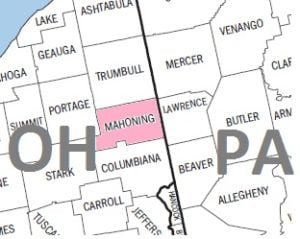 The Youngstown Vindicator is reporting that one of the first new horizontal gas and oil wells to be drilled in Mahoning County, OH, in recent years has begun producing gas and oil at its well pad. The Wehr Spring Valley Farm well is producing oil and natural gas. However, the Ohio Department of Natural Resources (ODNR) has not yet released any production numbers for the well. The big news here is that drilling is migrating well north of the traditional locations for Utica drilling—to the “northern part” of the Utica. Is this a foretaste of good things to come in the northern Utica?