
Cornell Prof Admits He’s Anti-Drilling Advocate, Not Impartial

When someone says “a professor of hydraulic fracturing from Cornell University” is bad mouthing shale drilling, it certainly grabs your attention. Cornell is a storied institution and professors at Cornell face tough competition to teach there. We’ve written plenty about Dr. Anthony Ingraffea, the Cornell prof with a bachelors degree in aerospace engineering from Notre Dame and a Ph.D. in civil engineering from the University of Colorado at Boulder–and an “expert” in hydraulic fracturing. Ingraffea has a nice sideline business of bashing fracking whenever and wherever he can–and when he does so, it is with the full reputation and backing of Cornell University behind him. We still remember the first time we heard Ingraffea in person (see Cornell Hydraulic Fracturing Expert Headlines First Meeting of New York Residents Against Drilling (NYRAD) in Vestal, NY). Ingraffea spoke about everything at that meeting–except the science of fracking. And therein is the bait and switch that Ingraffea engages in. He trades on his reputation as a geologist and scientist, and on the reputation of Cornell–yet he never attacks the actual science of fracking. To do so would be intellectual and professional suicide. It is the other, tertiary issues Ingraffea attacks–like “boom and bust” cycles, and truck traffic, and theoretical damage to water aquifers. Recently Tony finally admitted, on the record, that he’s not an impartial scientist at all when it comes to fracking. Tony himself said he’s an advocate and that he engages in advocacy–not science…
Read More “Cornell Prof Admits He’s Anti-Drilling Advocate, Not Impartial”
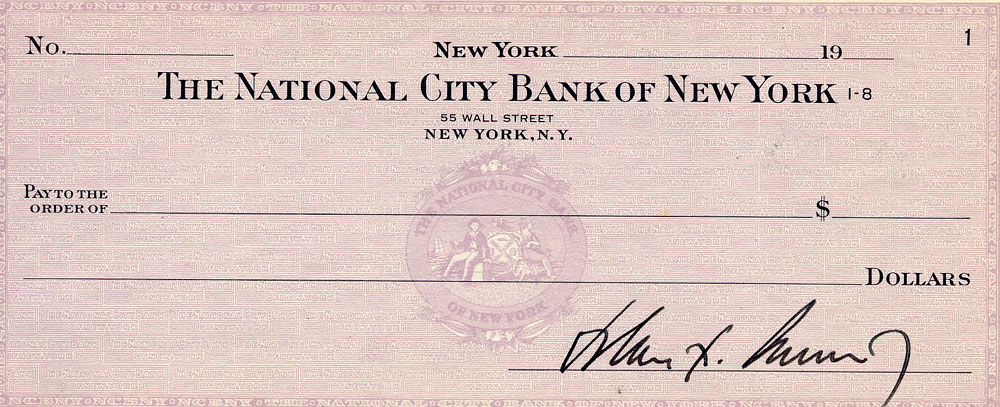 Ever hear of a special-purpose acquisition company, or SPAC? How about a “blank check company”? No, neither had we. The man who once described himself as the biggest fracker in the world, Aubrey McClendon, filed paperwork with the Securities and Exchange Commission (SEC) on April 7 to float an initial public offering (or IPO) for a company called Avondale Acquisition Corp., which describes itself in the filing as a “newly organized blank check company” that will “focus on potential mergers or other deals with existing businesses in the onshore U.S. oil and gas sector.” It is, in a sense, just a different pocket being sewn onto Aubrey’s trousers from which he can dip his hand in and pull out money placed there by other people–to buy more leases and operations in places like the Utica and Marcellus. How much money does Aubrey hope to find in that pocket? About $200 million…
 The shakedown is complete. In June 2012 Reuters tried to stir up trouble against Chesapeake Energy by broadcasting “leaked” (Watergate anyone?) emails that somehow magically appeared on the Reuters doorstep that supposedly show Chesapeake trying to collude with Encana Energy to keep the price of Michigan state land oil and gas leases artificially low (see
  You may recall MDN has tracked the issue of potential LNG (liquefied natural gas) exports from Canada that would use, in part, Marcellus Shale gas. There are five such possible LNG projects, four of them based in Nova Scotia (see
  New York State’s anti-drilling Dept. of Environmental Conservation Commissioner, Joe Martens, is doing his best to concoct a litigation-proof Supplemental Generic Environmental Impact Statement (SGEIS). The SGEIS is the document that will find too many “troubling” aspects of fracking to allow it in New York. Except there’s potentially a loophole coming in the SGEIS, if press reports can be believed. Fracking WILL be allowed IF it uses under 300,000 gallons of “liquid”–the liquid most likely being water. (A typical well takes 5-8 million gallons of water to frack.) The NY loophole of using up to 300,000 gallons of liquid leads pro-drillers like MDN to muse: Is there an alternative liquid, other than water, that can be used to frack a well economically at under 300K gallons? What if the substance is foam and not liquid–is foam exempt from the 300K gallon cap? Or how about this: Can a driller use 299,999 gallons of water to frack a well and get enough gas out of it to break even and wait until the idiot we have in office now (Gov. Andrew Cuomo) is gone and go back later and re-frack the same well once the 300K gallon restriction is lifted? Hey, it’s fun to speculate. We’re not trying to foster false hope, but we do wonder if there’s a loophole in the SGEIS that can be exploited so landowners and drillers (the good guys) can beat extremist environmentalists like Cuomo, Martens and Yoko Ono (the bad guys)…