
CNG/LNG | Duke Energy | Electrical Generation | Energy Services | Industrywide Issues | North Carolina
Duke Picks Davie County for 2 Gas Plants, Davidson for LNG Facility
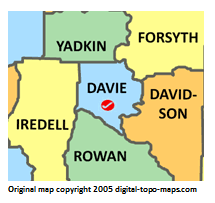 In January, MDN broke the news that Duke Energy was eyeing a 1,360-megawatt (MW) gas-fired power plant on 1,600 acres in Davidson County, North Carolina (see Duke Energy Considers 1,360-MW Gas Plant for Davidson County, NC). In April, we updated it: Duke actually wanted two such plants, and had a second candidate site directly across the Yadkin River in Davie County (see Duke Energy Considers 2 New Large Gas-Fired Power Plants in NC). Duke said back then that a final decision wouldn’t come until late 2026 or early 2027. Surprise! The decision landed today, and Duke didn’t pick one site over the other. It’s using both. Read More “Duke Picks Davie County for 2 Gas Plants, Davidson for LNG Facility”
 There’s terrific news brewing in Grant County, West Virginia — with an asterisk roughly the size of a cooling tower. Word circulated over the weekend that Dominion Energy plans to build a brand-new natural gas-fired power plant at its Mt. Storm complex, the same site where three coal-fired units have been cranking out electrons since 1965. The key detail: the gas plant would run alongside the coal units, not replace them. That’s more power, not swapped power. We like that math.
  Chesapeake Utilities Corporation (NYSE: CPK) and its subsidiary Peninsula Pipeline Company (PPC) announced on July 13 a new intrastate natural gas pipeline project in South Florida called the Florida Energy Pathway, or FEP. The line will be 24 inches in diameter, running from Palm Beach County to Miami-Dade County. It’s already anchored by firm commitments of nearly 250,000 dekatherms per day from multiple investment-grade shippers. (A dekatherm, or Dth, is a heat measurement roughly equal to a thousand cubic feet of natural gas — so think of it as about 250 MMcf/d, or 250 million cubic feet per day.) Upstream supply will come courtesy of Florida Gas Transmission’s Phase IX expansion. The price tag is around $1.2 billion, with an in-service date of 2030. Chesapeake plans to sell off up to 49% of the project to one or more partners. CEO Jeff Householder pinned the need on Florida’s booming population, its growing economy, and “significant energy supply constraints” in the south Florida market.
  MARCELLUS/UTICA REGION: How infrastructure can unleash Ohio’s energy dominance; New PA methane rules being developed for oil and gas operations; OTHER U.S. REGIONS: Argent LNG wins DOE approval to export to free-trade agreement countries; NATIONAL: U.S. natural gas futures extend losses; Hybrid sales rise while battery electric sales remain lower after tax credit expiration; CIEL’s latest report makes the case for #EveryoneKnew; The war on data centers jeopardizes our economy and national security; Reuters recycles the myth of cheap renewables; Climate lawfare comes for American energy and your wallet; INTERNATIONAL: Brent tumbles nearly 9% on diplomacy; Oil tankers reroute to Egypt amid Houthi threat; Iran war risk keeps US LNG cargo values near three-year highs; Academic says get used to a few blackouts to keep costs down.
  Add another name to the growing list of pipeline projects chasing Northeast Marcellus/Utica gas: Tennessee Gas Pipeline (TGP), a Kinder Morgan subsidiary, launched a non-binding open season on July 13 for its proposed 219 South Project. The idea is to grab gas from as far north as TGP’s Station 219 Pool in Pennsylvania (Zone 4) and move it south through Ohio, West Virginia, Kentucky, and Tennessee — up to 530,000 Dth/d (that’s dekatherms per day, roughly equivalent to 530 Mcf/d). TGP says demand along its “200 Line,” the backbone connecting Pennsylvania to Tennessee, is growing fast enough to justify testing shipper appetite now. If it goes forward, in-service is targeted for December 1, 2029. The open season runs through August 13. Below are the key details, straight from TGP’s posting.
  Well, this isn’t what we expected. Bloomberg reported Friday, citing unnamed people “familiar with the matter,” that Devon Energy is exploring a sale of two of its shale positions — the Eagle Ford in South Texas and the Powder River Basin in Wyoming — that together could bring in more than $4 billion. Devon plans to announce a formal strategic review of the two packages when it releases second-quarter results in early August (the release is scheduled for Tuesday, Aug. 4, with the analyst call the next morning). Nothing is final. The timing could slip, and Devon could decide to keep both. Just two weeks ago we told you activist investor Kimmeridge is beating on Devon for moving too slowly on divestitures following the Coterra merger (see
  In March, we brought you the news that a Connecticut Superior Court judge tossed a lawsuit filed by Big Green group Save the Sound and the colluding Town of Brookfield, telling them their attempt to stop the state Department of Energy and Environmental Protection (DEEP) from ruling on the Iroquois compressor permit was premature (see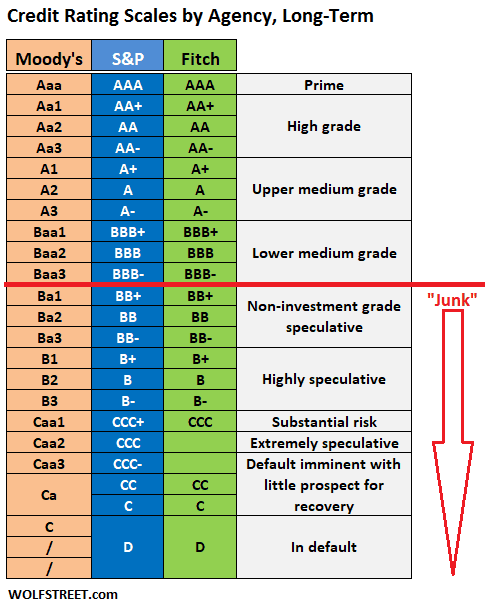
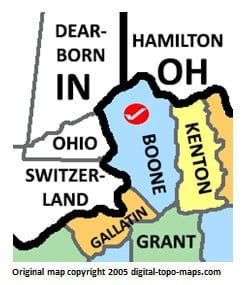 Texas Gas Transmission, LLC, a subsidiary of Boardwalk Pipelines, LP, wants to build the Dearborn County Lateral Project — roughly 12 miles of new 20-inch natural gas pipeline that begins at Texas Gas’s existing system in Dearborn County, Indiana, dips south across the Ohio River into Boone County, Kentucky, then hops back over the river into Hamilton County, Ohio. The destination is Vistra Corp.’s Miami Fort Power Plant, a coal-fired station slated for shutdown until someone had the good sense to convert it to natural gas instead. The lateral would move 265,000 dekatherms per day (Dth/d) of firm transportation service. A dekatherm is roughly one thousand cubic feet of gas, so call it about 265 MMcf/d (million cubic feet per day). Texas Gas filed with FERC in late May. Boone County leaders are not thrilled.
  U.S. drillers last week cut the number of rigs operating for the first time in six weeks, according to the venerable Baker Hughes rig count on Friday. The national count dropped by one to 587. Even though the count slipped from its 1+ year high, the current number is still 45 higher than this time last year (an 8% increase). The Marcellus/Utica count hasn’t budged for 11 weeks in a row, holding at a combined 36. However, the M-U’s chief competitor for resources and attention, the Haynesville, added one rig and now operates 56 gas-focused rigs, which is 20 more than we operate here in the M-U. Not so long ago, the M-U operated more than the Haynesville!
  The Marcellus/Utica region received 26 new drilling permits last week, July 13 – 19, up 19 from two weeks ago (after dipping down 21 three weeks ago). So goes the permitting yo-yo ride. Last week, Pennsylvania issued 23 new permits (after issuing just 1 two weeks ago). Ohio issued 2 new permits. And, West Virginia issued 1 new permit. The drillers who received new permits included: Antero Resources (1), Ascent Resources (2), CNX Resources (2), EQT (1), Expand Energy (3), Formentera Operating (1), Laurel Mountain Energy (5), Pennsylvania General Energy (6), and Range Resources (5).
  The Federal Energy Regulatory Commission (FERC) is close to issuing an environmental assessment for the Constitution Pipeline, a 125-mile greenfield pipeline from the Marcellus gas fields of Susquehanna County, PA, to Schoharie County, NY (see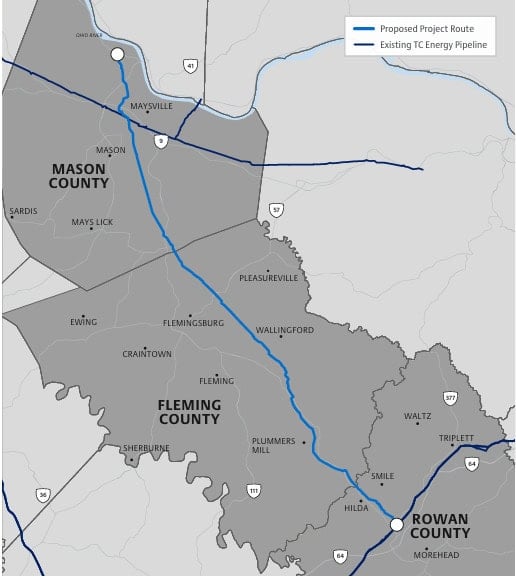
 In April, MDN reported that PowerTransitions, an independent power producer specializing in redeveloping legacy power facilities, had agreed to acquire five New York gas-fired power plants — Batavia, Hillburn, Massena, Shoemaker, and Sterling — totaling 323 megawatts (MW) from Alliance Energy Group affiliates (see
  A new S&P Global Energy study (full copy below) projects U.S. LNG will become the nation’s second-largest net export industry by 2031, trailing only civilian aircraft and parts. Feedgas demand for exports is expected to double to 36 Bcf/d within five years — 25% above the prior base case — as the U.S. surpasses a one-third share of the global market. Through 2040, LNG should support 555,000 jobs annually, add $1.4 trillion to GDP, and generate $2.9 trillion in business revenues, $206 billion in taxes, and $630 billion in labor income, on more than $1 trillion of supply-chain investment. Household gas costs rise just 1.6% from 2026-2031, and new Northeast pipeline capacity could cut peak winter prices more than 20%.