
MDN’s Energy Stories of Interest: Thu, Mar 12, 2026
 NATIONAL: U.S. natural gas gains with Middle East conflict in view; They’ve nearly given up on climate — plastics will be next; INTERNATIONAL: Crude settles higher as conflict grows; IEA announces record 400 million bbl release as Hormuz flows remain blocked; EIB to shell out $87B in clean energy financing over 3 years. Read More “MDN’s Energy Stories of Interest: Thu, Mar 12, 2026”
 It’s time to make a LOT of noise with the Pennsylvania Department of Environmental Protection (DEP) if you care about Marcellus drilling continuing in the Keystone State. In December, the Pennsylvania Environmental Quality Board (EQB) accepted a petition by radical green groups, including the Clean Air Council and Environmental Integrity Project, to “study” the issue of increasing setbacks for shale drilling so far that it would ban ALL new Marcellus/Utica drilling in the Keystone State, which is no exaggeration (see
  Yesterday, March 10, 2026, Repsol held its Capital Markets Day at its headquarters in Madrid, Spain, where the company unveiled its new Strategic Plan for 2026–2028. Repsol is leaning into its U.S. natural gas assets, even as its total company-wide spending is slowing. Repsol reiterated that the United States is a “core country” for its Upstream (Exploration and Production) business. Repsol is specifically “high-grading” its portfolio to focus on high-value areas like the Marcellus Shale in Pennsylvania and the Eagle Ford Shale in Texas.
 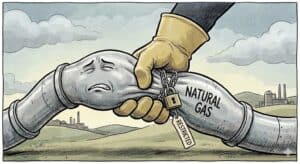 We’ve recently begun to highlight flow restrictions along pipelines that carry Marcellus/Utica molecules. When flows slow or stop (because they can’t reach other markets), the price typically falls because local supply exceeds local demand. In the middle of Winter Storm Fern in January, outages and freeze-offs led to significant stress with production dropping 10-12% due to pipeline and well issues (see
  Wastewater injection wells are an essential, safe, and highly regulated component of Southeast Ohio’s fracking industry. Banning these wells would trigger an economic catastrophe, leading to job losses and reduced public funding, without providing any actual environmental benefits. Yet that’s exactly what the political leaders of Marietta, OH, in collusion with virulent anti-fossil fuel groups, are attempting to do. Opposing injection wells while supporting fracking (as Marietta’s “leaders” are doing) is contradictory, as the two are inseparable for regional energy production and the area’s continued economic stability.
  Wow! What a difference a month makes. The U.S. Energy Information Administration (EIA) issued its latest monthly Short-Term Energy Outlook (STEO) yesterday. The STEO is the agency’s monthly best estimate of where energy prices and production will head over the next 12 months. There was a major revision to the agency’s prediction about the spot price (at the Henry Hub) for natural gas in 2026. Just last month, EIA predicted the HH spot price would average $4.31 per million British thermal units (see
  Yesterday, President Donald Trump announced the construction of a new 168,000 barrels-per-day oil refinery at the Port of Brownsville, Texas, backed by India’s Reliance Industries. Developed by startup America First Refining, this facility marks the first new U.S. refinery in half a century and is specifically designed to process American “light sweet” crude oil from shale plays. Reliance has committed to a 20-year offtake agreement, helping to reduce the U.S. trade deficit with India. While Trump emphasizes the project’s role in boosting energy production and national security amid rising gasoline prices, some industry analysts remain skeptical of the need for additional Gulf Coast capacity.
 Here’s a lawsuit that had (until now) escaped our radar screen. It’s a lawsuit dealing with the issue of post-production deductions. The case is Kirkbride v. Antero Resources Corp. and is being litigated in the U.S. District Court for the Southern District of Ohio. On March 6, 2026, Magistrate Judge Elizabeth Preston Deavers denied a motion to certify the case as a class action. This is a significant development in the ongoing legal friction between Ohio landowners and energy companies over how royalties are calculated.
  Chesapeake Utilities (CPK) is a diversified energy company with businesses in natural gas distribution, transmission, marketing, electricity distribution, propane distribution, and wholesale marketing (nothing to do with Chesapeake Energy). The company issued its fourth quarter and full-year 2025 update 10 days ago. The company and its subsidiaries move (and use) a lot of Marcellus/Utica molecules. We took the opportunity of this update to analyze what’s happening with CPK as it relates to the use and flow of M-U molecules through its systems.
  Even a leftist liberal putz like Pennsylvania Governor Josh Shapiro can have a good idea every now and again. (Credit where credit is due.) Shapiro is introducing what he calls GRID (Governor’s Responsible Infrastructure Development) standards to incentivize Pennsylvania data center developers to voluntarily adopt higher environmental and transparency benchmarks. In exchange for committing to water conservation, local hiring, and independent power generation, projects can access “Fast Track” permitting to accelerate construction.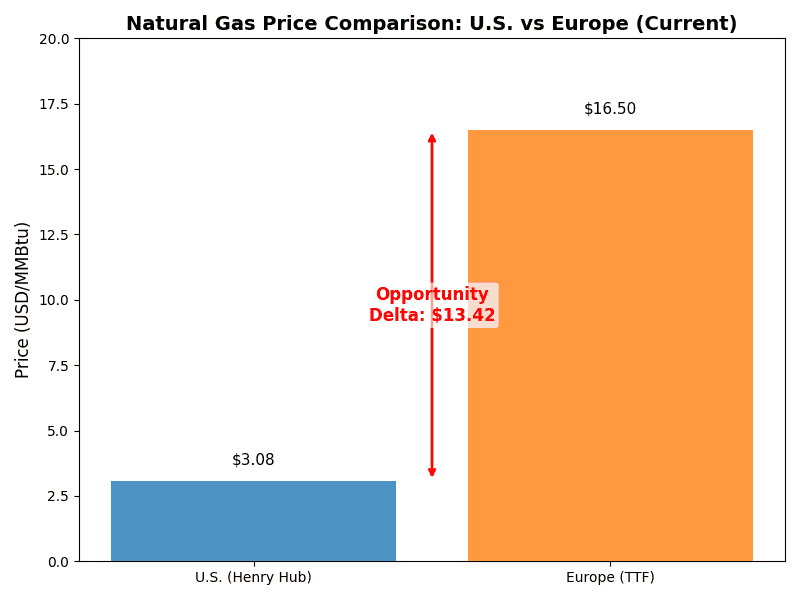

 Last week, the Marcellus/Utica saw a realignment in rig counts, at least in Ohio and West Virginia. Pennsylvania kept the 20 rigs it has had since early February. Ohio lost two rigs, from 13 to 11, the fewest active rigs in the Buckeye State since last September. And perhaps the biggest news was that West Virginia picked up one rig, from 7 to 8 rigs, for the first time since last May! Overall, the M-U region had a net loss of one rig last week, going from 40 to 39 active rigs. The M-U’s biggest competitor, the Haynesville, gained one rig, from 52 to 53 rigs, some 14 rigs more than the M-U. It wasn’t all that long ago that the M-U ran more rigs than the Haynesville.