
Shapiro Aide: 100 Data Centers Floated in PA, Only 2 Fully Permitted
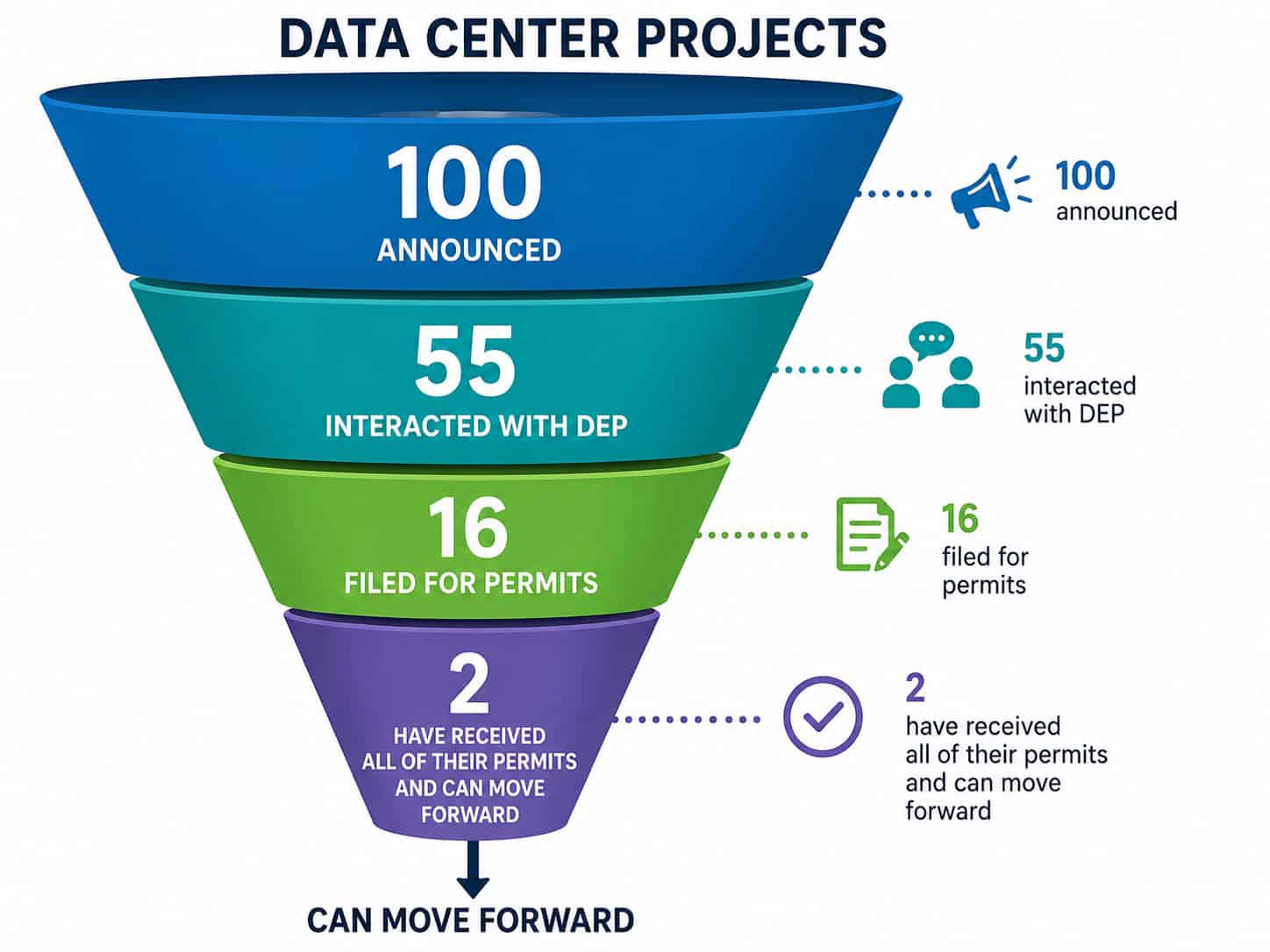
Ever wonder how many of those breathless AI data center announcements in Pennsylvania are actually real? Somebody in Gov. Josh Shapiro’s office finally counted. Speaking Wednesday (Aug. 12) to the Department of Environmental Protection’s Environmental Justice Advisory Board, Deputy Chief of Staff Sam Robinson walked through the funnel — from roughly 100 projects that have been talked about somewhere, down to just two that have every permit they need to start building phase one. That’s a number every producer, midstream planner, and gas-fired power developer in the Marcellus ought to write down. Read More “Shapiro Aide: 100 Data Centers Floated in PA, Only 2 Fully Permitted”
 WhiteHawk Minerals (NYSE: WHK), the Philadelphia company that has quietly become one of the largest mineral and royalty owners in the Marcellus, filed its first full quarterly report as a public company this week: $111.8 million of new acquisitions, record production of 70.0 MMcfe/d, and its first real dividend at $2.00 per share annualized. But the most interesting thing WhiteHawk said all week wasn’t in the press release. It came out of CEO Daniel Herz’s mouth on Thursday’s earnings call — some of the biggest drillers in Appalachia are now partnering with WhiteHawk to buy minerals ahead of the drill bit.
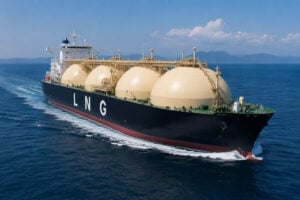 Venture Global (VG), the Arlington, Virginia-based LNG exporter that operates the Calcasieu Pass and Plaquemines liquefaction plants in Louisiana — and is building a third, CP2 — reported second quarter 2026 results Tuesday that were, by any measure, a blowout. Revenue hit $4.6 billion (up 48% from 2Q25), net income came in at $1.3 billion (up 266%), and consolidated adjusted EBITDA reached $2.5 billion (up 79%), the largest quarterly EBITDA in company history. VG shipped 127 cargoes in the quarter and raised its full-year EBITDA guidance to $8.7-$9.1 billion, up from the $8.2-$8.5 billion it guided to in May. The company also passed its 1,000th cargo overall and jacked up its quarterly dividend by 122%. Why do we care in Appalachia? Because Plaquemines is fed by pipelines that carry Marcellus/Utica molecules south — and VG is planning to nearly double in size.

 The U.S. Energy Information Administration (EIA) released its August Short-Term Energy Outlook (STEO) on Tuesday — the agency’s monthly toss at the energy dartboard. Last month EIA nudged its Henry Hub natural gas price forecast up a few pennies. This month it took a real bite out of it. EIA now expects Henry Hub to average $3.44/MMBtu in 2026 (down from $3.67 last month) and $3.31/MMBtu in 2027 (down from $3.49). For the current quarter, the number is $2.87/MMBtu — a full 50 cents below what the agency predicted a month ago. The short version for landowners and royalty owners: gas is going to be cheap this fall. The longer version is more interesting, and it’s a story about where the gas is coming from.
 MARCELLUS/UTICA REGION: MSC head: The workers live in this community, too; OTHER U.S. REGIONS: Amazon is behind one of the largest planned gas power plants in the US; Duke Energy invests $500,000 to help small businesses grow across North Carolina; Heat wave keeps southeast natural gas spot market cooking; Trump’s ‘energy emergency’ could fast-track massive expansion of Plaquemines LNG; NATIONAL: U.S. natural gas futures fall as inventories rise; AGA applauds introduction of the Energy Efficiency Reform Act; AI hyperscalers are pricing bitcoin miners off the grid; Democratic socialists seek to cripple American AI; President Trump returns Endangered Species Act ‘to how it was intended to be’; INTERNATIONAL: Oil falls as Iran talks remain stalled; It goes both ways – Canada needs U.S. oil and gas too; Hormuz standoff derails oil supply recovery and deepens demand slump; 5 LNG megaprojects poised to power the next gas boom; India seeks more USA LPG.
 Two panels at
 A new report from RBN Energy fills in a piece of the Project Beacon puzzle we haven’t fully covered: two separate Millennium Pipeline expansions — one already sanctioned, one still on the drawing board — that DT Midstream and TC Energy are advancing to feed New England’s growing appetite for Marcellus/Utica gas. One is moving fast. The other needs New York State’s blessing, which is never a sure thing.
 Forward natural gas prices for this coming winter at the Cove Point LNG terminal in Maryland have gone parabolic — and if you produce, gather, or transport Marcellus/Utica gas, you should care, because the pipes behind this story are the same pipes you use every day. A quick primer: a ‘forward price’ is what buyers and sellers agree today to pay for gas delivered on a future date — think of it as locking in a price months ahead of time. When forward prices spike, it means the market is already betting on tight supply or high demand down the road.
 A unanimous Ohio Supreme Court has ordered the tiny Pickaway County village of Ashville to let voters decide the fate of a data center and natural gas power plant — a project the village council tried to fast-track by declaring it an “emergency” not subject to a public vote. The court didn’t buy it. But before opponents celebrate too hard, the ruling doesn’t guarantee a vote will actually happen this November — county election officials still get to decide whether the deal is even the kind of thing voters can weigh in on at all.
 PJM Interconnection and Dominion Energy are reviewing a July 22 event in Northern Virginia in which roughly 3,800 megawatts (MW) of data center load — the largest such disconnection in PJM’s history — unexpectedly ripped itself off the grid after a routine, correctly cleared transmission fault, forcing PJM operators to scramble to keep the grid stable. The event has reignited a fight over whether data centers, which are growing explosively across the PJM footprint (including Marcellus/Utica territory), need to be held to new “ride through” standards so they stop treating minor grid hiccups like five-alarm fires.
 Pennsylvania got off easy in the 2026-27 budget. Only one data center bill made it into law, and it was a toothless one. But the Pittsburgh Business Times reports Harrisburg is loading up for another round this fall — and this time the antis have a working blueprint to copy. It’s called New York, where Gov. Kathy Hochul banned new hyperscale data centers last month, and where the anti-fracking crowd has already spent a decade proving what happens when a state tells industry to go away.
 Remember when Dan Rice IV (older brother of EQT CEO Toby Rice) sold his landfill-gas company Archaea Energy to BP for $4.1 billion back in 2022, pocketing the Rice family somewhere between $720 million and $975 million in the process? Well, what goes around comes around: BP told investors this week it’s now looking to sell Archaea. On the company’s Q2 2026 earnings call, new BP CEO Meg O’Neill said Archaea has turned out to be a “capital-intense” way to play the biogas market, and BP would rather go “capital-light” going forward. Translation: RNG isn’t the money-printer BP thought it would be four years ago, and Big Oil’s would-be savior molecule is getting shopped to the highest bidder.
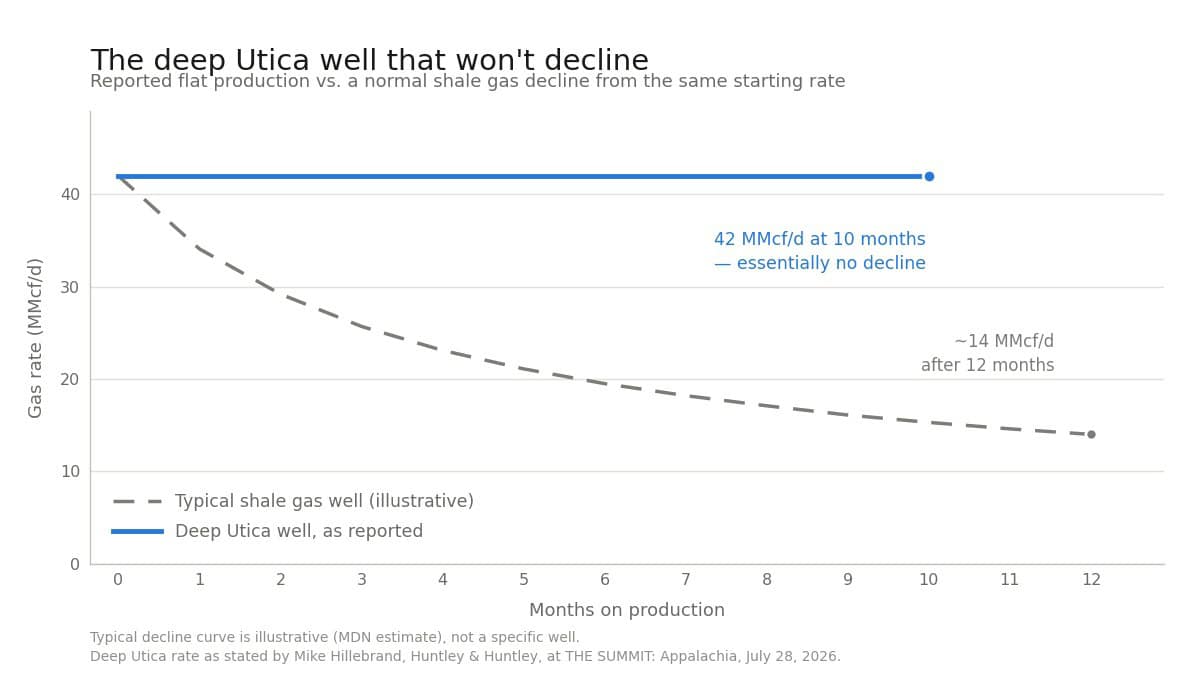
 Infinity Natural Resources (INR), the Morgantown, WV-based pureplay Marcellus/Utica driller, dropped its second quarter 2026 numbers on Monday and walked analysts through them Tuesday morning. The short version: production jumped 75% year over year to 348.5 million cubic feet equivalent per day (MMcfe/d), adjusted EBITDAX hit a company-record $114.7 million, the first wells from the Ohio Utica package INR bought from Antero came online ahead of plan — and INR quietly drilled and cored its first deep dry gas Utica well in Pennsylvania. Full-year guidance was reaffirmed. Not a bad quarter for a company that was still private 18 months ago.