
AI Forecaster Predicts “Multiple Significant Cold Snaps” This Winter
 Planette, a long-range weather prediction platform that combines cutting-edge AI with decades of Earth system science, says it can predict long-range weather more accurately than others. Planette’s Winter 2025-26 forecast anticipates a highly volatile season driven by a North Pacific dual ocean temperature “blob” and a weakened polar vortex, deeming the current La Niña too weak to be significant. The outlook predicts above-average temperatures interrupted by multiple, predictable, and “significant” cold snaps, with the AI-driven platform offering 30- to 40-day lead times to warn people of their approach. If you’ve been paying attention to MDN’s posts this week, you know how significant weather is in determining the price of natural gas. Read More “AI Forecaster Predicts “Multiple Significant Cold Snaps” This Winter”
 I see ghosts! Or is that dead people? The U.S. electricity grid faces pressure from surging demand, primarily from data centers, sparking debates over reliability and cost allocation. EPSA (Electric Power Supply Association) CEO Todd Snitchler warns that “ghost projects”—projects announced and planned/funded but never built—are artificially inflating load forecasts. He argues that regulated utilities use these overstated numbers to justify expensive rate-based generation, benefiting shareholders while forcing customers to bear the costs of potential overbuilding. Competitive energy markets are demanding accurate, data-driven planning to maintain affordability and reliability without wasting capital on unnecessary infrastructure. Please, no more ghosts.
  Reorg! The Department of Energy (DOE) unveiled a major reorganization under the Trump administration to prioritize fossil fuels, minerals, and nuclear power while diminishing renewable energy programs. Secretary Chris Wright’s plan rebrands the loan program as “Energy Dominance Financing” and consolidates efficiency and clean energy divisions into a new “Office of Critical Minerals and Energy Innovation.” This restructuring, aimed at restoring “common sense” to energy policy, accompanies billions in project cancellations and staff reductions.
  Bloomberg writes that shale energy’s next revolution should worry the thug dictators of OPEC. American shale drillers currently extract 10% to 15% of the oil locked in the shale layer, leaving the rest underground. However, engineers are actively trying to change this through new techniques and technologies. What if we could double the amount of oil and gas extracted? It would, once again, change the oil and gas industry worldwide. Double the production for the same investment? It’s a no-brainer.
  OTHER U.S. REGIONS: Texas gains primacy to lead in carbon capture and storage; Maura Healey deflects blame for soaring energy bills; NATIONAL: U.S. natural gas futures retreat on weather data; Natural gas price continues to consolidate; USA crude oil stocks drop by 3.4 million barrels WoW; FERC explores blanket authorizations for LNG, hydroelectric; How tariffs are impacting the U.S. oil and gas industry; As US expands NLG exports, fractionation capacity risk emerges; INTERNATIONAL: Oil slips as peace talks advance; Norway gas output hits six-month high; Colombia urges world to quit fossil fuels as its own effort founders.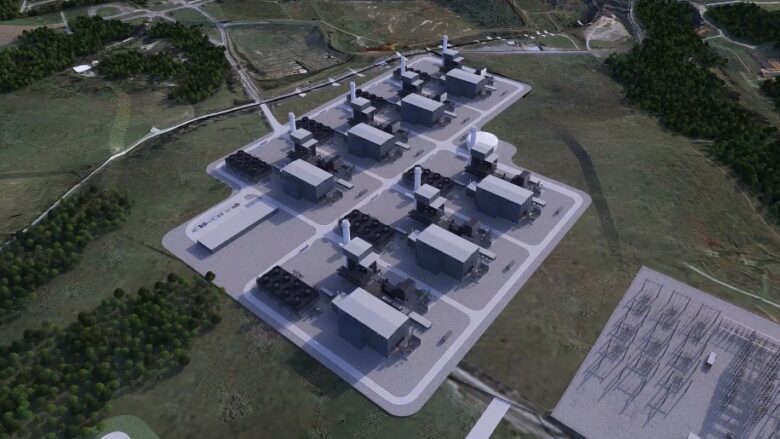
 Diversified Energy, which owns significant assets in the Marcellus/Utica region (and other regions, too), issued its third quarter update earlier this month. The company owns approximately 8 million acres of leases with close to 70,000 oil and gas wells, mostly conventional wells (by number of wells). However, the company now produces 41% of its production from shale wells, meaning the blend of assets has changed over time. The company’s business model is to buy already-drilled, lower-producing wells on the cheap and find ways to make them more productive. They do a great job at it. Diversified also owns midstream (pipeline) assets, as well as a well-plugging subsidiary, Next LVL. What does the 3Q25 update show? The company produced 1,127 MMcfe/d (74% natural gas, 13% NGLs, and 13% oil). That’s up a huge 36% increase over 3Q24!
 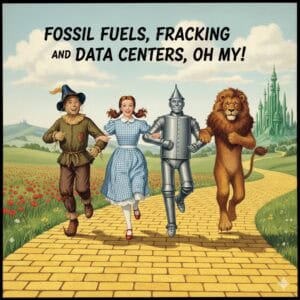 In honor of the new Wizard of Oz movie coming this week: “Lions and tigers and bears, oh my!” The environmental left version of that is, “Fossil fuels, fracking, and data centers, oh never!” Just yesterday, we outlined a trend we see in Pennsylvania (and on the national level): anti-fracking groups morphing into anti-data center groups (see
 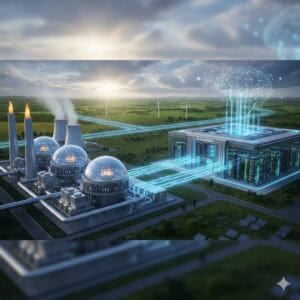 The American Energy + AI Initiative, a collaboration between the Hamm Institute and the American Energy + AI Coalition, held a summit on Monday in Washington, D.C., to address the urgent need for firm power to sustain the rapid growth of Artificial Intelligence (AI) in the U.S. Cabinet officials, including DOE Secretary Chris Wright, and industry leaders, discussed concrete steps to modernize federal tools and accelerate power production. During the summit, a new study was released (full copy below) emphasizing that America’s ability to lead in AI depends on quickly building reliable energy and highlighted the immediate need for more natural gas to meet the massive, unexpected demand from data centers.
 In May, pipeline giant Williams filed a request with the Federal Energy Regulatory Commission (FERC) to expedite the reissuance of a certificate for the Northeast Supply Enhancement (NESE) project, a $1 billion+ project designed to increase Transco pipeline capacity and flows of Marcellus gas heading into New York City and other northeastern markets (see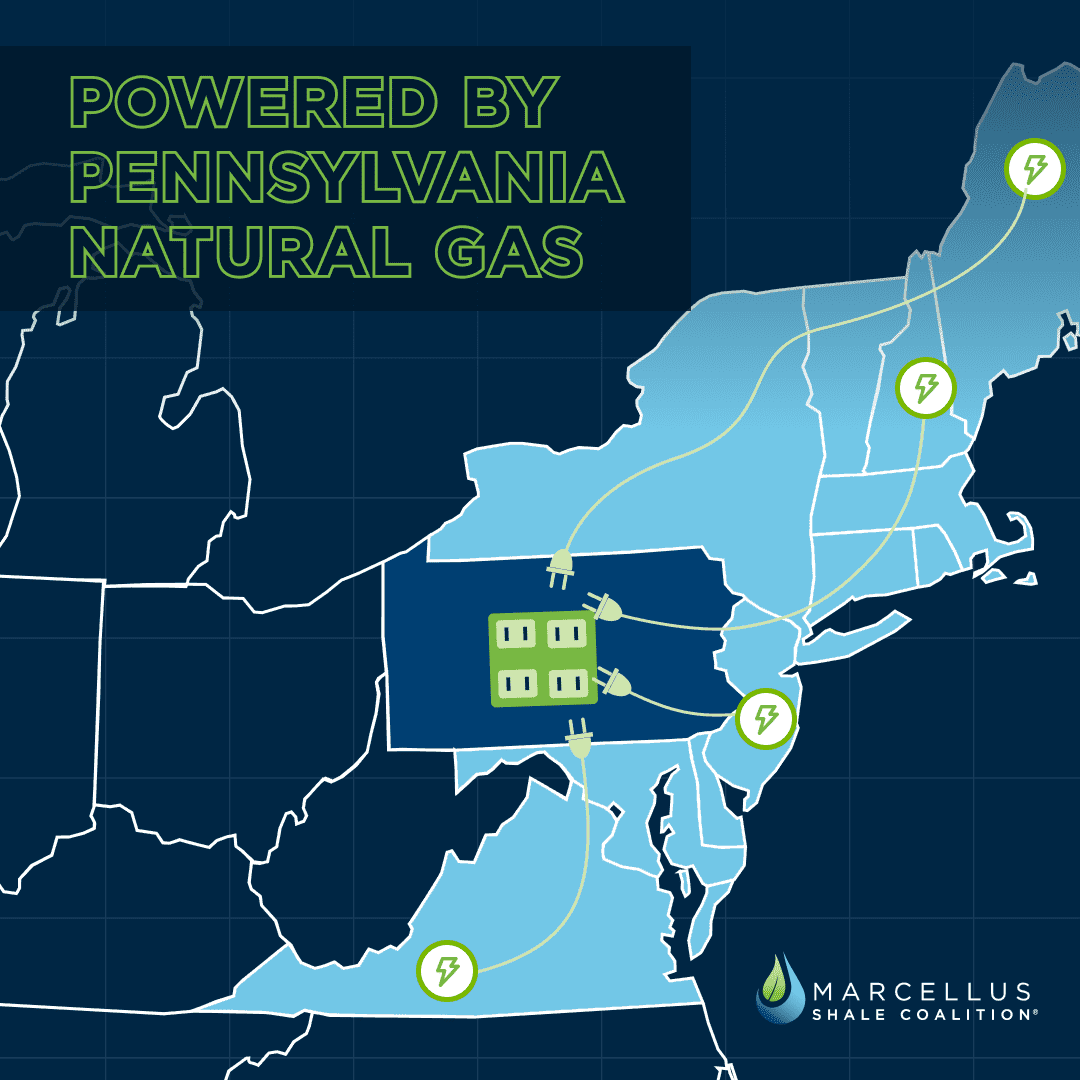
 In July, MDN told you that Talen Energy, a leading energy producer in the U.S., which owns and operates approximately 10.7 gigawatts (GW) of power infrastructure, had announced the acquisition of two gas-fired power plants: one located near Wilkes-Barre in northeastern Pennsylvania, and the other in Guernsey County, in eastern Ohio (see
  Last week, MDN warned you that the enviro-left that opposes fracking and shale energy in Pennsylvania (because they have an irrational hatred of fossil fuels) has morphed into opposing data centers, because data centers need lots of electricity and the only practical way of providing that power is via natural gas-fired power plants (see