
MDN’s Energy Stories of Interest: Wed, Mar 25, 2026
 OTHER U.S. REGIONS: Haynesville sitting pretty as LNG export capacity takes off on Gulf Coast; New Jersey legislation targeting energy companies will hurt consumers; Maryland Supreme Court tosses Blue cities’ climate lawsuits against energy companies; NATIONAL: U.S. natural gas settles higher as oil futures gain; Mideast situation shows need for energy diversification, says Cheniere CEO; Upwing Energy achieves ISO certification for subsurface compressor system; Energy bosses share Iran anxieties at CERAWeek; A turning point for litigation campaign; BlackRock CEO abandons climate delusion for investor needs; U.S. LNG feedgas maintains peak levels; From transit funds to sports arenas – the raid on clean energy funds; INTERNATIONAL: Oil rises on Strait uncertainty; The oil supply crunch is spreading from the Gulf to the rest of the world; Iran charges some ships Hormuz transit fees; On oil prices, the narrative shifts to ‘higher for longer’. Read More “MDN’s Energy Stories of Interest: Wed, Mar 25, 2026”
 Norway’s Equinor (formerly Statoil) is expanding its U.S. shale gas footprint, specifically targeting the Marcellus Shale to increase “portfolio longevity.” This strategic move is part of a broader global reshuffling in which Equinor is divesting from mature assets in regions such as Azerbaijan and Nigeria to reinvest in high-growth areas. The U.S. remains Equinor’s largest international development hub, and the company aims to boost non-Norwegian production to 900,000 barrels per day by 2030. By focusing on non-operated positions in Appalachia and the Gulf of Mexico, Equinor is “high-grading” its portfolio to relocate capital toward more sustainable, long-term production assets.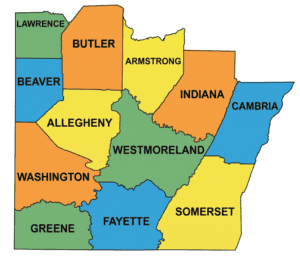
 In July 2022, MDN brought you news of a possible frac-out, or “inadvertent return” that happens when drilling mud pops out of places where it’s not supposed to — places outside the borehole being drilled (see
  Hull Street Energy (HSE) has entered an agreement to acquire two peaking power plants from Rockland Capital, LP, significantly expanding its Milepost Power portfolio. The acquisition includes the 677-megawatt (MW) Lee County Generating Station in Illinois and the 586-MW Tait Electric Generating Station in Ohio. Both facilities operate within the PJM electricity market, providing essential fast-start resources and grid stability amidst tightening supply-demand dynamics. Upon closing later this year, HSE’s total generation capacity will reach nearly 5,000 MW, establishing it as one of the largest private power producers in the United States.
 Dr. Kelvin Kemm is a South African nuclear physicist and past Chairman of the South African Nuclear Energy Corporation (Necsa). In an article on the Committee For A Constructive Tomorrow (CFACT) website, Kemm highlights a political exchange in which Senator John Kennedy exposed a climate advocate’s lack of knowledge about atmospheric CO2 concentrations. Kemm clarifies that CO2 levels are merely 0.04% of the Earth’s atmosphere, illustrating this with a 10,000-golf-ball analogy in which only one “yellow-dotted” ball represents human-added emissions since the 1860s.
  Three weeks ago, the Marcellus/Utica saw a realignment in rig counts, at least in Ohio and West Virginia. Pennsylvania kept the 20 rigs it has had since early February. Ohio lost two rigs, going from 13 to 11, the fewest active rigs in the Buckeye State since last September. And West Virginia picked up one rig, from 7 to 8 rigs, for the first time since last May. Overall, the M-U region had a net loss of 1 rig three weeks ago, bringing the total to 39 active rigs. The same numbers for the M-U held last week—no changes. There are 27 Marcellus-focused rigs and 12 Utica-focused rigs.
 Last April, Knighthead Capital Management, Homer City Redevelopment (HCR), and Kiewit Power Constructors Co. announced a plan to convert the former Homer City Generating Station, previously the largest coal-fired power plant in Pennsylvania (Indiana County, 50 miles east of Pittsburgh) into a more than 3,200-acre natural gas-powered data center campus, designed to meet the growing demand for artificial intelligence (AI) and high-performance computing (see
  One of the great ironies of the Marcellus Shale is that THE TOP two natgas-producing counties in the state, Susquehanna (#1) and Bradford (#2), both of which are rural, don’t, for the most part, offer the gas extracted from under their residents to their residents for everyday use. It costs a lot of money to run local distribution pipelines to homes and businesses for natural gas. Leatherstocking Gas Company is on a mission to change that. Leatherstocking provides natural gas utility service in Susquehanna and Bradford to some 500+ customers. More customers will soon be added to Leatherstocking’s service in Wyalusing (Bradford County) following a recent PIPE grant.
  Connecticut’s Department of Energy and Environmental Protection (DEEP) has determined that Eversource Energy’s plan to install a natural gas pipeline through Hurd State Park and the Connecticut Valley Railroad State Park Trail requires a formal Environmental Impact Evaluation, unnecessarily delaying a tiny portion (1.1 miles) of a critically-important reliability project (34.5 miles long). This 16-inch pipeline, a segment of the Southeast Resiliency Project, is designed to provide energy redundancy and security for the region.
  The province of Québec, Canada, with a huge supply of Utica Shale gas sitting beneath it, passed a new law in 2022 outlawing all oil and natural gas production throughout the province, called Bill 21 (see
  The Marcellus/Utica region received a combined 17 new drilling permits last week, Mar. 9 – 15, down 4 from the 21 permits issued two weeks ago. Pennsylvania issued 11 of the permits. Ohio issued 5. And, West Virginia issued 1 new permit last week. The drillers receiving new permits last week included: Arsenal Resources, BKV, CNX Resources, EOG Resources, Gulfport Energy, and Range Resources.