
EIA Nov. STEO Raises NatGas Spot Price by $0.10 in 2025 & 2026
 The U.S. Energy Information Administration (EIA) issued its latest monthly Short-Term Energy Outlook (STEO) yesterday. The STEO is the agency’s monthly best estimate of where energy prices and production will head over the next 12 months. In this latest assessment, EIA reversed its months-long trend of lowering its estimates for the Henry Hub spot price for 2025. The agency expects the HH spot price to average $3.50 per million British thermal units (MMBtu) in 2025, $0.10 higher than last month’s forecast. EIA also raised its 2026 forecast by $0.10 to $4.00/MMBtu. Recent soaring HH prices appear to have influenced the official price dartboard at EIA HQ. Read More “EIA Nov. STEO Raises NatGas Spot Price by $0.10 in 2025 & 2026”
 ECA Marcellus Trust I, the royalty interest holder in some of the wells drilled and maintained by Greylock Energy in Greene County, PA, announced yesterday that it will issue a 2-cent per unit dividend to unitholders for the third quarter of 2025. The company continues to hold back some profits ($90,000 in 3Q25) to build a cash reserve for “future known, anticipated or contingent expenses or liabilities.” ECA Marcellus Trust I, traded over-the-counter on the Pink Sheets, canceled distributions to investors for the first three quarters of 2020 due to the pandemic and the crash in oil and gas prices. The company restarted paying dividends in 4Q20. Since then, the Trust has paid out something in most quarters, floating from under a penny to as high as 18 cents/unit in 3Q22.
  MARCELLUS/UTICA REGION: EPA head visits WV to talk economy, manufacturing and energy; OTHER U.S. REGIONS: Chevron chooses W. Texas for 1st AI data center power project; Stefanik hits Hochul on energy ahead of $800/year utility hikes; NATIONAL: U.S. natural gas futures edge down in choppy trade; RFK Jr. probes health dangers of offshore wind turbines; Six FIDs, $72 billion – U.S. LNG’s record-breaking year; Oil vs. Gas – diverging valuations in the energy patch persist; INTERNATIONAL: Oil sinks as OPEC acknowledges supply surplus; Energy is the foundation of every digital addition.
  EOG Resources, one of the largest oil and gas drillers in the U.S. (with international operations in several other countries), issued its third quarter update last week. EOG closed on its purchase of Utica driller Encino Energy in August (see
  National Fuel Gas Company (NFG), headquartered in Buffalo, NY, is the parent company for Marcellus/Utica driller Seneca Resources and the parent of midstream company NFG Midstream (and subsidiary Empire Pipeline). Last week, NFG issued its latest quarterly update, which is the company’s fiscal year 4th quarter (but everyone else’s 3rd quarter). According to NFG CEO David Bauer, the company added 220 new Upper Utica locations during the quarter, extending the well inventory to “almost 20 years” that will be profitable at a NYMEX price under $2/MMBtu. Bauer also stated the company recently executed a new pipeline deal with an unnamed shipper to haul an extra 250 MMcf/d of Seneca’s molecules from Tioga County, PA, to premium markets, with an expected in-service date of late 2028.
 The Pennsylvania House Environmental & Natural Resource Protection Committee will hold a hearing on November 17 for House Bill 1946, sponsored by Rep. Greg Vitali (Democrat from Delaware County), which proposes to significantly increase setback distances for unconventional shale gas wells to “better protect public health and the environment.” The bill mandates a minimum setback of 2,500 feet from homes and 5,000 feet from schools, hospitals, and long-term care facilities, a substantial increase from the current 500 feet. It also raises setbacks for drinking water sources from 1,000 to 2,500 feet and for natural bodies of water from 300 to 750 feet, affecting everything, from lakes and ponds to mud puddles. Vitali knows his bill would be a de facto ban on new shale drilling in 95-97% of the state. That’s his objective.
  Powerhouse consulting firm McKinsey & Co. has released a new report titled, “The infrastructure imperative: Who benefits from pipeline expansion?” The report digs into some of the key considerations, upsides, and challenges of pipeline expansion for consumers, operators, and beyond. In the report, McKinsey analysts model two hypothetical infrastructure development plans for the Appalachian Basin—northward pipeline expansion and southward pipeline expansion—and compare them to a baseline scenario. The report finds a southward expansion could potentially reduce costs to consumers by $4-5 billion from 2025 to 2030 vs. reducing costs by $2-3 billion with a northward expansion.
  Venture Global’s Calcasieu Pass (CP) LNG export facility in Louisiana began operations in March 2022 (see
  MDN will not publish on Tuesday, Nov. 11, in observance of Veterans Day. We thank our veterans for their service and sacrifice. They pay the price for the rest of us to live in a free society. Without Veterans, the U.S.A. would not exist. We salute you!
 Donald Trump once famously said, “We’re gonna win so much. You’re gonna get tired of winning. And you’re going to say, ‘Please, please, it’s too much winning. We can’t take it anymore. Mr. President, it’s too much.’ And I’ll say, ‘No, it isn’t. We have to keep winning. We have to win more!'” He’s keeping his promise to win! However, we’re not tired of winning just yet. 😉 Last Friday, Williams announced that both New York and New Jersey have issued the required federal water permits needed to build the Transco pipeline project called the Northeast Supply Enhancement (NESE). President Trump made a deal (so the rumor goes) with NY Gov. Kathy Hochul, allowing her to continue building a $5 billion offshore wind farm boondoggle in return for building NESE and another project, the Constitution Pipeline (see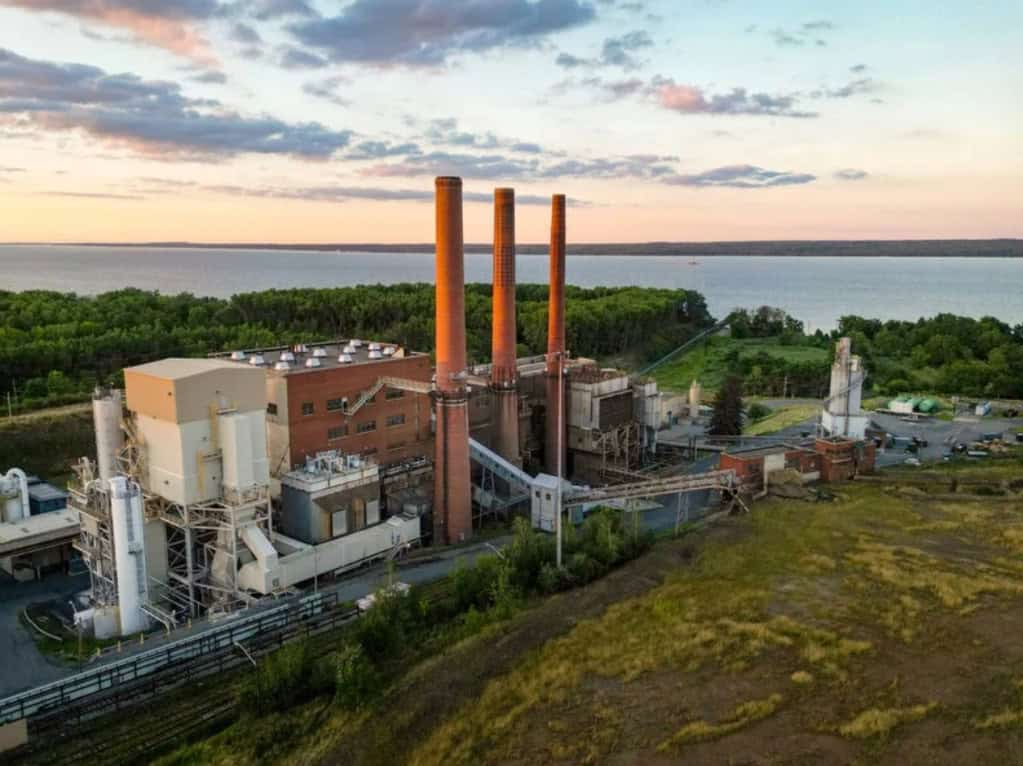
 Last week, the Pennsylvania Public Utility Commission (PUC) approved a Tentative Order by a 3-2 vote, proposing a statewide model tariff (tax) to manage the growing impact of large-load customers, such as AI data centers, on the electric grid. The goal is to encourage investment and job growth while protecting existing ratepayers from cost-shifts and ensuring reliability. The PUC failed. The proposed order was passed on a partisan basis, with the three Democrat commissioners voting to make it harder and more expensive for data centers to locate in the Keystone State, potentially jeopardizing $92 billion of investments promised to the state related to data centers (see
  We may finally, after seven long years of torture, have a resolution to the issue of forcing Pennsylvania to join the Regional Greenhouse Gas Initiative (RGGI) carbon tax scheme. The rumors are swirling around Harrisburg that the Democrats (including Governor Josh Shapiro) and Republicans in the state Senate are close to a budget deal. The budget was supposed to be adopted by July 1st. It’s now over four months late, and school districts and government agencies dependent on state funding are hurting. The rumor is that the budget deal includes a provision to dump PA’s participation in RGGI. Lefty environmentalists are having a CO2-emitting cow at the news.
  In April, we told you that Energy Transfer’s (ET) Lake Charles LNG project had landed a new partner to help pay for the project, MidOcean Energy, which will cover 30% of the cost of building the plant (see