
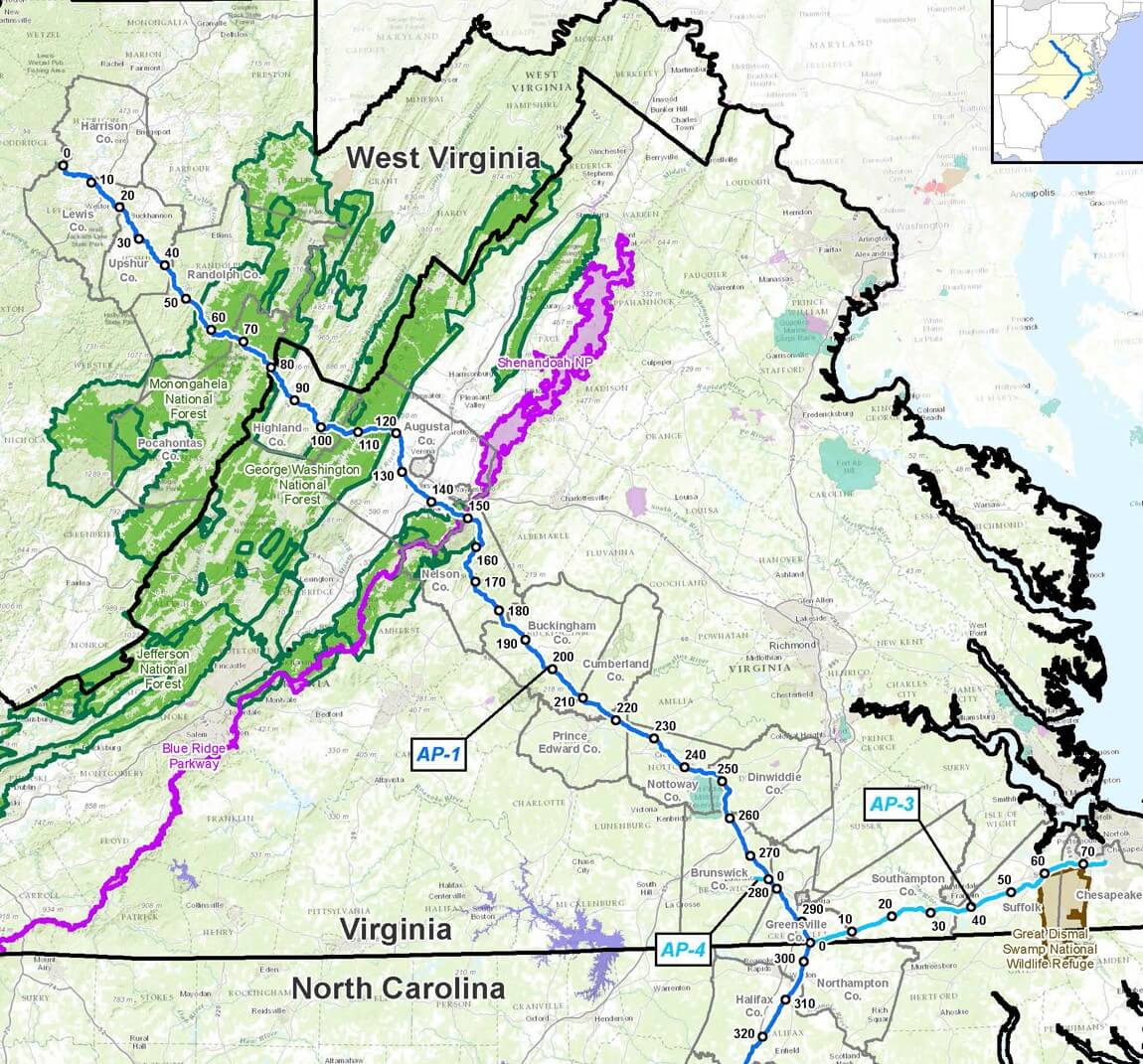
Equitrans Looks to Expand Capacity on MVP by Extra 0.5 Bcf/d
 We have some significant news coming out of yesterday’s 2Q update from Equitrans about the company’s Mountain Valley Pipeline (MVP) project. Equitrans is seriously considering expanding compression along MVP to flow an extra 500 million cubic feet per day (MMcf/d) of natural gas along the pipeline after it’s up and running.
Read More “Equitrans Looks to Expand Capacity on MVP by Extra 0.5 Bcf/d”
 Two big pieces of news coming from yesterday’s Range Resources 2Q update: (1) The company is not yet done with asset sales, including active discussions on selling its northeastern Pennsylvania leases/wells in Lycoming County; and (2) drilling costs averaged less than $600 per lateral foot last quarter–the lowest average in the Marcellus/Utica region.
 The pipeline business is doing just fine, despite COVID-19. That’s according to Alan Armstrong, CEO of one of the country’s largest pipeline companies–Williams. On a conference call yesterday to discuss the company’s 2Q20 performance, Armstrong said: “[M]any people assume that natural gas demand would be greatly diminished by COVID-19 and a stalled economy. Fortunately, we have not seen that play out at all. In fact, natural gas demand has continued to grow, both broadly across the market and on our systems, in particular.”
 The Federal Energy Regulatory Commission (FERC) finally got its butt in gear and issued a favorable environmental assessment (EA) for an amended request by PennEast Pipeline to break the project into two phases–building the pipeline through Pennsylvania in Phase One, and through New Jersey in Phase Two. FERC was supposed to issue its findings on or by July 10. Finally, after two weeks with no report, no explanation, and no communication, PennEast goosed FERC on July 24 (see
 On August 1, 2019, Enbridge’s Texas Eastern Pipeline Company (TETCO) pipeline exploded in Lincoln County, Kentucky–killing one and sending six to the hospital (see
 MARCELLUS/UTICA REGION: Pennsylvania is tough. Joe Biden is weak. (video); NATIONAL: U.S. crude oil production in May has a record monthly decrease; Natural gas prices reach ‘turning point,’ with possible rally into 2021, says BofA; Low oil prices will boost consumption; US shale industry seeks same output for less input; Oil donors flock to Trump as Biden hardens climate stance.
 Range Resources has cut a deal to sell its Haynesville Shale assets (220,000 acres plus the wells they’ve drilled since buying those assets) to Castleton Resources, a privately owned company majority-owned by Tokyo Gas, for $245 million (plus an extra $90 million, maybe, contingent on the price of gas). Range bought those assets in 2016 for $4.4 billion (see
 Yesterday the price of natural gas trading on the NYMEX futures exchange, a price based on the spot price at the Louisana Henry Hub trading point, zoomed up, closing 30 cents higher than the trading day before (up 14%). There does not appear to be a single, specific reason why trading took off like wildfire. Some speculate it rose based on the good news that U.S. LNG exports are once again on the rise. Others say short-term forecasts are now predicting continued hot weather. Whatever the reason, we’ll take it!
 New Fortress Energy (NFE), which is building an LNG liquefaction facility in northeastern Pennsylvania and a dock on the Delaware River to export their PA LNG, is expanding rapidly. NFE issued its 2Q20 update yesterday. In reading a transcript of a conference call with analysts, the light bulb went off for MDN. NFE has figured out how to deliver (sell) LNG to just about any market on the planet. It’s pure genius. We’ll explain it below.
 What is it with Democrats and the urge to tax everything–even things that breathe? They have a particular fascination with taxing carbon dioxide–the building block of life and the substance every living thing breathes out with every breath. The latest Democrat who wants to tax CO2 is Pennsylvania Senate Minority Leader Jay Costa, Jr. (from Pittsburgh) who introduced Senate Bill (SB) 15. Costa falsely calls it a “cap and invest” plan. In reality and normal plain English, it’s a tax plan–taxing natural gas-fired power plants.
 The experts at RBN Energy have been analyzing pipelines and natural gas flows out of the Marcellus/Utica region and warn of a coming problem this fall. Production in the M-U remains high. Storage is quickly filling up. The gas needs to exit the region in order to fetch better prices. According to RBN, “This fall, the situation could be even worse and may force producers to shut-in gas for a second time this year.” Pipeline constraints are coming, and that spells problems.
 It’s been a tough past five months in the shale industry. While it’s been tough in the gas-focused plays like the Marcellus/Utica, it’s been tougher in the oil-focused plays like the Permian. Employment in the O&G space has shrunk, by one account, by some 86,000 jobs. We’re now at the same employment level as we were following the downturn in 2014-2016. “But everyone knows this industry is cyclical. It’ll bounce back again, right?” This time it may be different. According to analyst John Kemp, this time some of the jobs (and companies) leaving the industry will be gone for good…
 Cabot Oil & Gas issued its 2Q20 update on Friday. CEO Dan Dinges said natural gas prices hit a historic low in 2Q (lowest since 1995), but he thinks the price will improve “this winter.” Although the price Cabot got for its gas last quarter ($1.52/Mcf) was 33% lower than a year ago, the company still made a profit. Cabot netted $30 million in 2Q, vs. netting $181 million a year ago. The company drilled 14 new shale wells, completed/fracked 31 wells, and placed 25 new wells online last quarter. They produced an average of 2.2 Bcf/d of natural gas.
 Southwestern Energy released its 2Q20 update on Friday. The company, with nearly a half-million acres under lease, drills solely in the Marcellus/Utica in two distinct regions: northeastern Pennsylvania and West Virginia. The NEPA operation targets dry gas. WV targets wet gas/NGLs. During 2Q, Southwestern drilled 80% of its new wells in the NEPA dry gas area. Southwestern drilled 30 new wells, completed/fracked 31 wells, and placed 31 wells online to sales last quarter. One of the eye-popping bits of news from the company update is that for one particular well they hit a super-low $505/lateral foot cost to drill the well–the lowest drilling cost we’ve seen by any M-U driller anywhere!