
Canadian Province That Banned Fracking OKs Marcellus-Fed Gas Plant
 The government of New Brunswick, Canada, granted conditional approval last Friday for a 500-megawatt natural gas power plant that provincial officials say is needed to keep the lights on and prevent rolling blackouts within two years. The Canadian Press story that broke the news never asked the obvious question — the one a half-dozen readers asked in the comments section instead. Where does the gas come from? Answer: Appalachia. Or Qatar. Anywhere, really, except New Brunswick, which has outlawed fracking since 2014. Read More “Canadian Province That Banned Fracking OKs Marcellus-Fed Gas Plant”
 OTHER U.S. REGIONS: Transco, Florida natural gas basis strengthens as pipelines near capacity; The New York data center moratorium is a mistake; NC DEQ approves air permits for giant Amazon data center in Richmond County; Vineland data center accused of operating natural gas generators without permit; NATIONAL: U.S. natural gas futures make small weekly gains; Energy Transfer quietly becoming one of biggest natgas suppliers to AI data centers; INTERNATIONAL: Oil futures end week lower as more oil seen moving; Goldman says Gulf oil exports at 2/3 of pre-war level; Formentera, Daly Waters commission first Beetaloo gas plant; Venezuela weighs OPEC exit; How dare you – Doom Pixie and her political pals; N.B. to review ban on fracking amid U.S. tariffs and economic pressures.
  The Marcellus/Utica region received 19 new drilling permits last week, August 17 – 23, down from the 27 permits issued two weeks ago. For the second week in a row, Pennsylvania issued the fewest new permits, with 2 (after issuing just 4 two weeks ago). What’s up with PA? Ohio issued 4 permits. And West Virginia took the prize last week, issuing 13 new permits. The drillers who received new permits were: Expand Energy (6), Infinity Natural Resources (1), Northeast Natural Energy (1), Pennsylvania General Energy (2), Tiburon Oil & Gas (3), and Vickery Energy (6).
 Nineteen months after TECfusions bought the old Alcoa research campus in Upper Burrell (Westmoreland County), PA, and promised to build 3 gigawatts of gas-fired AI computing capacity, the company announced yesterday that the site is live and delivering GPU capacity to a paying customer. It’s a small first bite of a very large apple—but it’s real, it’s running on gas turbines today, and it sits on top of Marcellus wells the company already owns.
  When we covered DTE Energy’s second quarter results in July, we grumbled that the company was throwing $10 billion at unreliable renewables and only $2.5 billion at a single new gas plant to replace a retiring coal fleet (see
  Back in June, we praised South Strabane Township in Washington County, PA, for doing the hard, unglamorous work of writing data center rules instead of slamming the door shut (see
  South Carolina’s utility regulators voted unanimously yesterday to let a $2.8 billion artificial intelligence data center in Spartanburg County build and run its own 457-megawatt natural gas power plant without asking the state’s permission first. The decision is a big win for the “behind-the-meter” model — where a data center brings its own generation instead of leaning on the grid — and it’s a model that is going to burn a lot of molecules. Possibly some of ours.
  A press release crossed the wire yesterday announcing that Edge LNG — the little company that showed the Marcellus how to truck its stranded gas to market — has been sold. Sapphire Gas Solutions of Conroe, Texas, is the buyer. Blue Water Energy, the private equity firm that backed Edge from the beginning, is the seller. And here’s the part that caught our eye: the announcement calls Edge “a Texas-based LNG company” serving customers in the Southern U.S. The Marcellus, where Edge made its name, doesn’t get a single mention.
  Sixty-two days after a wastewater pipeline let go at Equitrans’ Richter impoundment in Aleppo Township, Greene County, the Pennsylvania Dept. of Environmental Protection (DEP) went back out to look at the site on August 18 — and didn’t like what it found. Contaminated water is still moving, soil is still dirty, and DEP says the cleanup has largely stalled. Quick refresher for those just tuning in. On June 17, 2026, Equitrans Water SVC (PA) LLC — the water-handling arm of EQT — reported a wastewater release from a pipeline tied to its Richter Shale Gas Water Impoundment while the site was being reclaimed. DEP issued a cleanup order on June 30 requiring the company to stop contaminated water from migrating off site and from reaching ground or surface water.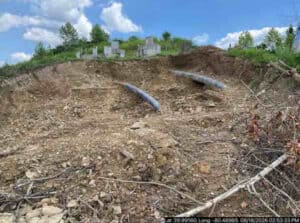
 A second poll of Pennsylvania voters on data centers landed this week, and the headlines say what you’d expect: six in ten are opposed. Dig into the crosstabs — the detailed tables showing how each group answered — and you find something the coverage skipped entirely. A majority of Pennsylvania Republicans support building data centers. Fifty-one percent for, 42% against (take note, Stacy Garrity). The Philadelphia Inquirer, teaming up with the New York Times and Siena University, surveyed 760 likely Pennsylvania voters from August 17-21. The topline: 62% oppose the construction of AI data centers, 33% support them.
 The PJM market monitor asked federal regulators to kill Hull Street Energy’s purchase of two gas-fired peaking plants unless Hull Street promised not to point them at data centers. On August 13, FERC said no — and said the monitor hadn’t supported its argument. Thirteen days later, the deal closed. Hull Street Energy (HSE), a private equity firm in the Washington, D.C. area, announced yesterday that it completed the acquisition of the Lee County Generating Station in Dixon, Illinois, and the Tait Electric Generating Station near Dayton, Ohio, from Rockland Capital. HSE calls the pair the “GridFlex Portfolio” and has folded it into Milepost Power, its thermal generation platform.