
Green County, PA, OKs Phase 1 of New Data Center with 910-MW Plant
 The Greene County Planning Commission recently voted 8-1 to approve Phase 1 of “Project Hummingbird,” a massive data center complex proposed for the former Robena Mine site in Monongahela Township. This initial phase focuses on land grading, reclamation, and site preparation for a “power island” featuring two natural gas turbines totaling 910 megawatts (MW) and a water treatment plant. The plant will use Marcellus/Utica gas to power it. Read More “Green County, PA, OKs Phase 1 of New Data Center with 910-MW Plant”

 In April, Knighthead Capital Management, Homer City Redevelopment (HCR), and Kiewit Power Constructors Co. announced a plan to convert the former Homer City Generating Station, previously the largest coal-fired power plant in Pennsylvania (Indiana County, 50 miles east of Pittsburgh) into a more than 3,200-acre natural gas-powered data center campus, designed to meet the growing demand for artificial intelligence (AI) and high-performance computing (see
  OTHER U.S. REGIONS: Fuel rationing chaos looms in New York State; Hochul ends ‘100-foot-law’ through new legislation; Georgia regulators approve massive power grid expansion to serve data centers; NATIONAL: U.S. natural gas futures post daily gain, weekly loss; Climate fundraising update – hope amid doom; The EV bubble, or what’s left of it, popped this week; Democrats introduce legislation to stop LNG exports; INTERNATIONAL: Oil posts second weekly decline; The high cost of the “energy transition.”
  Volatility is the watchword for new permits in the Marcellus/Utica. Three weeks ago, the combined count between Pennsylvania, Ohio, and West Virginia was a measly 8 new permits (see
  In August 2014, the Marshall County, WV board of commissioners voted to approve a plan to build a Marcellus Shale-powered electric plant in the county (see
  Data centers—large facilities full of computers—have been in the news a lot over the past year. The internet and tech companies like Facebook, Google, and Amazon gave rise to data centers. But a new/renewed emphasis emerged a year ago with the unveiling of artificial intelligence (AI), which is now being used by a large portion of the population. Did you know that there are currently 4,149 active data centers in the U.S.? And that another 2,788 have been announced/planned, primarily related to AI? That’s from a fantastic new report from the American Edge Project (AEP) and the Technology Councils of North America (TECNA). Earlier this week, they released “America’s AI Surge: Powering Investment, Jobs, and Growth in Every State” (full copy below). We’ve extracted information specific to the Marcellus/Utica region from the report.
  In April, Knighthead Capital Management, Homer City Redevelopment (HCR), and Kiewit Power Constructors Co. announced a plan to convert the former Homer City Generating Station, previously the largest coal-fired power plant in Pennsylvania (Indiana County, 50 miles east of Pittsburgh) into a more than 3,200-acre natural gas-powered data center campus, designed to meet the growing demand for artificial intelligence (AI) and high-performance computing (see
  In June 2023, Dominion Energy announced plans to build four small “peaker” electric generating plants in Chesterfield County near Richmond (see
 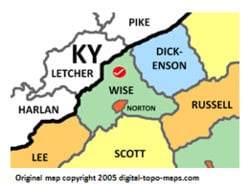 Great news about another new gas-fired power plant coming to Virginia—a plant that will use Marcellus/Utica molecules. Red Post Energy Group and Wise Innovation Hub Venture (OASIS) have signed a Letter of Intent to develop power infrastructure for a major technology and data center hub in Wise County, Virginia, in the southwestern corner of the state. Known as the Maverick Project, this phased initiative aims for a total capacity of 600 megawatts, beginning with an initial 100-megawatt phase.
  This is sad and unexpected. Five weeks ago, MDN reported that Energy Transfer was holding off on a final investment decision (FID) for its Lake Charles LNG export project until 80% of the project had been sold to equity partners (see
 PJM Interconnection today announced the results of its 2027/2028 Base Residual Auction (BRA), which secured 134,479 MW of unforced capacity generation (UCAP) and demand response (DR) to meet projected electricity needs for more than 67 million people across 13 states and the District of Columbia, including Pennsylvania, Ohio, and West Virginia. The auctioned price came in at the FERC-approved cap of $333.44/MW-day (UCAP) for the entire PJM footprint, an increase of +1.3% from the 2026/2027 BRA. Even so, the BRA fits way too tightly, falling short of PJM’s reliability requirement by 6,623 MW, meaning the committed supply is less than what would be required to meet the one-event-in-10-year reliability standard of a 20% reserve margin. If that event happens in 2027/28, we’re in trouble. The lights will go out. Who’s to blame? We credit Pennsylvania Governor Josh Shapiro.
  In February 2024, members of the South Carolina Public Service Commission approved a proposed project to build a 1,020-megawatt (MW) gas-fired power plant in the state’s Lowcountry, in Colleton County (see
  Ohio already has 217 data centers with more on the way. Data centers are warehouses filled with computer equipment that generates a lot of heat. To cool down the computers, data centers use massive amounts of water. If data centers want to get rid of that water after it’s been used, they have to apply for a permit called the National Pollutant Discharge Elimination System (NPDES) through the Ohio EPA. Currently, data centers must apply for an individual NPDES permit, which is detailed and unique to their operations. The OEPA is looking to streamline the process to make it faster and easier. That’s a good thing.