• | |

    Fed Judge Revives Obama Waters of US Tragedy in 26 States

    U.S. District Judge David Norton

    Just when you thought we were making progress in reversing some of the cancerous regulations imposed by Lord Obama, up pops a swamp-dwelling judge (appointed by George H.W. Bush, George the 1st) to reinstate the idiotic “Waters of the United States” (WOTUS) regulation in 26 states. In May 2015, Obama’s radical Environmental Protection Agency (EPA) along with the Obama U.S. Army Corps of Engineers (USACE) released a finalized rule clarifying what WOTUS means vis a vis what can be regulated under the federal Clean Water Act (see EPA Power Grab: Redefines Waters of the U.S. to Include Everything). Essentially the rule change redefined everything down to mud puddles (and no, we’re not exaggerating) as being subject to the federal Clean Water Act. It was yet another attempt to bring oil and gas regulation under the purview of the federal government, a violation of the U.S. Constitution. We won’t recount the history of lawsuits and counter lawsuits that ensued. We’ll only tell you that in January the U.S. Supreme Court entered the fray by determining which courts can hear lawsuits regarding WOTUS (see U.S. Supreme Court Changes Jurisdiction for WOTUS Challenges). In February, then-EPA Administrator Scott Pruitt (we’re sorry he’s now gone) suspended the existing WOTUS until two years from now when a new WOTUS will be ready (see EPA Director Scott Pruitt Suspends Obama WOTUS Rule). The swamp-dwelling, Bushie U.S. District Judge David Norton threw that out and reinstated WOTUS. It’s OK for Obama and his droids to take the law into their own hands, but when another administration comes in and wants to wash away the stain of overregulation, that’s not OK. We call that protecting the swamp…
    Read More “Fed Judge Revives Obama Waters of US Tragedy in 26 States”

  • | |

    Irrational Fossil Fuel Hatred in Bristol, VT re Local Gas Line

    It took Vermont Gas Systems three years to build a 41-mile, $165 million natural gas transmission pipeline from Colchester to Middlebury. The pipeline went into service in April. Vermont Gas is now working to complete several local distribution spurs–short, small pipelines to deliver the gas to homes and businesses. One of those spurs goes to Bristol, VT. A handful of Bristol residents are suing the town board for approving the local distribution pipeline without first holding a townwide vote. When you read the objections of those against the project, they don’t talk about exploding pipelines and safety issues, or running pipelines through pristine areas. How can they object on that basis? There are literally tens of thousands (maybe hundreds of thousands) of miles of this very same kind of pipeline in every major and most minor cities and towns across the country. When you read the comments of those in Bristol objecting, they talk about natural gas as “a big, dirty fossil fuel” and fracking as an abject evil, contaminating water, filled with chemicals, yada yada yada. In other words, they are clinically insane. They irrationally hate fossil fuels, even though their very lives and existence depend on those fossil fuels every minute of every day. We’ve run out of words to describe such lunacy…
    Read More “Irrational Fossil Fuel Hatred in Bristol, VT re Local Gas Line”

  • Energy Stories of Interest: Fri, Aug 17, 2018

    The “best of the rest”–stories that caught MDN’s eye that you may be interested in reading: Dominion once again offering $1 million to local nonprofits; Allegheny County Health Dept. investigating frack sand terminal; Pennsylvanians have a clear choice for US Senator–Lou; wackos protest in Albany to ask Cuomo to stop coal plant from converting to natgas; there is a stable market for coal aside from electric generation; Mexico’s new president rolling back free market reforms in oil & gas; does OPEC really have the oil supplies it claims?; and more!
    Read More “Energy Stories of Interest: Fri, Aug 17, 2018”

  • | | | | |

    NY Judge Overrules DEC, Allows Gas-Fired Plant to Start Up

    A new hope has emerged for Competitive Power Ventures (CPV) Valley Energy Center, a $900 million, 680-megawatt natural gas-fired electric generating plant in Orange County, NY. Last week MDN told you that at the last minute, four days before the plant was set to start up, the Andrew Cuomo-corrupted Dept. of Environmental Conservation (DEC) pulled the ultimate dirty trick and refused to renew an air permit for the plant they previously issued five years earlier (see Cuomo Strikes Again: Blocks Completed Gas-Fired Plant from Starting). The DEC now says the plant will need a different (federal) air permit before it can start up, effectively blocking it. As we told you in a followup article, the DEC’s dirty trick left CPV with three options (see 3 Options for Blocked NY Marcellus-Fired Electric Plant). Option #2 in our list was to ask a judge to overturn the DEC’s decision (our preferred option). CPV exercised that option and yesterday the judge agreed and shut down DEC’s ability to stop the plant from starting up, which will now happen this week or early next week. Great news! However, the judge’s order is temporary, while a larger lawsuit works its way through the court system. In the meantime, CPV will start the plant, a victory for the good guys. The best part? PA Marcellus fracked gas will feed it…
    Read More “NY Judge Overrules DEC, Allows Gas-Fired Plant to Start Up”

  • | | | | | | | |

    Atlantic Coast Pipeline Asks FERC to Lift Stop-Work Order

    Borrowing a chapter from EQT and their Mountain Valley Pipeline project, Dominion Energy has asked the Federal Energy Regulatory Commission (FERC) to lift a stop-work order for its 600+ mile Atlantic Coast Pipeline (ACP) project. On Tuesday MVP sent a letter to FERC requesting the agency lift it’s stop-work order for them (see Mountain Valley Pipe Asks FERC to Lift Stop Work Order). A day later, yesterday, ACP did the same thing. Last week a federal court pulled permits for approximately 100 miles (of 600 miles) for ACP in response to a frivolous lawsuit filed by the anti-American Sierra Club (see FERC Shuts Down ALL Work on Atlantic Coast Pipeline). The Clubbers convinced the Fourth Circuit Court of Appeals to overturn permits granted by the U.S. Fish and Wildlife Service and the U.S. National Park Service, granted to ACP to cross the Blue Ridge Parkway. The court, in rolling back ACP’s permits, told FERC they should shut down work on the entire project until this matter is resolved. Last Friday FERC did just that. Yesterday Dominion politely asked FERC to ignore the court and lift the ban for those portions not part of the actual court order. Dominion got some moral support from West Virginia’s congressional delegation in their effort. Senators Joe Manchin and Shelley Moore Capito, along with Rep. David McKinley wrote a letter to FERC asking the agency to lift the stop-work order for both ACP and MVP…
    Read More “Atlantic Coast Pipeline Asks FERC to Lift Stop-Work Order”

  • | | |

    Duke Study Can’t Hide Fact Water Use for M-U Fracking is Small

    We find the latest “bash fracking” so-called study just published by Duke University to be, well, rather amusing. This is not Duke “researcher” Avner Vengosh’s first bash fracking study (see Duke Hit Piece on Shale Water Usage from Same Park-Sponsored Prof and Latest Case of Duke U Bought & Paid “Research” by Park Foundation). This newest “research” study is amusing because the findings appear to be solid and positive news for the industry, but the researchers and mainstream media are going out of their way to spin the findings into something negative. In “The intensification of the water footprint of hydraulic fracturing” (full copy below), researchers imply and infer that fracking is using too much water, and producing too much wastewater (brine and flowback). Yet here in the Marcellus/Utica region, fracking’s use of our regional (very abundant) water supplies is minimal, only growing 20% from 2011 to 2016. Although they do their best to spin it negatively, you can’t ignore the facts. Fracking isn’t a drain on freshwater supplies, using a small fraction compared to other uses, including golf courses. The amount of wastewater that must be disposed is not a burden either. Most brine (i.e. produced water) and flowback is recycled and reused, with a small amount disposed via injection wells…
    Read More “Duke Study Can’t Hide Fact Water Use for M-U Fracking is Small”

  • |

    Tour of OH Gas-Fired Plant Illustrates Superiority Over Nuclear

    Oregon Clean Energy Center

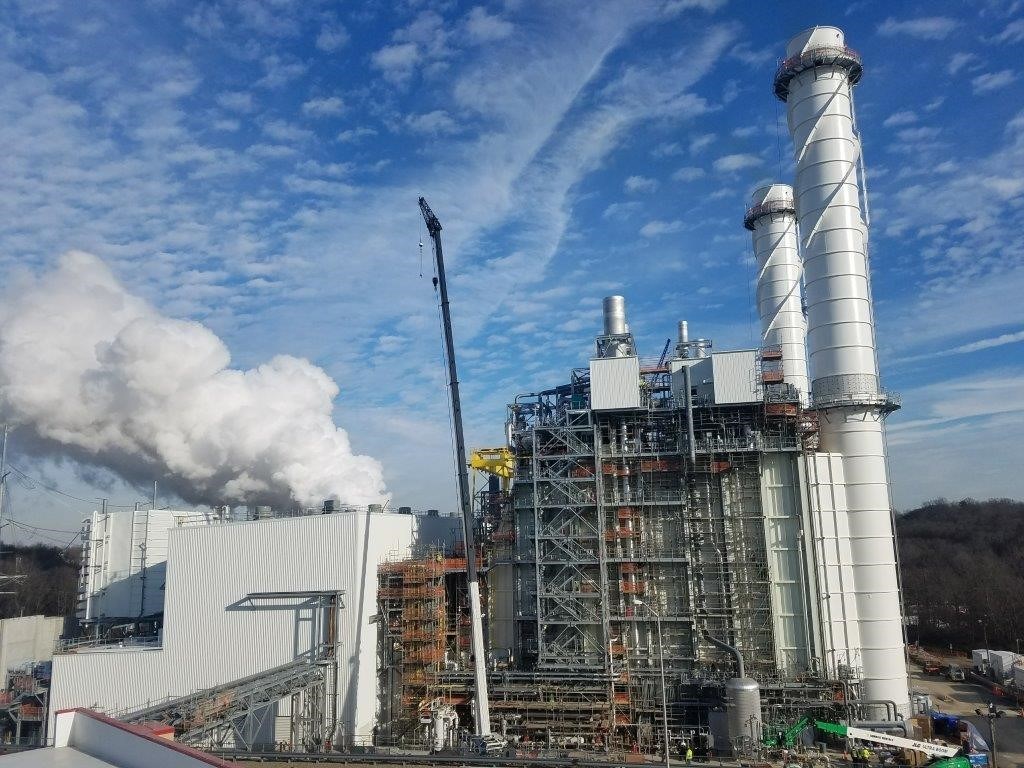
    It’s been a year since CME Energy’s Oregon Clean Energy Center, a Utica-fired electric plant, went online in Oregon (Lucas County, near Toledo), OH (see New 870 MW Gas-Fired Electric Plant in NW Ohio Begins Operation). The plant was originally planned to generate 870 megawatts of electricity but actually generates 960 megawatts during peak times. Recently representatives of the Ohio Manufacturers’ Association took a tour of the plant–and they “liked what they saw.” What did they see? They saw a new, ultra-modern, clean-burning plant producing 960 megawatts with only 21 employees, vs. the nearby Davis-Besse nuclear plant that produces 908 megawatts using 700 employees. Oregon Clean Energy produces electricity far cheaper than Davis-Besse. Here’s what we like, a little fact that came out during the tour: During a recent 24-hour period Oregon Clean Energy purchased and used $350,000 worth of Utica Shale gas to produce those 960 megawatts. We suspect more days than not that’s how much gas the plant is using–over $300,000 worth a day. See why we’re so jazzed about gas-fired electric plants?…
    Read More “Tour of OH Gas-Fired Plant Illustrates Superiority Over Nuclear”

  • | |

    With $3B from Germany, Canadian Goldboro LNG Looks Like Done Deal

    Location for proposed Goldboro LNG plant – click for larger version

    Canadian company Pieridae Energy is on the cusp of making a positive final investment decision (FID) to build a $10 billion LNG export facility on the coast of Nova Scotia. In February, Pieridae enlisted the help of Morgan Stanley and Société Générale to help raise the $10 billion needed to build Goldboro LNG (see Pieridae Energy Hires Morgan Stanley, SG to Help Fund Goldboro LNG). In May, Pieridae began lining up customers in Europe (see Goldboro LNG in Nova Scotia Negotiating Deal to Sell LNG to Europe). In a press release issued yesterday, Pieridae says they have hired yet another adviser, KfW IPEX-Bank (in Germany), to help it get a $3 billion loan from the German government. Canada’s Financial Post is reporting if the German loan goes through, Pieridae is prepared to pull the trigger and commit (and begin to build) the project this year. Which is a good thing, because if Pieridae doesn’t begin construction on Goldboro LNG by the end of this year, they risk losing Nova Scotia environmental approval…
    Read More “With $3B from Germany, Canadian Goldboro LNG Looks Like Done Deal”

  • | | | |

    PA Senate Bill Encourages Use of Conventional Brine on Roadways

    A bill under active consideration in the Pennsylvania Senate would remove the PA Dept. of Environmental Protection’s (DEP) prohibition against using brine from conventional oil and gas wells on PA’s roadways (see DEP Continues to Block Use of Brine on PA Dirt Roads). This past spring the DEP notified townships they could no longer use brine, a cheap source of “road salt” for deicing roads and (in liquid form) for spreading on dirt roads to keep the dust down. Brine from shale wells has never been allowed on PA’s roads–so this only concerns conventional drillers/wells. The move by DEP to block brine use, among other DEP actions, angered the industry and led to bills being introduced by both the House and Senate that “roll back” (more like “lock in”) regulations that govern conventional PA drilling to the Oil and Gas Act of 1984 (see 2 PA Bills Would Roll Back Conventional Drilling Regs to 1984). The House already passed their version of the bill back in June (see PA House Passes Bill Exempting Conventional Drillers from Shale Regs). The corresponding Senate bill is now being discussed. Part of the bill, if passed, tells the DEP it must “encourage” (not ban) the use of conventional brine…
    Read More “PA Senate Bill Encourages Use of Conventional Brine on Roadways”

  • | | | |

    Cove Point LNG’s Exports End Up in Far-Flung Countries

    The world of LNG (liquefied natural gas) is a strange world for us. We’re still learning about it. LNG is important for the Marcellus/Utica region as our molecules increasingly get shipped to other countries. Our molecules get shipped directly from the Dominion Cove Point LNG export facility in Lusby, Maryland, and by Cheniere’s Sabine Pass LNG export facility in Louisiana. Yes, some of our gas makes it to Louisiana and is liquefied and shipped out. However, the Cove Point facility is the focus of this post. Since early 2013, all of the LNG export capacity from Cove Point has been spoken for, by India and Japan, signing 20-year contracts (see Dominion’s Cove Point LNG Facility Achieves Important Milestones). You would think if they contracted for the LNG, they’d ship it to their respective countries and use it. But you would be wrong (see Half of India’s Contracted US LNG Won’t End Up in India). Once a company or a country owns a shipload of LNG and the ship sets sail and is on the open seas, the owner can sell it, trade it, swap it–do anything they want with it. Both Japan and India are and have been doing just that. The U.S. Department of Energy (DOE) recently released data on U.S. LNG exports covering year to date through June 2018. In looking over the shipment data for Cove Point, the shipments not only went to India and Japan, they also went to Jordan, Kuwait, Argentina, Dominican Republic, Mexico, Pakistan, Panama, and the United Kingdom! Marcellus/Utica molecules are literally being used around the world. The best part? Our drillers get higher prices for the gas than they can get here at home. Prices for the gas coming from Cove Point fetched anywhere from $5.27 per thousand cubic feet (Mcf) to $8.16/Mcf…
    Read More “Cove Point LNG’s Exports End Up in Far-Flung Countries”

  • Energy Stories of Interest: Thu, Aug 16, 2018

    The “best of the rest”–stories that caught MDN’s eye that you may be interested in reading: Public forum set for new natgas pipeline in Rochester, NY area; rig count in Utica climbs by 2 to 20; US-China dispute may delay Magnolia LNG construction; judge overturns Idaho’s forced pooling reg in court case; SEC drops #ExxonKnew investigation; scientists invent mineral to soak up CO2 out of atmosphere; plastics industry flourishes thx to shale; Canada’s Quebec looking for LNG suppliers; China can’t shake US oil addiction; and more!
    Read More “Energy Stories of Interest: Thu, Aug 16, 2018”

  • |

    EIA Aug ’18 Drilling Report: Gas Prod. Jumps 1 Bcf/d, Again!

    Records continue to be shattered. On Monday our favorite government agency, the U.S. Energy Information Administration (EIA), issued our favorite monthly report, the Drilling Productivity Report (DPR). The DPR is the EIA’s best guess, based on expert data crunchers, as to how much each of the U.S.’s seven major shale plays will produce for both oil and natural gas in the coming month. The Marcellus/Utica region (called Appalachia in the report) continues to see production go through the roof. As has been happening for the past 6 months or so, production in the Marcellus/Utica region will grow another roughly 1/3 billion cubic feet (Bcf) in the coming month. If you add up new gas production for all seven major plays, the U.S. will produce an additional 1 Bcf/d in September, same as was added in August. That’s 1 Bcf more in September than we produced in August, or 2 Bcf/d more in September than what we produced in July. Mind blowing! No less impressive is U.S. oil production from shale. This month oil production will grow another 93,000 barrels per day, hitting a new all-time high of 7.5 million barrels per day of production–just from shale (not from offshore). Once again, new records for gas (and oil) will be shattered in September…
    Read More “EIA Aug ’18 Drilling Report: Gas Prod. Jumps 1 Bcf/d, Again!”

  • | | | | | |

    Mountain Valley Pipe Asks FERC to Lift Stop Work Order

    EQT Midstream and its partners in the Mountain Valley Pipeline (MVP) project are trying to convince the Federal Energy Regulatory Commission (FERC) to lighten up and reconsider lifting most of a stop-work order for the entire 303-mile pipeline project. In a 7-page letter to FERC yesterday, Matthew Eggerding, EQT Midstream’s top lawyer, outlined his company’s case for allowing them to restart work on most of the pipeline. Two weeks ago FERC ordered MVP to shut down all construction for the entire project following a court case that overturned permits for a tiny, 3.5-mile section of the project as it runs through the Jefferson National Forest (see FERC Shuts Down ALL Work on Mountain Valley Pipeline in WV, VA). In delivering its stop-work order, FERC said while it expects the two federal agencies involved (U.S. Forest Service and Bureau of Land Management) to quickly rework and reissue the permits overturned by the court, they (FERC) don’t know when that will happen and so in the meantime, just shut it all down. MVP is asking them to reconsider. What happens if FERC doesn’t reconsider and MVP stays shut down until the court gives the OK for reissued permits? According to EQT’s incoming CEO Rob McNally, “that would certainly put the first-quarter [2019] timing in jeopardy.” Meaning all bets are off…
    Read More “Mountain Valley Pipe Asks FERC to Lift Stop Work Order”

  • | | | | | | | | |

    Cabot, Seneca, Chief Ramp Up Production for Atlantic Sunrise

    According to a report from BTU Analytics, the top three shippers who will soon flow natural gas along Williams’ Atlantic Sunrise Pipeline (ASP)–Cabot Oil & Gas, Seneca Resources and Chief Oil & Gas–have “nearly doubled” their rig counts over the past few months leading up to the imminent startup of ASP. The pipeline is due to go online any day now–by the end of August (see Genscape Confirms Atlantic Sunrise Pipe Ready to Flow in August). Cabot has reserved 1 billion cubic feet per day (Bcf/d) of the 1.7 Bcf/d capacity of the new ASP. One third of Cabot’s 1 Bcf/d (350 million cubic feet per day, MMcf/d) will flow to Dominion’s Cove Point LNG export plant in Maryland–heading for Japan. Another 500 MMcf/d of Cabot’s gas will go to Washington Gas via ASP–meaning northeast PA Marcellus molecules will help heat, cool and power D.C. swamp dwellers. Joy. Here’s the great news that a single pipeline is stirring up a lot more drilling in northeastern PA…
    Read More “Cabot, Seneca, Chief Ramp Up Production for Atlantic Sunrise”

  • | | |

    MSC Calls PA 250% Hike in Shale Permit Fees “Excessive”

    Industry trade associations are not impressed with a proposed 250% hike in shale permit fees in Pennsylvania and they’re saying so. PA Gov. Tom Wolf’s Dept. of Environmental Protection (DEP), the agency charged with overseeing oil and gas drilling in the state, blindsided the shale industry in February with a proposal to hike the fee required when submitting an application to drill a new shale well (see PA DEP Plans to Raise Marcellus Well Permit Fee by 250%). The current fee is $5,000. The proposed new fee is $12,500–or 2.5 times (250%) higher. Yes, the DEP has fewer people working there than it once did, and needs to hire more help. However, the DEP wants to slap this insanely high fee on shale drillers to (in part) cover the expenses associated with non-shale activities! The shale permit fees will, “fund the broad scope of the [DEP] office’s operations, including its oversight of traditional [i.e. conventional] oil and gas wells, gas storage wells, abandoned wells and earthmoving activities.” How is it, in any sense, fair to hike the fees of shale drillers so DEP agents can better keep an eye on non-shale wells? The DEP is trying to steamroller the increase through. DEP’s own Environmental Quality Board has already approved the increase and published an official notice in the Pennsylvania Bulletin (see PA Seeks Comments on Boosting Shale Permit Fees 250%). Publication in the Bulletin triggered a 30-day public comment period which just ended. Among those commenting on the plan were the Marcellus Shale Coalition (MSC) and the Pennsylvania Independent Oil & Gas Association (PIOGA). Neither had good things to say about the dramatic increase. MSC’s David Spigelmyer called it “excessive and not proportional to the costs incurred by the oil and gas program to oversee the unconventional natural gas industry.” Making the same point we’ve made: It’s not fair for shale drillers to fund the whole darned program that includes conventional and other aspects of the oil and gas program not related to shale…
    Read More “MSC Calls PA 250% Hike in Shale Permit Fees “Excessive””

  • | | | | | |

    Shell to Remediate PA Swamp in Return for Falcon Pipe Permit

    Shell is proposing to remediate a swamp in Mercer County as a way to “offset” the “impacts” of building an ethane pipeline to feed it’s mighty cracker plant under construction in Beaver County. Oops. Sorry. Instead of calling it a swamp, the PC term is “wetland.” Shell will make a swampy portion of Neshannock Creek in Mercer County swampier, in return for permission to build the Falcon ethane pipeline elsewhere. Apparently it’s not the first time Shell has proposed such a swap. Shell is in the middle of remediating a swamp in Washington County in return for “local impacts” (i.e. “damage” to the environment) they’re causing by building the cracker plant itself. This is not an uncommon practice–across the country. We happen to think it’s silly. Either a project is worthwhile–worth “damaging” some of our precious environment, because of the greater good it will bring–or not. Playing this game of “I’ll spoil this area here, so I’ll un-spoil that area over there” is senseless, in our humble opinion. But hey, if that’s the game we must play to get it built…
    Read More “Shell to Remediate PA Swamp in Return for Falcon Pipe Permit”