
Anti-Drilling/Fossil Fuel | Delaware County (PA) | Energy Services | Energy Transfer Partners | Industrywide Issues | Pennsylvania | Pipelines | Sunoco Logistics
Too Funny! Angry “Reporters” Call Mariner East 2 “Frankenpipe”
 You know you’ve hit a nerve when so-called reporters (propagandists) at a Philadelphia-area newspaper drop all pretense of being objective in their reporting and begin calling a pipeline project made-up names–like calling Mariner East 2 “Frankenpipe.” Talk about petulant and childish!
Read More “Too Funny! Angry “Reporters” Call Mariner East 2 “Frankenpipe””

 Last September the Ohio Supreme Court handed down a decision that requires oil and gas landmen working in Ohio to have a real estate license (see
  One year ago, in January 2018, Dominion Energy announced a deal to buy out and merge in South Carolina-based SCANA Corporation (see
  In early December, the U.S. Senate confirmed Bernard McNamee in a razor close 50-49 vote to become the fifth member of the Federal Energy Regulatory Commission–the third Republican member (see
  The “best of the rest”–stories that caught MDN’s eye that you may be interested in reading: Four permits issued in Ohio’s Utica; PA Rep. Daryl Metcalfe named new Republican Chair of House Environmental Committee; Weirton-Steubenville corridor sees nation’s highest percentage of construction job growth; Gov. Charlie Baker signs law requiring greater engineering oversight of natural gas work; U.S. natural gas producers, facing bottlenecks, practically giving gas away; How fracking enriches education in Texas – the rest of the story; Sempra sheds non-utility U.S. natural gas storage facilities; Energy commodity prices fell significantly in the last quarter of 2018; Here’s what to expect from oil in 2019; Chesapeake Energy, fracking pioneer, bet on oil – then prices plunged; Annual natural gas storage ‘deficit’ will turn into ‘surplus’ by mid-January; With an eye on record flow from Russia, gas market braces for slump; Russian natural gas flows to Germany, Slovakia up 2% on year in 2018 at 132.5 Bcm; Warnings of LNG supply shortages after 2022 should be taken seriously.
 Pennsylvania strippers are back in the news. Hold on, this is a family-friendly site! We’re talking about stripper wells.
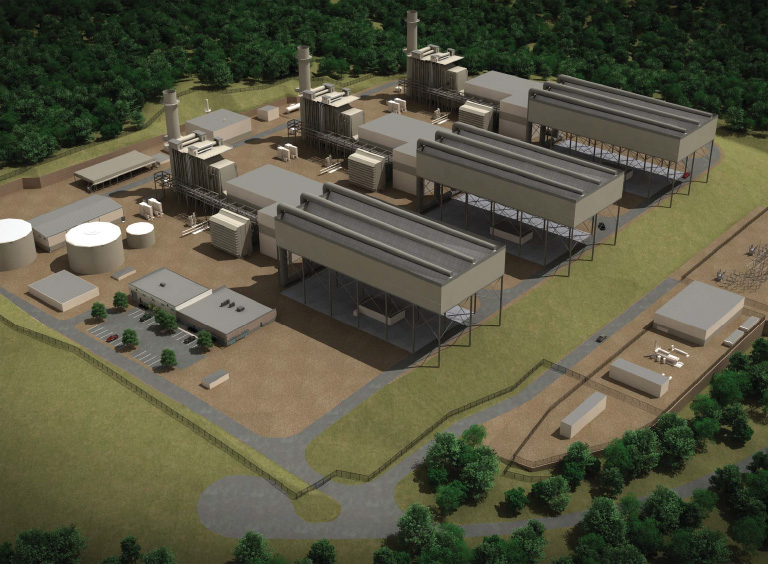 On Sunday, Dec. 23, residents living near the Lackawanna Energy Center (LEC) in Jessup, PA (near Scranton) woke to a loud noise that sounded like a jet engine–and the release of natural gas into the air.
 Tenaska Westmoreland Generating Station, a new natural gas-fueled power plant in southwest Pennsylvania, is now online.
 In January 2016, Invenergy announced their intention to build a natgas-powered electric plant in Elizabeth Township, in Allegheny County (see
  Grrrr. It appears that just like last year, more Russian liquefied natural gas (LNG) is going to be unloaded at Boston for use in Massachusetts and New England. Not only that, a second shipment is going to Cove Point!
 Following an extensive (underscore extensive) review, the Pennsylvania Department of Environmental Protection (DEP) has approved the permit applications for Shell’s Falcon ethane pipeline project.
 Because of lawsuits, regulatory actions by Pennsylvania, and (most relevant) delays from problematic underground geology near Philadelphia, the Mariner East 2 and 2X pipelines, being laid side by side, will temporarily use a 12-inch pipeline near Philadelphia already in the ground but no longer in use to patch together and complete the ME2 and 2X project.