
Outrage: Taxpayer Money Continues Funding PA Anti-Pipeline Group
 Although President Trump is having good success in draining much of the D.C. swamp, there are still stagnant pools here and there. One of them is the Pipeline and Hazardous Materials Safety Administration (PHMSA). Two years ago PHMSA was caught directly funding anti-pipeline activists with your taxpayer dollars! When it was exposed, the grants stopped–at least temporarily. But now they’ve begun again. In 2018, PHMSA is giving almost $100,000 to the Pipeline Safety Coalition, a radical anti-pipeline group in Pennsylvania. Since 2009 the group has grabbed $1.1 million of taxpayer’s money via federal grants!! It’s time for a Congressional hearing and investigation.
Read More “Outrage: Taxpayer Money Continues Funding PA Anti-Pipeline Group”
 If we were ask you, “What is corporate social responsibility (CSR)–what does it mean?” How would you define it? We have to admit that when we first began to see CSR mentioned a few years ago, we were a bit confused by what it meant, largely because everyone defines it their own way. Here’s a real basic definition (the MDN definition) for CSR: Giving back. Giving back to a local community or to a larger sector of society with time, money and volunteers. Think of it as the “heart” of a company. Companies make money. It is increasingly expected those companies should be “good corporate citizens” and help out the people and areas where they make their money. Why do we mention it? Because companies in the shale industry are big into CSR. For example, Chevron (Pittsburgh) is funding a new Center for Corporate Social Responsibility at Waynesburg University with a $250,000 gift.
 Although EQT Midstream’s 303-mile Mountain Valley Pipeline project has experienced a number of legal and regulatory setbacks and is currently blocked from constructing pipeline across/under/near any river, stream, or wetland in all of West Virginia and all of Virginia, there are still places where MVP can build (see
 The “best of the rest”–stories that caught MDN’s eye that you may be interested in reading: Fake news alert: Mariner East 2 will NOT have to wait until 2020; Marathon Petroleum-Andeavor $23.3B merger creates industry giant; Tri-Cities natural gas bills are going down. Trump’s tax plan gets part of the credit; Natural gas regulator station proposal raises real estate concerns; Panel: Renewables and natural gas should work together; Blackstone buys shale drill bit firm that grew through downturn; The energy crisis that never happened: What happens later?; The industry with the most female CEOs isn’t what you’d expect; Mexico steel execs call for competitive natural gas, cohesive industrial policy.
 There’s a series of private events held each fall, sponsored by investment banks and investment firms, that won’t allow media to attend. Supposedly the events allow companies to speak off the record (to investors and analysts) about things they’d rather not have on the public record. We think its a farce…since it keeps us out of those meetings! Inevitably, if there’s big news, it leaks out. And such is the case with news from a recent event hosted by Height Capital Markets in Washington, D.C. At the Height event, Energy Transfer (i.e. Sunoco Logistics Partners) told analysts that the Mariner East 2 (ME2) pipeline project “will be in service as soon as it is mechanically complete, which is expected to be in the next few weeks.”
 Less than two weeks ago NEXUS Pipeline, a $2.6 billion, 255-mile interstate pipeline that runs from Ohio into Michigan, received permission from the Federal Energy Regulatory Commission to begin operation (see
  We thought that all of Mountain Valley Pipeline’s (MVP) permits issued by the U.S. Army Corps of Engineers for stream and wetland crossings had been pulled in both West Virginia and Virginia, but alas, no. One of the regions where permits issued by the Army Corps (called NWP 12 permits), in the northern panhandle of WV, is issued by a different Army Corps district office (in Pittsburgh). That office has now revoked MVP’s permits in Wetzel and Harrison counties–another 59 stream and 62 wetland crossings. Which now makes it complete: MVP cannot engage in any construction across/under/near any river, stream, or wetland in *all* of WV and *all* of VA. That is, until they get the NWP 12 permit reworked and reissued.
 TransCanada’s ANR Pipeline system has just received permission from the Federal Energy Regulatory Commission (FERC) to begin service on the Wisconsin South Expansion Project, a project to expand capacity along the ANR in northern Illinois and Wisconsin. This is the first time we’ve highlighted this project. So why *are* we highlighting it? Because we think Marcellus/Utica molecules will be some of the molecules flowing along the expanded ANR–all the way to Wisconsin.
 American Water Management Services (AWMS) owns a wastewater injection well in Trumbull County that supposedly caused a low-level earthquake (that nobody could feel) in 2014. Two wells located at the site, both operated by AWMS, were “temporarily” shut down by the Ohio Dept. of Natural Resources following the quake (see
  Pipeline company Eureka Midstream was once a subsidiary of Magnum Hunter Resources. Magnum Hunter spun Eureka out into a standalone company prior to Magnum going through bankruptcy. Last October Eureka acknowledged the former Magnum Hunter no longer owned any of it (see
  The Sisters of the Corn (our name for the a group of nuns in Lancaster County, PA) are not giving up their hypocritical lawsuit against Williams for building the Atlantic Sunrise Pipeline across their property. As we told you in September, the sisters planned to ask the U.S. Supreme Court to hear the case, claiming infringement of religious freedom (see
  Although the 600-mile Atlantic Coast Pipeline (ACP) was federally approved a year ago, in October 2017 (see
 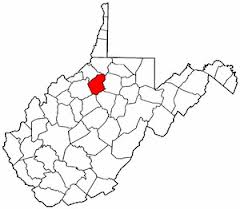 According to Anne Blakenship, executive director of the WV Oil & Natural Gas Association (WVONGA), Doddridge County leads WV’s 55 counties in “oil and natural gas production.” She said Doddridge will “remain at the epicenter” of the state’s oil and gas industry “for years to come.” While Doddridge is indeed the #1 natural gas producing county, replete with a number of gas processing plants (and pipelines), Doddridge is not the #1 oil producing county.
 MDN told you in July that Philadelphia antis were paying $50,000 to a “consultant” to produce a faux report that will say the Mariner East 2 (ME2) natural gas liquids pipeline is dangerous, a nightmare waiting to happen (see