
Shell Focused on Single PA County, No New Drilling in Other Areas
 Some big news about Shell’s plans for drilling and fracking in the Marcellus/Utica region came from this week’s DUG East conference in Pittsburgh. The Shell head of unconventional drilling in PA told conference goers that Shell’s shale drilling is currently focused on one county: Tioga County, PA. Shell has leases on 250,000 acres in Tioga and plans to spend $150 million to drill wells on four pads in 2018. That’s the focus for this year. According to MDN’s recently published Marcellus & Utica Shale Upstream Almanac, Shell also has assets (producing wells) in Bradford, Butler, Crawford, Elk, Forest, Lawrence, Lycoming, McKean, Mercer, and Potter counties–all in PA. The Shell rep said the company also owns leases in eastern Ohio, in the Utica, but there’s no current plans to drill in Ohio. Instead, they remain laser focused on PA–specifically Tioga County…
Read More “Shell Focused on Single PA County, No New Drilling in Other Areas”
 Another interesting story coming from this week’s DUG East Conference in Pittsburgh. CNX Resources (formerly CONSOL Energy), is beginning to use a new strategy of mixing together the natural gas produced from two different rock layers–the Marcellus and Utica. Why do that? The “gas” CNX gets from their Marcellus wells is “damp”–which is a new term for us. Everyone else would call it “wet”–as in there are extra hydrocarbons in the gas, like ethane, propane, butane, etc. In other words, NGLs (natural gas liquids). Interestingly, the Utica wells CNX is drilling in southwestern PA are “dry”–meaning relatively little if any NGLs coming out of the ground along with the methane. By mixing the two together, damp and dry, CNX dilutes the mixture enough that it’s pipeline ready and goes directly to market. That is, the gas doesn’t have to be transported via pipeline (which costs money) to a gas processing plant to remove the extra hydrocarbons (which costs more money). Typically if you can get a good price for those other hydrocarbons, it’s worth the extra transportation and processing costs. But with NGL prices low, and with few markets for ethane (the primary NGL extracted) right now, other than exporting it out of the area, CNX’s “blending” strategy lowers their costs and gets the gas to market quicker. Here’s the beauty of it: CNX can drill both Marcellus and Utica wells on the very same pad, and blend the gas together right at the pad. Less cost and faster to market sounds like a good strategy to us…
 CNX Resources announced Tuesday that the company has signed a long-term contract with Evolution Well Services to use Evolution’s 100% natural gas-fueled electric pressure pumping equipment. That is, CNX will use electric fracking equipment, with the electricity generated by burning natural gas (instead of diesel). According to Evolution, their “next generation” equipment saves drillers “up to 95 percent on fuel costs.” Whoa! If that claim is true (we have no reason to disbelieve it), it certainly changes the economics of fracking. Using natgas to generate the electricity, instead of diesel, also has the benefit of cleaner air. And here’s the coolest part: The natural gas used to power the electric generator comes from other other CNX wells in the area, i.e. “field gas.” Look ma, no more endless truck deliveries of diesel fuel! Here’s the exciting news that CNX is a “first-mover” on this new technology…
 This year’s Pennsylvania budget deal is different from the previous three such annual budgets. One way it’s not different is that this year’s budget once again hits a new high–a massively bloated, morbidly obese $32.7 billion. Although the budget does not include any new taxes, it does increase spending in a number of areas, including “education” (i.e. teacher’s unions). Democrat Gov. Tom Wolf once again asked for a Marcellus-killing severance tax this year, but he didn’t really mean it. He knew he wouldn’t get one. So Wolf brokered a deal with House and Senate Republicans that leaves out a severance tax. In the previous three budgets Wolf demanded a severance tax and delayed adopting each budget by months, in an act of petulance and temper tantrum. Since this is an election year and Wolf is up for reelection, he decided to forgo the histrionics over a severance tax. So, we’ve dodged the tax bullet once again. However, if Wolf is reelected, expect him to double down and perhaps even shut down state government in order to get a severance tax. The tax battle will be super-nasty next year, you can count on it. Meanwhile, the Senate is due to pass the budget on Friday, and Wolf will sign it soon after…
 Last October MDN told you that a second Marcellus gas-fired electric generating plant is planned for Greene County, PA (see
  Liberal Presbyterians in Pittsburgh, along with their comrades from New York, have succeeded in pressuring a once-great denomination, Presbyterian Church (U.S.A.), into adopting a proposal that forces the denomination to divest from all investments in fossil fuel companies, and instead invest in so-called renewable energy companies. The measure says divestment is “the beginning of a faithful response to the devastating and urgent reality of climate change.” The leaders of the divestment movement within the denomination say investing in fossil fuels is the moral equivalent of investing in tobacco, alcohol and gambling. And yet the very same people and the very same denomination refuse to lead by example. They don’t force their churches to quit using “devastating fossil fuels” to heat and cool their buildings. They don’t demand parishioners quit driving fossil-fuel powered automobiles to church. And they certainly don’t refuse tithes and offerings from those who work at evil fossil fuel companies (nor do they prohibit contributions from fossil fuel companies). Just a tad hypocritical?…
 In 2014, the North Carolina legislature passed a law that specifically says local municipalities can’t regulate oil and gas exploration–it is the sole responsibility of the state to do so. Some municipalities thought there were loopholes they could use. Stokes and Chatham counties enacted moratoriums instead of outright bans, hoping to game the system. In order to plug the loopholes, the NC General Assembly approved a 41-page “technical corrections” bill (literally passed in the middle of the night) in September 2015 (see
  The “best of the rest”–stories that caught MDN’s eye that you may be interested in reading: ICE launches updated Cove Point trading instrument; solar power slow to catch on in NY; closing PA nuke plants will cut energy prices; natgas pipeline bottlenecks in Louisiana affect M-U; antis keep pressure on Michigan regulators to retract decision to approve gas-fired power plant; is Trump’s coal/nuke support getting him in hot water with supporters?; massive climate funding by big foundations fails to sway public opinion; China’s home-grown frack boom; more OPEC machinations; and more!
 Here’s the latest strategy in THE Delaware Riverkeeper’s ongoing war against fossil fuels, and against natural gas pipelines in particular: Pressure the Delaware River Basin Commission (DRBC) to revoke a permit granted by the agency to the Mariner East 2 (ME2) pipeline project on the flimsy basis that ME2 has “violated” the conditions of the permit. Frankly, we didn’t even know the DRBC had issued a permit for ME2. After all, ME2 is a state-permitted project and does not come under federal authority. We doubt the DRBC has legal authority to issue a permit for the project–but if no one challenges them, their authority stands. ME2 probably thought it easier to just get the permit and not squabble over it. According to Big Green mouthpiece PBS StateImpact Pennsylvania, the DRBC is actually considering Riverkeeper’s request. The problem with this latest strategy by Riverkeeper is that DRBC’s executive director, Steve Tambini, is so weak, he may fold like a cheap deck of cards and actually do it. Tambini, who has been a major disappointment since taking over from the ultra-leftist Carol Collier, seems happy to take his marching orders from Riverkeeper. We have to wonder if this latest strategy will bear fruit. A scary proposition. But Riverkeeper isn’t content to try and scuttle ME2 by pressuring the weak DRBC as its only strategy. Last week the DRBC filed a “groundbreaking” lawsuit against the ME2 project in U.S. District Court for the Eastern District of Pennsylvania, meant to stop the project by court order…
 TransCanada’s Leach XPress project–some 160 miles of new natural gas pipeline and compression facilities in southeastern Ohio and West Virginia’s northern panhandle which flows 1.5 billion cubic feet (Bcf) of gas all the way to Leach, Kentucky (hence the name)–went online January 1st. A section of the pipeline exploded and burst into flames on June 7 (see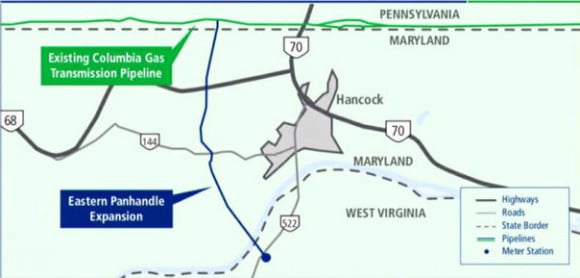
 Cunningham Energy is a small oil driller based in West Virginia. In 2015, Cunningham struck oil in the Big Injun sandstone formation in Clay County, WV (see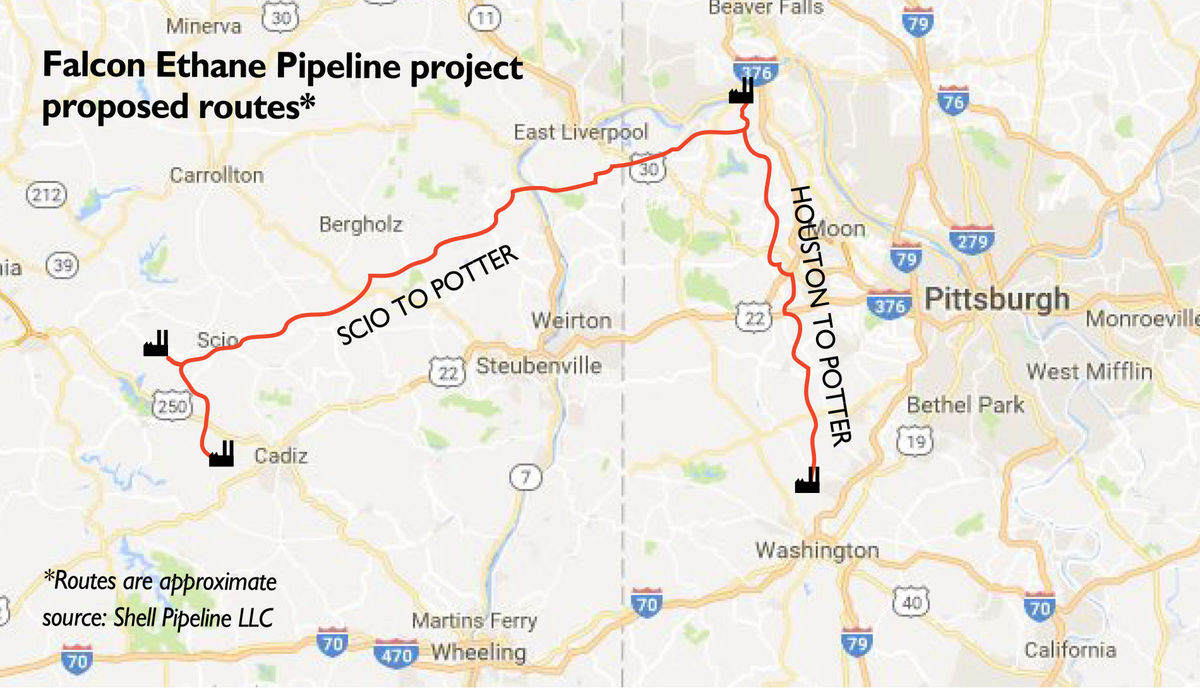

 A newly published study by the Interstate Natural Gas Association of America (INGAA) Foundation is raising eyebrows. The study, titled “North America Midstream Infrastructure through 2035” (full copy below), says the United States and Canada together will need to invest a total of $791 billion, or an average of $44 billion per year, from 2018 to 2035, to build new natural gas and oil pipelines (and associated infrastructure). That is some serious cash! The study makes certain assumptions, like this one: “Because production costs are relatively low in the Marcellus and Utica compared with production costs elsewhere, the study anticipates both production and infrastructure needs related to natural gas will be focused in the U.S. Northeast.” Meaning a lot of the money to build pipelines will go to our region. And this: “The study estimates about 25 billion cubic feet per day of new capacity to move Marcellus and Utica supplies to consumers and export facilities through 2035.” Whoa! According to the updated EIA Drilling Productivity Report issued on Monday, the Marcellus/Utica region will produce 28.9 Bcf/d of natural gas in July. Another 25 Bcf/d on top of that (essentially doubling current production) means by 2035 our region will produce over 50 Bcf/d of natgas. Incredible! No wonder we need more pipeline investment. Here’s an overview, along with a copy of the full study…