
Plan for Sustainable Aviation Fuel at PIT Changes, KeyState Out
 In May of 2024, CNX Resources Corp., KeyState Energy, and Pittsburgh International Airport (PIT) announced they were working together on a $1.5 billion project that, if completed, would make sustainable aviation fuel (SAF) at PIT from coalbed methane gas (see CNX, KeyState Partner with Pittsburgh Airport on H2 Aviation Fuel). However, the project was/is contingent on the IRS allowing coalbed methane to qualify for green energy tax credits. Good news: The revisions under the One Big Beautiful Bill Act (OBBBA) retain the designation that allows coalbed methane to qualify for the tax credits. However, KeyState has confirmed it’s pulling out of the PIT SAF project. CNX said it will continue with the project. Read More “Plan for Sustainable Aviation Fuel at PIT Changes, KeyState Out”

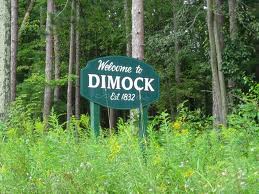
 For the week of June 23 – 29, the number of permits issued to drill new wells in the Marcellus/Utica rose slightly from the previous week. There were 27 new permits issued across the three M-U states last week, up three from 24 issued two weeks ago. The Keystone State (PA) issued 10 new permits. Six of the ten permits went to EQT for a single pad in Greene County. Two permits were issued to Range Resources for a pad in Washington County. And one permit each was issued to Coterra Energy in Susquehanna County (in Dimock!), and Infinity Natural Resources in Indiana County.
  In April, MDN told you that EQT Corporation, the second-largest natural gas producer in the country (and the largest producer in the Marcellus/Utica) was buying out and merging in Olympus Energy for $1.8 billion (see
  A kerfuffle has erupted in Morgan Township (Greene County), PA, between drilling and pipeline giant EQT Corporation and the town over the issue of hauling heavy equipment on Morgan’s roadways. Morgan supervisors prohibited EQT from using local town roads to haul heavy equipment to work sites. On June 18, EQT filed a lawsuit against the town, which the town is sure to lose (copy below). There is word that an agreement is already in the works to settle the dispute.
 The special court established in Pennsylvania to hear appeals of Department of Environmental Protection (DEP) decisions, known as the Environmental Hearing Board (EHB), didn’t please anyone with a decision it rendered several weeks ago. We previously reported that the EHB had ruled in favor of CNX Resources to allow two previously permitted wells to move forward with construction (see
 EQT Corp. has agreed to pay $167.5 million to investors who claimed the company overstated the benefits of its $6.7 billion merger with Rice Energy, according to a motion filed yesterday seeking preliminary approval of what the investors called the largest-ever stockholder suit deal lodged in Western Pennsylvania federal court. The proposed settlement comes after six years of ongoing litigation.
 Coterra Energy CEO Tom Jorden had a sit-down interview at the 2025 J.P. Morgan Energy, Power, Renewables and Mining Conference on Tuesday of this week. Coterra is the successor company of Cabot Oil & Gas after Cabot merged with Cimarex Energy in October 2021 (see
  Just as the pandemic began to unfold in early 2020, Shell pulled out of a 50/50 joint venture partnership with Energy Transfer (ET) to build a new LNG export facility in Lake Charles, Louisiana (see
  Infinity Natural Resources (INR), headquartered in Morgantown, WV, focuses 100% on the Marcellus/Utica. The company went public earlier this year with a $265 million ($20/share) initial public offering, giving INR a $1.18 billion market capitalization (see
  Diversified Energy and global investment firm Carlyle have formed a strategic partnership to invest up to $2 billion in proved developed producing (PDP) natural gas and oil assets across the U.S. Diversified will operate and manage the assets, while Carlyle brings the money and financial expertise, aiming to “securitize” these investments for long-term funding. Diversified owns significant assets in the Marcellus/Utica region (and other regions, too). The company owns approximately 8 million acres of leases with close to 70,000 (mostly) conventional oil and gas wells. The company’s business model is to buy already-drilled, lower-producing wells on the cheap and find ways to make them more productive.